What a hotel concierge is for, and what the job asks of the person doing it
Restaurant tables, theatre seats, cars, parcels and the questions nobody else can answer: what a hotel concierge does and when a hotel needs a concierge desk.
Covers · · 5 min read
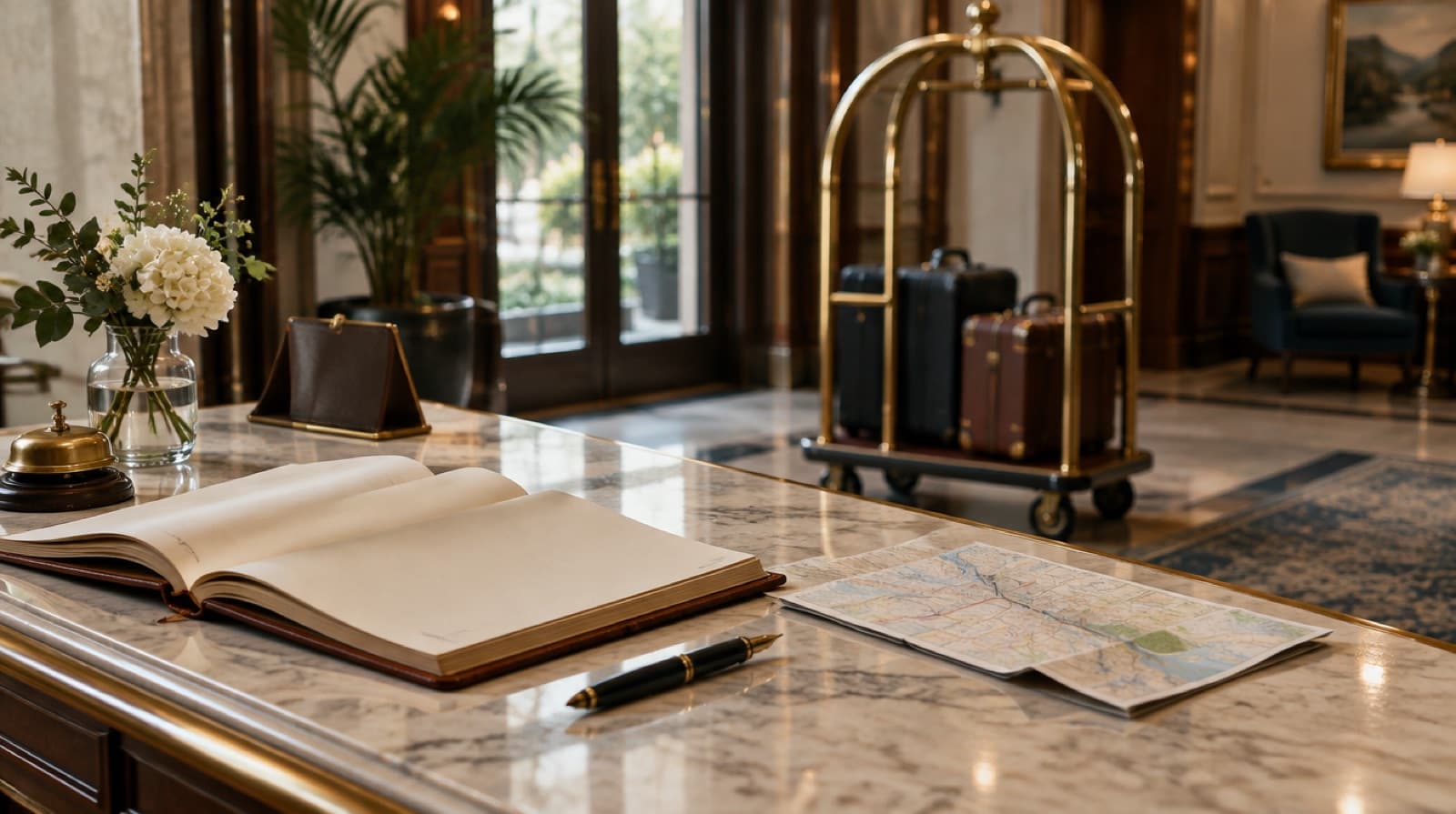
A concierge exists to get guests things they could not easily get themselves. A table at a restaurant that says it is full, two seats for a sold-out show, a car to the airport at four in the morning, a pharmacy open on a Sunday, a suit pressed before a wedding, a birthday cake delivered to the room at the right moment. The desk sits in the lobby, and the job runs on local knowledge, contacts and a log book.
The desk on an ordinary day
Requests arrive in person, by phone from rooms, by email from guests before they travel, and through the reception desk when a question outgrows it. A concierge on shift might handle:
- Restaurant bookings, and advice on where to eat that is specific to what the guest actually wants rather than a printed list.
- Tickets for theatre, concerts, exhibitions and sport, and tours for guests with a day to fill.
- Transport: taxis, chauffeured cars, airport transfers, train times, and the parking of guests' own cars.
- Luggage, with the porters: taking bags to rooms, storing them after checkout, sending them on ahead.
- Parcels, post and deliveries, arriving for guests and leaving with them.
- The unusual requests, which are the reason the job exists: a replacement phone charger at midnight, a florist, a tailor, a vet.
Everything is written in the log. What was asked, what was arranged, the confirmation, the cost, and whether the guest was told. A concierge who leaves at the end of a shift hands over through the log, and a request for tomorrow night's dinner has to survive the change of shift intact.
Shifts cover the day and evening, often with a morning and an afternoon team, and in larger hotels the desk may be staffed around the clock. Weekends and holidays are when the desk is busiest.
When a hotel needs a concierge, and when it does not
A concierge desk is a service a hotel chooses to offer, and it makes sense where guests expect it. Luxury and upper-scale hotels, hotels in cities with a lot to book, and properties whose guests travel for events or business and have little time to organise themselves. The problem it solves is that reception staff are busy checking people in and out; when they also have to find theatre tickets, both jobs suffer and the queue grows.
The signs a hotel has reached that point: reception constantly fielding requests that take more than a minute to answer; guests leaving the hotel to find things the hotel could have arranged; reviews noting that staff were friendly but unhelpful with bookings. A budget hotel or a small property does not need a concierge. Reception staff with good local knowledge, a printed or digital guide to the area, and a few reliable taxi numbers cover what guests ask. Some mid-range hotels have a guest services or guest relations role instead, which blends reception and concierge work.
The team around the desk
A concierge reports to the head concierge, who runs the desk, and the head concierge usually reports to the front office manager or rooms division manager. In larger hotels the head concierge also manages the uniformed team: porters, doormen and drivers. The desk works closely with reception on guest information, with guest relations on VIPs, and with the night team, which picks up anything still open at the end of the evening.
What makes the difference
An adequate concierge knows where things are. A good one knows people: the maître d' who will find a table for a regular's guest, the ticket agent who holds returns, the driver who will wait without complaining. That network is built over years and it is the most valuable thing a senior concierge brings to a hotel, which is why hotels hire for it deliberately.
The rest is discretion and memory. Concierges see a lot of guests' private lives and are expected to keep all of it private. They remember the returning guest's preferences and have the table booked before being asked. And they follow up: a good concierge checks the car arrived and the dinner went well.
Some concierges join Les Clefs d'Or, the international association of hotel concierges, whose members wear crossed golden keys on their lapels. Membership has its own requirements and is a recognised mark of standing in the profession.
How people get there
The traditional route is up from the uniformed team: porter or doorman, then assistant concierge, then concierge. Others arrive from reception or guest relations. Knowing the city well counts for more than a qualification, and languages help. From concierge the path leads to head concierge, then guest services or front office management, and the contacts built at the desk also open doors in private client and lifestyle management work.
What the advert should include
The salary or hourly rate, the shift pattern and how many weekends. Be clear about tips: concierges are frequently tipped directly by guests, and the advert should say whether those tips stay with the person, are pooled at the desk or go into the hotel's tronc. The law on tips requires that the hotel has a written policy on how they are shared, so the advert can simply point to it.
The rules on tips that apply to hotels: what the tipping law requires
What hotels are paying: hotel and rooms pay
Open positions: hotel jobs