The night porter: often the only person awake in the building
A night porter looks after a hotel and its guests overnight, often alone. What the shift involves, from late arrivals to rounds, and why hotels hire one.
Covers · · 5 min read
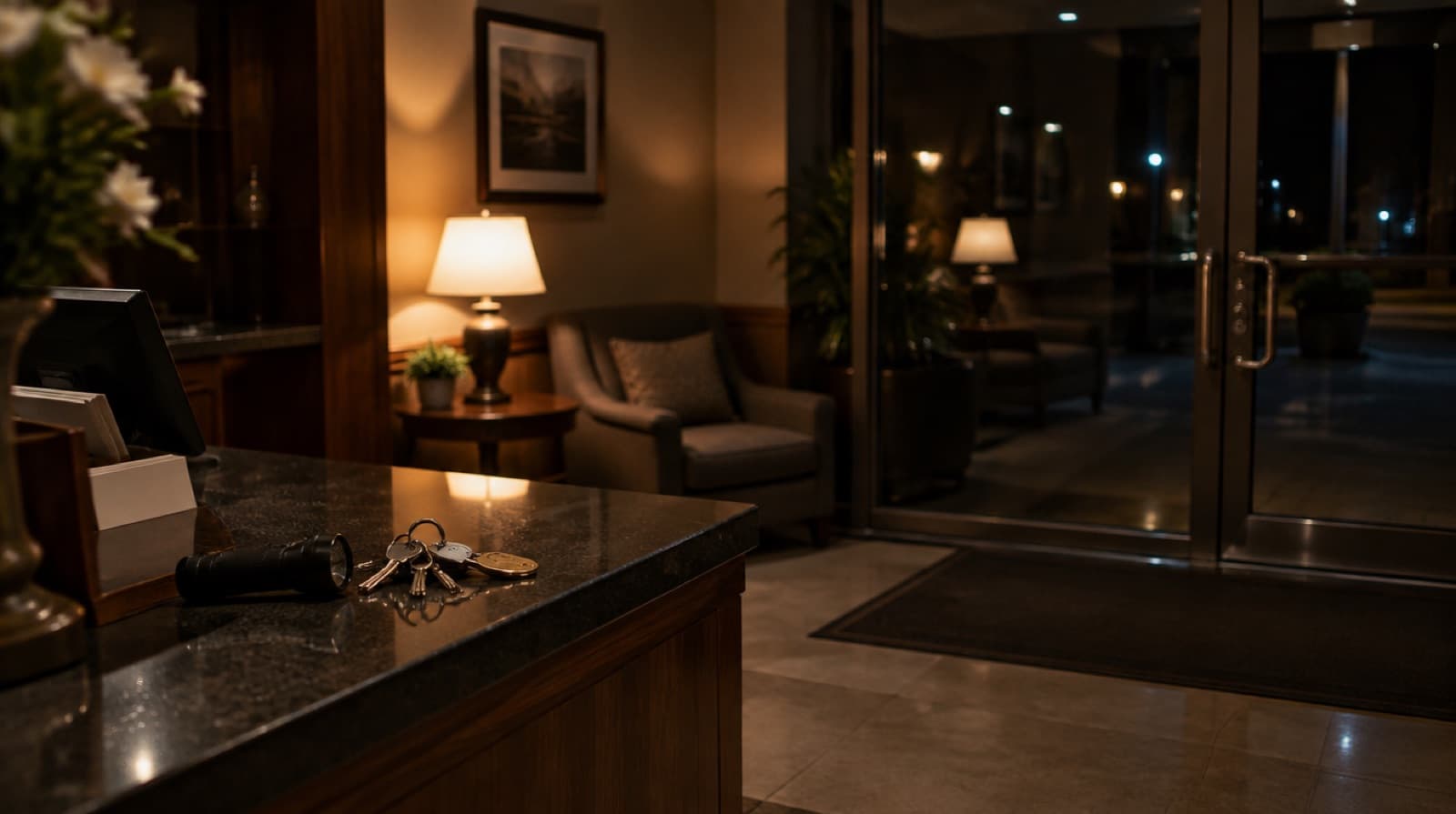
When the day staff go home, somebody has to stay with the hotel. In a lot of small and mid-sized hotels that is the night porter, working alone from late evening until morning, with the guests, the building and the front door in their care. It is a quiet job for long stretches and a very responsible one all of the time.
What happens between handovers
The shift starts with a handover from the evening receptionist or duty manager: who has not yet arrived, which rooms have requests, any guest to keep an eye on, any fault in the building. The porter reads the log, counts the float if there is one, and takes the keys.
Then the night runs roughly in stages. Late arrivals are checked in and shown to their rooms. The bar may need serving until it closes, and room service at night is often the porter making a sandwich from what the kitchen left. At a set hour the front door is locked, and guests coming back late are let in by buzzer or bell. After that, the quieter work:
- Security rounds: walking the corridors, checking fire doors and exits, looking at the plant rooms and the car park, and making sure nothing has been left on or open.
- Watching the fire alarm panel, and knowing what to do if it sounds, including how to account for guests.
- Cleaning the public areas: the lobby, the bar, the toilets, the entrance.
- Setting up for breakfast, from laying tables to putting out cereals and juices, in hotels where that falls to the night team.
- Collecting shoes left out for polishing, and newspapers delivered in the early hours.
- Answering the phone and the door, and the occasional guest who cannot sleep and wants to talk.
In some hotels the porter also runs a simple version of the night audit or prints the morning reports. Near the end of the shift come early departures, wake-up calls and the morning handover, with the log written up so the day team knows everything that happened.
Why a hotel employs one
A hotel with guests in it overnight needs somebody awake. Guests arrive late, fall ill, lose keys and set off alarms; the building needs someone to check it and to respond if something goes wrong. Without a night porter, all of that falls on an owner sleeping upstairs or on an emergency phone number, and a guest standing outside a locked door at one in the morning writes the review nobody wants.
The alternatives depend on size. A bed and breakfast where the owners live on site may manage with a doorbell and a phone by the bed. Some hotels use keypad entry and a remote duty phone. Larger hotels, or those with a late bar and a lot of overnight activity, put a night manager on shift as well, with the porter doing the physical work and rounds while the manager handles the audit and the decisions. A hotel usually adds a night porter when the owner can no longer be the one who answers at night, or when the number of rooms makes late arrivals and overnight requests a regular event rather than an occasional one.
Where the role sits
The night porter reports to the night manager if there is one, otherwise to the front office manager, head porter or general manager. In hotels without a night manager, the porter is effectively in charge overnight, with a manager on call for anything they cannot handle. The day team hands over in the evening and receives the hotel back in the morning.
Working alone
Lone working is the defining feature. The porter needs to be trusted with keys, cash and the safety of everyone in the building, and needs to be able to handle a drunk guest or an intruder calmly, knowing when to call the manager and when to call the police. Employers have duties to assess the risks of lone working and plan for them, and the Health and Safety Executive explains what those are.
What makes a reliable night porter
Reliability, literally: a porter who does not turn up leaves a hotel with no one on, which is why hotels value a steady record above almost anything else. Beyond that, being able to stay alert through the small hours, doing the rounds properly rather than approximately, and writing a clear log.
A night porter who is merely adequate keeps the building safe and checks the late arrivals in. A good one also leaves the lobby spotless, has breakfast laid, handles the guest locked out with warmth rather than irritation, and gives the morning team a log they can act on without a question.
Who does it, and what comes next
The job needs no formal experience, though customer service or security work helps. It suits people who prefer nights, work well without supervision, or want daytime free for study or other commitments. Porters can move into night reception, night audit or night manager roles, or across to day reception and on into front office work.
What the advert should cover
The hourly rate, the shift start and finish, the number of nights per week and the pattern, and whether the porter works alone. List the duties that go beyond the usual, such as bar service, breakfast set-up or the night audit. Say whether night porters share in the tronc, and whether meals are provided.
An employer's duties for staff working alone: lone working on the HSE website
Rates hotels are advertising: hotel and rooms pay
Current vacancies: hotel jobs