Duty manager: the person in charge until the shift ends
A duty manager is in charge of the whole building for one shift: the open or close, incidents, cash and the safe. How it differs from an AGM, and who hires one.
Covers · · 5 min read
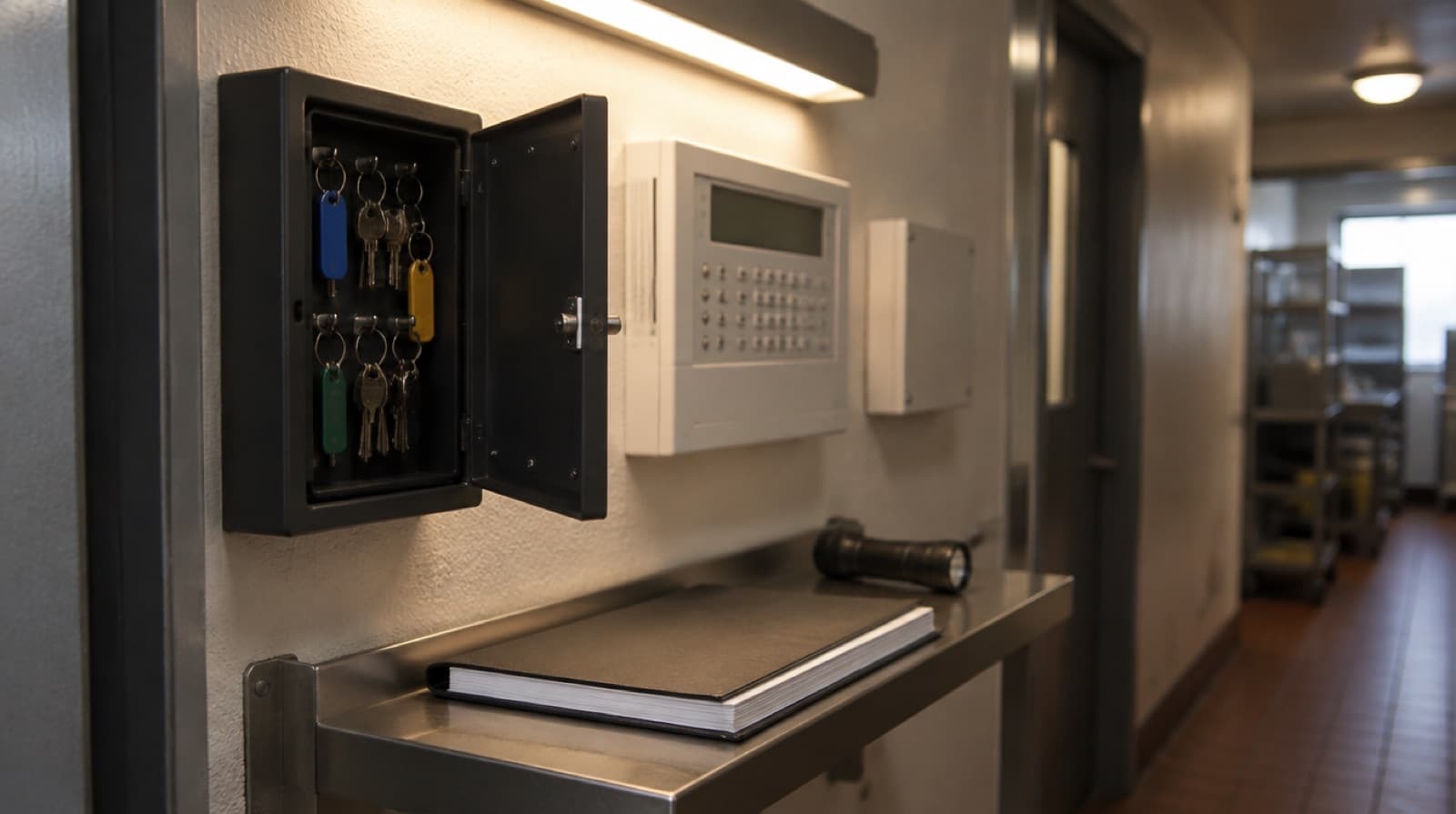
A duty manager’s authority lasts exactly as long as their shift. For those hours they run the whole building and everyone in it, staff and guests. When the shift ends, it passes to the next duty manager or goes home with the keys.
The title turns up in hotels, pubs, large restaurants, bars, venues, cinemas and leisure sites: anywhere the business is open longer than any one manager can work, and needs a named person in charge at every hour it trades.
Opening and closing
The duty manager is often the first in and the last out. Opening means disarming the alarm, walking the building, checking fire exits are clear and the fridges held temperature overnight, counting the safe and issuing floats, and making sure the right people have turned up.
Closing is the reverse, with more to go wrong: getting the last guests out politely, cashing up every till, banking the takings into the safe, checking every door, window and gas tap, and setting the alarm. A duty manager on a late close may be the only person in the building at the end of the night.
What happens in between
During the shift a duty manager moves between departments rather than belonging to one. The job is mostly about what nobody else is responsible for:
- Incidents: a guest who falls on the stairs, a staff burn in the kitchen, a fight at the door, a lost child. The duty manager deals with it and records it.
- Complaints that a supervisor cannot settle.
- Staffing gaps: ringing round when someone calls in sick, moving people between the bar and the floor.
- Refusals and ejections, in venues that sell alcohol, working with the door team where there is one.
- Breakdowns: calling out the engineer for the glass washer or the lift and deciding whether it can wait.
- Fire alarms and evacuations, including deciding when it is safe to go back in.
Duty managers keep records because whoever comes next needs them and because some of them are required: the accident book, the incident and refusals logs, the handover notes. Accidents at work have their own reporting duties, which the Health and Safety Executive sets out.
When an injury has to be reported: RIDDOR guidance from the HSE
Duty manager is not a junior AGM
The assistant general manager and the duty manager can both end up as the senior manager in the building on a given night, which is why the roles blur. The difference is what carries on after the shift. An AGM holds standing responsibilities, such as the rota, recruitment or compliance, and deputises for the general manager with the GM’s authority. A duty manager holds the shift. They may be given small projects, but decisions that outlast the night go up to the AGM or GM.
A site with long opening hours might run a rota of duty managers under a single AGM, the duty managers taking turns on the opens and closes.
When a business needs duty managers
A restaurant open for lunch and dinner five days a week, with a manager who works both, can often manage with supervisors covering the manager’s days off. The need for duty managers comes with trading hours: early breakfasts and late licences, seven-day opening, or a hotel that never closes.
Other signs are a senior bartender or supervisor being left to lock up with the takings and no authority to deal with an incident, or managers regularly working the close and the next morning’s open. Both are how serious incidents go badly and how managers burn out.
Who they answer to
Duty managers report to the GM or the AGM. On shift, every supervisor and team member reports to them, including kitchen staff for matters of safety and the building, though the head chef still runs the food. The handover, written and in person, is the part of the job that holds a multi-shift site together: what happened, what is still open, what the next manager must not forget.
What separates the good ones
Venues want calm under pressure, obviously, and trustworthiness with cash and keys. What separates a good duty manager is judgement about what to escalate. An adequate one rings the GM about everything, or about nothing. A good one handles what is theirs to handle, rings about what is not, and writes a handover that leaves nothing to be rediscovered.
Into the role and beyond it
Duty manager is usually the first management title in a business. People arrive from supervisor roles in the bar, on the floor or on reception. First aid training and, in licensed venues, a personal licence are useful early and some employers provide both. The next steps are AGM, restaurant manager, bar manager, or in hotels, front office manager.
What to say when advertising
State the pay and the shift pattern: how many opens and closes, how late the latest finish, and whether nights are involved. Say whether the duty manager ever locks up alone, what transport home looks like after a late close, and how tronc is shared with managers.
Current rates for shift managers: management pay figures
The role above, with the standing portfolio: what an AGM does
Venues looking for managers: duty and restaurant manager jobs