Every outlet, one manager: the food and beverage manager in a hotel
An F&B manager runs every place a hotel serves food and drink: restaurant, bar, breakfast, room service, banqueting. What it involves, and when a hotel needs one.
Covers · · 5 min read
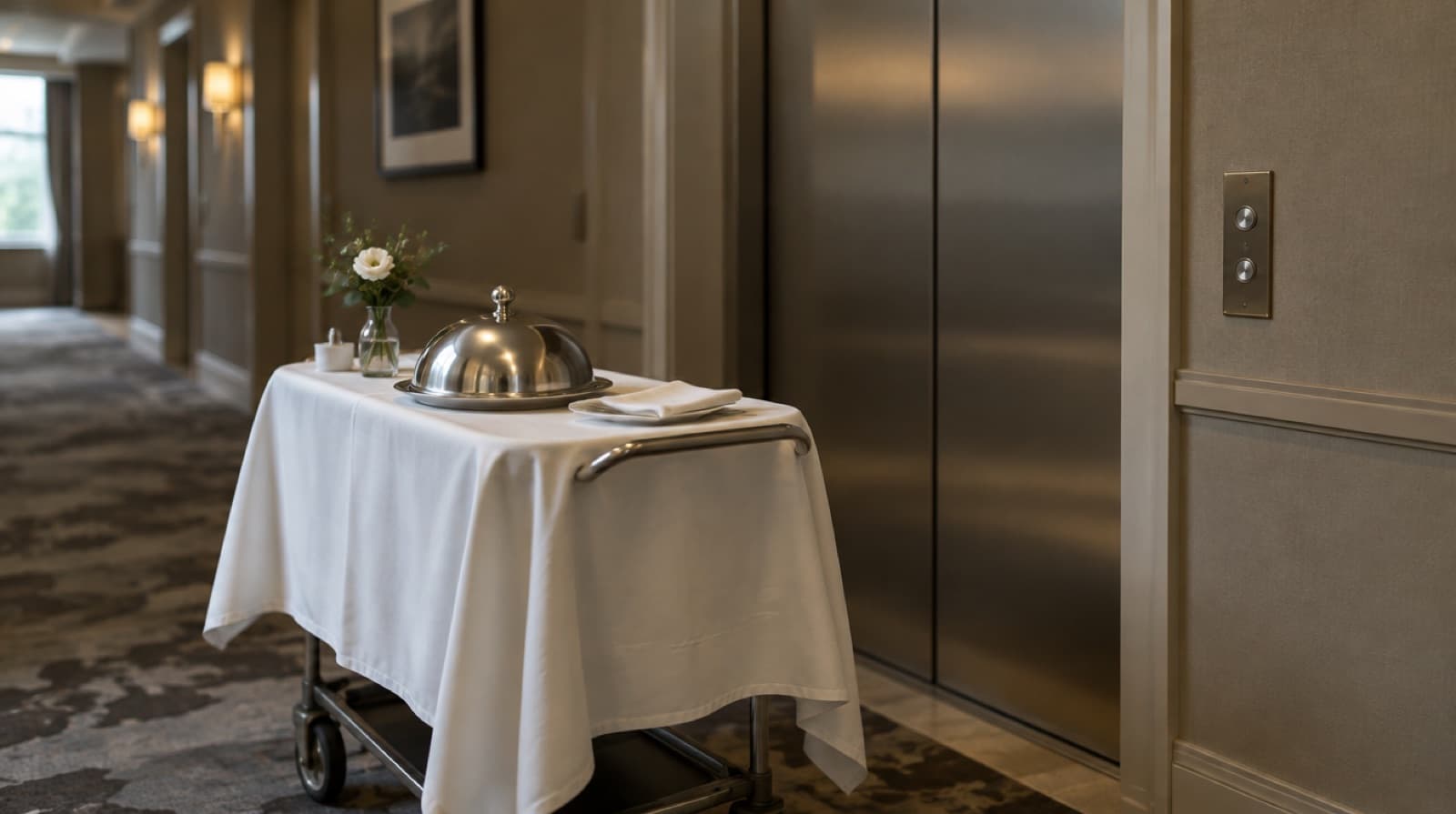
A hotel does not have a restaurant so much as a set of places where it serves food and drink, all drawing on one kitchen, one stores and one pool of staff. Breakfast for residents, a restaurant open to the street, a lobby bar, room service at midnight, a wedding in the function room on Saturday. The food and beverage manager is in charge of all of it at once.
The outlets and the day
An F&B manager’s day starts with the numbers from yesterday and the forecast for today: occupancy, breakfast covers, restaurant bookings, and what events are in the diary. From that they set staffing for each outlet and move people between them, because the bar will be quiet at the hour breakfast is busiest.
- Breakfast: a heavy service and the one every resident sees, so standards there matter out of proportion to its takings.
- The restaurant and bar, with their own managers or supervisors, and their own menus, drinks lists and pricing.
- Room service or in-room dining, with its own timings, trays and collection rounds.
- Conference and banqueting, working with the events or sales team on menus, timings, staffing and the function sheet for each booking.
- Minibars and lounges, in the hotels that still have them.
Across them all the F&B manager owns the department’s budget: revenue targets for each outlet, labour, food and drink cost, and the stock of china, glass, linen and silver that tends to vanish in a hotel. They also sit in the hotel’s daily heads-of-department meeting, where F&B is weighed against rooms, housekeeping and sales.
Why a hotel appoints one
A small hotel with a single breakfast room and an honesty bar does not need an F&B manager. The general manager or the front office manager covers breakfast, and the rest is simple.
The role becomes necessary once food and drink is a business in its own right inside the hotel, usually once there is a restaurant or bar open to non-residents or a function room taking events. At that point there are too many outlets sharing staff and stock for each to be managed separately. Signs a hotel has passed that point:
- The restaurant and banqueting teams compete for the same staff on busy nights and nobody arbitrates.
- Food and drink margins are reported as one line and no one can say which outlet is losing money.
- The executive chef is making front of house decisions because no one else is.
- Guest reviews praise the rooms and complain about breakfast.
A standalone restaurant does not have an F&B manager; it has a general manager or restaurant manager. The title is a hotel title, and on a CV it signals multi-outlet experience that a restaurant GM may not have.
Where it sits in a hotel
The F&B manager reports to the hotel general manager, or in larger hotels to a director of food and beverage. Reporting to them are the restaurant manager, bar manager, breakfast and room service supervisors, and often the conference and banqueting manager. The executive chef is usually a peer rather than a report, and the working relationship between the two decides whether the department runs well. Where there is a separate events manager, the F&B manager works alongside them to turn a confirmed booking into a staffed, fed event.
Adequate versus good
An adequate F&B manager keeps the outlets open and the budget near target. A good one treats the outlets as one operation: cross-training staff so the bar team can help at breakfast, planning menus with the chef so the same prep serves the restaurant and the banquets, and knowing which outlet makes money and which exists to make the rooms sell.
Hotels look for experience across more than one type of service, comfort with budgets and forecasts, the patience to deal with both a wedding planner and a night porter, and enough authority to stand up to the executive chef when it matters.
How people arrive, and where they go
A common route runs through hotel restaurants and bars: waiter, supervisor, restaurant or bar manager, assistant F&B manager, then F&B manager. Others arrive from banqueting. Restaurant managers moving from standalone sites into hotels often need an assistant F&B role first to learn the breadth. The next steps are director of food and beverage, hotel operations manager and eventually hotel general manager.
What the advert should cover
State the salary, bonus and any accommodation or meals on duty. List the outlets the role covers and the rough size of the event business. Say who the role reports to, whether the service charge is shared with managers, and what the working pattern is across breakfasts, late bars and weekend functions.
Hotel and restaurant management salaries: see the pay page
The role an F&B manager works alongside: what an events manager does
Hotels recruiting directly: hotel jobs