Behind the front desk: what a hotel receptionist actually does
Check-ins, room status, bills and the phone: what a hotel receptionist does on an early or late shift, where the role sits, and what separates a strong one.
Covers · · 5 min read
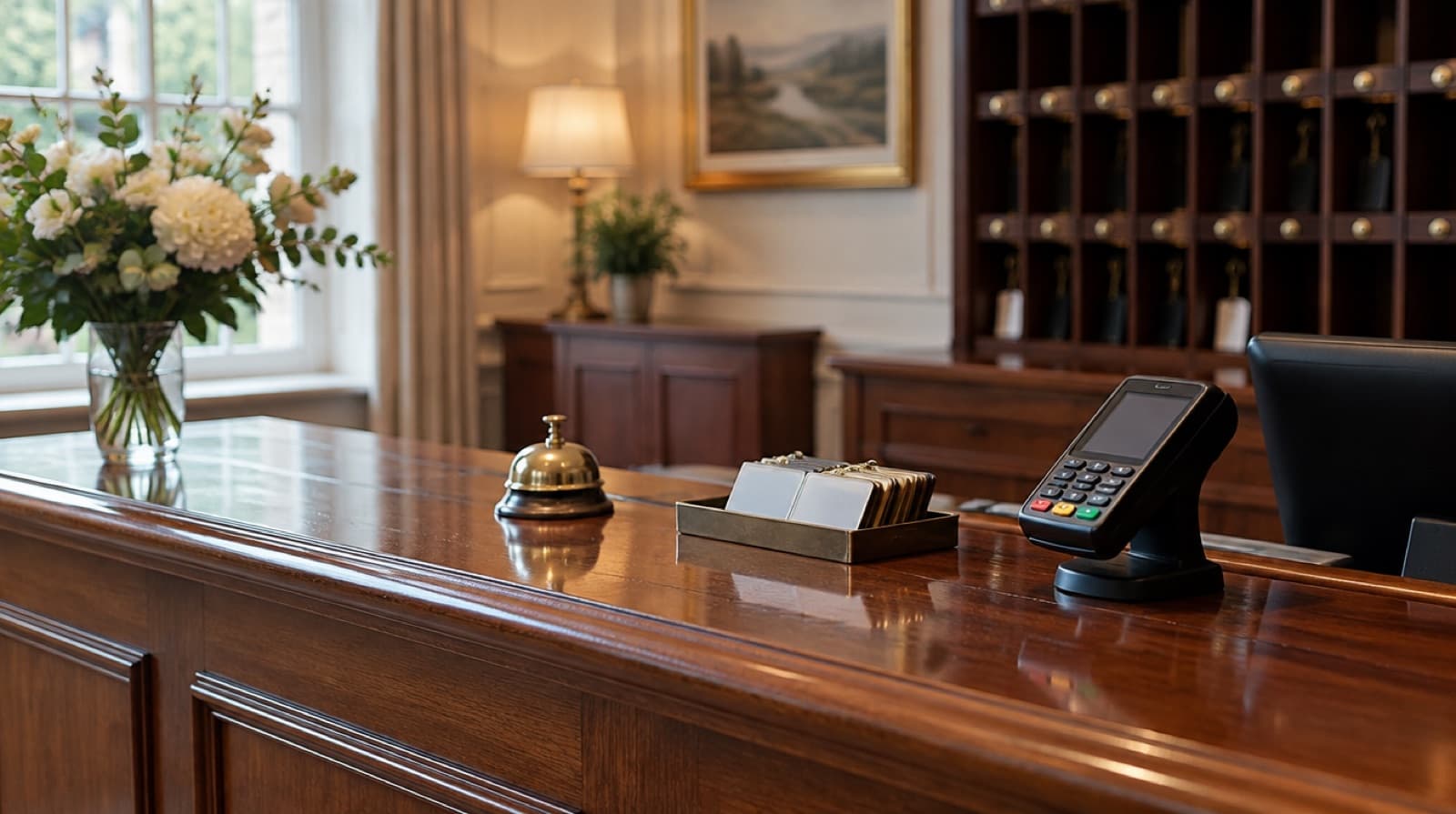
The receptionist is the first person a guest deals with and often the last, and in between is the one they come back to whenever something goes wrong. The desk is where the hotel's systems meet its guests: the booking, the room, the payment, the complaint about the air conditioning. A receptionist spends the shift translating between the two.
Earlies and lates
Front desks usually run on two day shifts with a night team covering the hours between. They feel like different jobs.
An early shift is departures. Guests checking out, bills to settle, disputed minibar charges, taxis to the station, luggage to store for people with afternoon trains. Alongside that, the desk is watching the room status coming through from housekeeping and matching clean rooms to the day's arrivals, because somebody will ask for an early check-in and the answer depends on which rooms are ready.
A late shift is arrivals. Checking guests in, taking a card for pre-authorisation, explaining breakfast times and the lift that skips the second floor, and sorting the guest who was promised a twin and has been allocated a double. Then the evening: restaurant reservations, a request for extra pillows, a noise complaint, and a handover to the night team with everything written down.
The tools
- The property management system, which holds every booking, room, rate and bill. Learning a hotel's system is the biggest part of starting the job.
- Bookings arriving from the hotel's own website, from online travel agents and from corporate accounts, each with its own terms.
- The key card encoder, the card terminal and the cash float, balanced at the end of a shift.
- The phone, which never stops, and an email inbox full of guests asking questions before they arrive.
- The handover log, where anything unfinished gets written for the next shift.
Whether a hotel needs reception staff, and how many
Every hotel needs the desk covered; the real questions are by whom and for how long. In a small guest house the owner runs reception between cooking breakfast and doing the accounts. Some modern properties use self check-in kiosks or app keys and staff a single host who moves around the building. A hotel starts hiring dedicated receptionists when the owner or manager can no longer be at the desk at the moments that matter: the morning checkout rush and the late afternoon arrivals.
The signs are visible to guests. Queues at the desk at checkout. Phone calls going to voicemail. Arrivals waiting while the only person on duty is carrying a tray to the bar. Bills going out wrong because nobody had time to post the restaurant charges. A receptionist fixes those by being the person whose job is the desk, and nothing else, for the length of the shift.
Where the question is instead whether reception staff can also cover other jobs, smaller hotels often combine the role with reservations, with the bar late in the evening, or with the night porter's shift. That can work, as long as the advert says so.
Where the desk sits
Receptionists report to a front office manager or reception manager, sometimes through a senior receptionist or shift leader who runs the desk on a given day. In a smaller hotel they answer to the general manager or the duty manager. Reception works closely with housekeeping on room status, with the concierge and porters on guest requests, and with reservations on availability and rates. At the end of the late shift the desk passes to the night manager or night porter.
What hotels look for
Composure, before anything else. The desk is where tired, lost and occasionally angry people arrive, and a receptionist who stays calm and specific with them resolves a great many situations by the second sentence. After that, accuracy with money and bookings, since an error at check-in turns into a dispute at checkout. Languages help in hotels with an international clientele.
What separates a strong receptionist from one who is simply fine is preparation. The strong one reads the arrivals list at the start of the shift, spots the returning guest, the anniversary noted in the booking, the two rooms that need to be next to each other, and the late arrival who will need a key left out. When a hotel is overbooked and a guest has to be moved to a sister property, the strong receptionist handles it before the guest reaches the desk, with a car and an apology arranged.
Starting out and moving on
Reception is one of the more common ways into hotels. Previous customer service work counts, whether in retail, a restaurant or a call centre, and the system training happens on the job. From the desk, people move to senior receptionist, then front office supervisor and front office manager, or across into reservations, revenue management, guest relations or the duty manager route into general management.
In the advert
Give the hourly rate or salary and the shift pattern, with start and finish times for earlies and lates and whether nights are ever part of the rotation. Say whether reception shares in the hotel's service charge through the tronc, whether meals are provided on duty, and which property management system the hotel uses, since experience on it is a real advantage.
What hotels are advertising for rooms-side jobs: hotel and rooms pay
Who takes the desk after the late shift: what a night manager does
Current openings: hotel jobs