What banqueting staff do on a wedding, a conference and everything in between
Banqueting staff set, serve and turn round function rooms for weddings, dinners and conferences. What the work involves and why hotels keep a banqueting team.
Covers · · 5 min read
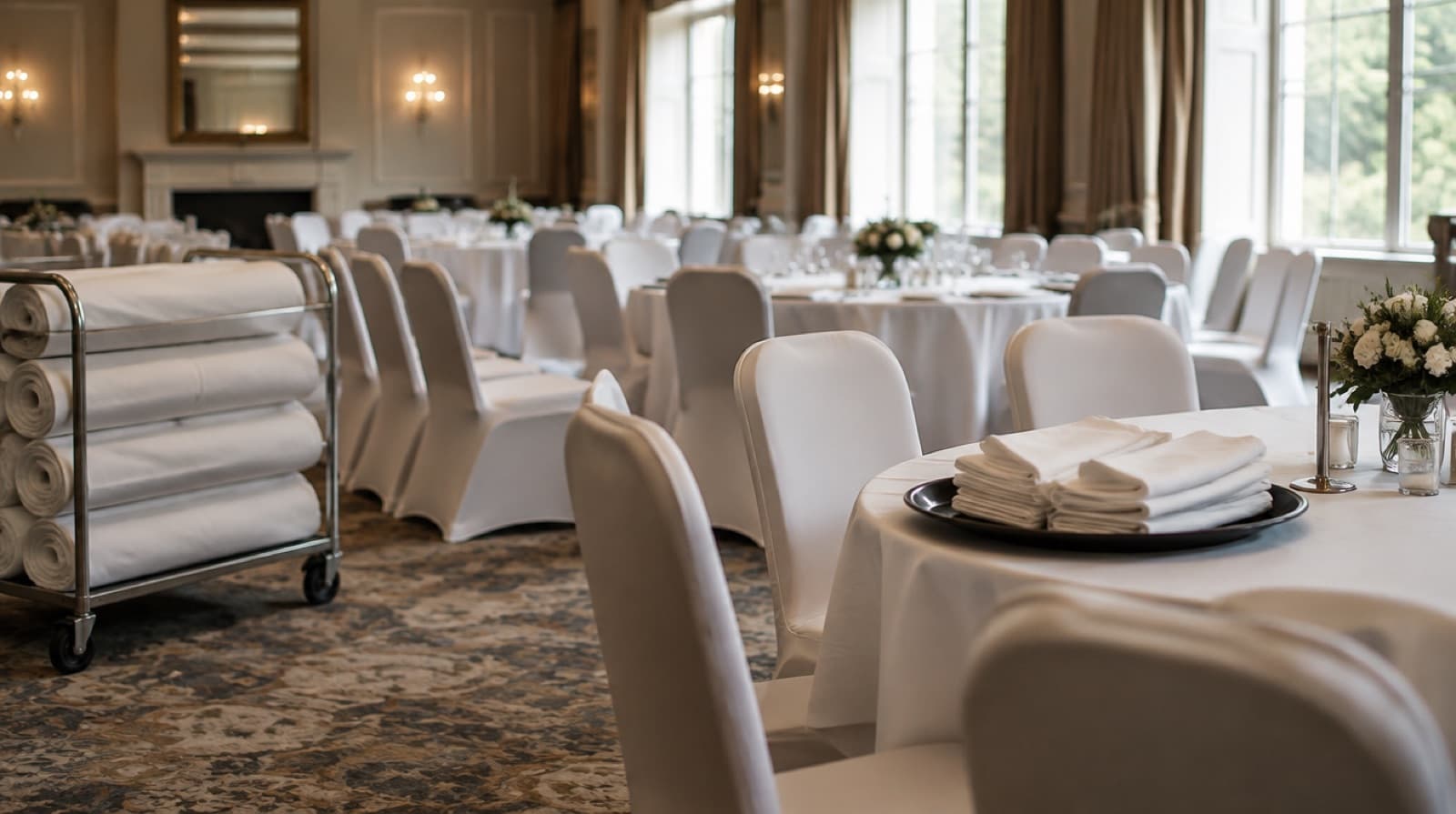
Banqueting is serving a whole room at once. Where a restaurant waiter looks after tables that arrive, order and leave at their own pace, a banqueting team serves every guest in a function the same course at the same moment, then clears it together, then does it again. The work happens in hotels, conference centres, wedding venues, livery halls and stately homes, and it is as much about moving furniture as about carrying plates.
The shape of a function shift
A banqueting shift has three parts, and the first and last are the ones people forget when they apply.
- 1The set. Tables are brought out and positioned to the floor plan, cloths laid and squared, chairs placed and covered if the booking asks for it. Then cutlery, glassware, napkins, table numbers and centrepieces, checked against the function sheet for the number of covers on each table.
- 2The service. A briefing from the banqueting supervisor or head waiter first: which tables each person has, the running order, the dietary requirements and which seat they are at. Then the reception drinks, the call to dinner, and the courses, each served as a wave across the room, often on a cue from the toastmaster or the events manager. Plated service is the usual style, with silver service and family-style sharing platters at some venues.
- 3The turnaround. Clearing, stripping the tables, returning linen and glass, and often resetting the room for the next day's conference breakfast before anyone goes home.
Daytime functions look different. A conference day means setting a room theatre style or boardroom style, running coffee breaks, serving a buffet lunch, and refreshing water and mints between sessions. The afternoon may then be spent flipping the same room into a dinner.
Hours are irregular by nature. A wedding finishes when the bar closes and the room is cleared, which can be well after midnight. Many banqueting staff work on a casual or zero-hours basis and are offered shifts function by function, alongside a smaller core team on contracts.
Why a venue keeps a banqueting team
A venue that sells functions has a staffing problem the restaurant floor cannot solve. A dinner for a full ballroom needs many hands for a few hours, on a date fixed months ago, and then needs almost none of them until the next one. Borrowing waiters from the restaurant leaves the restaurant short on the very nights it is busiest, and staff who have never set a function room will not do it quickly or to the plan.
So hotels and event venues build a banqueting team: a permanent core who know the rooms and the kit, and a bank of casual staff who can be called in when the diary fills. The signs a venue needs its own are that functions are regular rather than occasional, the restaurant suffers every time one happens, and managers are ringing round for favours in the week before each wedding.
A restaurant that hires out its whole room a few times a year does not need a banqueting team. Its own floor staff serve the party, perhaps on a set menu, and the head waiter runs it. The need arrives with dedicated function space and a diary to fill it.
Who runs whom
Banqueting staff report to a banqueting supervisor or head waiter on the night, who in turn reports to the banqueting manager. The banqueting manager works from the plans agreed by the events or sales team and takes the running order from them. In a hotel all of this usually sits under the food and beverage manager. The kitchen side has its own lead for banqueting, and the pass on a function night is organised around the waves rather than around individual tickets.
What venues want, and the difference between okay and good
- Stamina and a willingness to do the set and the clear, not only the service.
- Steady hands with plates on the arm. Carrying several plates at once is taught, and practised, and the venue will show you its way.
- Listening in the briefing. The guest with the nut allergy is on a specific seat at a specific table, and the plate has to reach that seat.
- Reliability, above all, since a casual bank only works if the people on it turn up when they have said yes.
An adequate banqueting waiter serves their tables. A good one watches the room, notices the table that is behind and helps it catch up before the wave clears, sets a place to the plan without being checked, and finishes the turnaround as carefully as the service.
A common first job, and a real ladder
Banqueting takes people without experience, which makes it a frequent first job for students and anyone who wants flexible shifts. From there the ladder runs to banqueting supervisor, then banqueting manager, and across into events management or into the hotel's restaurant. The habits it teaches, like reading a function sheet and moving a room to a plan, carry into almost any front of house job.
What a banqueting advert should state
The hourly rate, whether the role is contracted or casual, and how shifts are offered. The usual finishing time for evening functions, and whether there is transport or a taxi policy for late finishes. Whether service charge from functions is shared with banqueting staff through the tronc. And whether uniform is provided.
Rates in adverts for this work: events and banqueting pay
Where much of this work is: hotel jobs
Casual shifts still build up holiday: holiday pay for irregular hours