What a private dining manager does, and what the private room needs from one
The private dining manager sells, plans and often serves the restaurant's private room. What the job involves, who it answers to, and when a venue needs one.
Covers · · 5 min read
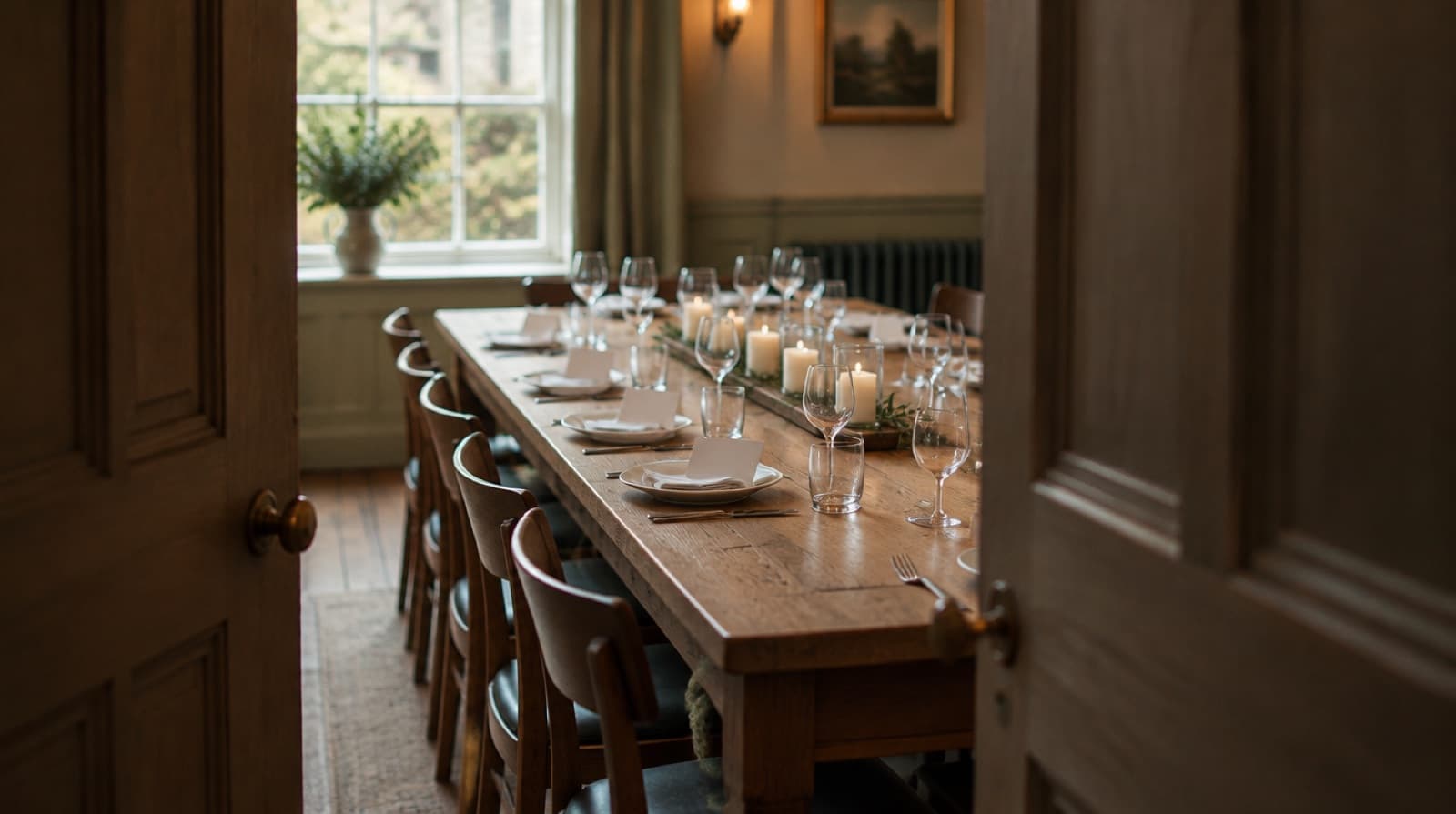
Plenty of restaurants have a room behind a door. It seats a single long table, or a couple of rounds, and on a good week it holds a board dinner, a family celebration and a client lunch. The private dining manager is the person responsible for that room: filling it, planning each booking with the host, and making sure the meal inside it is at least as good as the one in the main dining room, which is harder than it sounds.
A table, not a function
The difference from general events work is scale and closeness to service. A private dining booking is a restaurant meal for a closed group. The kitchen is the same kitchen, cooking the same food on the same night, and the private room is one more section it has to feed. The job lives inside the rhythm of the restaurant rather than beside it.
That shapes the day. Mornings and early afternoons go on the bookings themselves:
- Answering enquiries and holding dates, often for the same few corporate bookers who use the room every quarter.
- Agreeing the menu with the host and the head chef, usually a set menu drawn from the à la carte with a choice at each course.
- Collecting pre-orders and dietary requirements before the day, so the kitchen is not taking a table's order in the middle of a busy service.
- Wine: pre-selecting bottles with the host, or with the sommelier, and agreeing whether the table has an open bar or a set allowance.
- Place cards, printed menus, the room hire or minimum spend, the deposit and the final bill.
In the evening the private dining manager is frequently the one serving the room, or leading the small team that does. They pace the courses against the host's plans, catch the moment the speeches start and hold the main course accordingly, and keep the pass informed. It is quiet, attentive service at close range, for guests who are paying for privacy and for not having to think about anything.
The case for the role
A private room without an owner is a room that underperforms. The bookings go to whoever answers the phone, the menu gets rewritten from nothing each time, pre-orders are forgotten, and the room is staffed on the night by whichever waiter can be spared from the main floor. The guests notice, and those guests are frequently the people who would have booked again.
A venue is usually ready for a private dining manager when:
- The room is booked often enough that the restaurant manager spends a real part of each week on its admin.
- Corporate clients are asking for invoicing, repeat dates and a single named contact.
- Service in the private room is noticeably weaker than in the main room, because nobody is assigned to it.
- The room sits empty on nights it could be sold, since selling it is everybody's job and therefore nobody's.
If the room books occasionally, it does not need a dedicated manager. A clear private dining pack with menus and terms, handled by the reservations team or the assistant manager, will do. If the venue has several spaces and hosts receptions, weddings and launches as well, the broader role of events manager is the better fit, and the private room becomes one of the spaces that person sells.
Reporting lines
The private dining manager usually reports to the restaurant manager or general manager, and in a group may also answer to a central events or sales lead. They work closely with the head chef on menus and with the sommelier on wine. In a larger operation they may run a small dedicated team of servers and a coordinator; in a smaller one they borrow staff from the floor and brief them before service. At the end of the night they hand the room, and any open bill, back to the duty manager.
What separates a strong one
Memory, first. The best private dining managers remember which booker's chairman does not drink, which company always wants the same Burgundy, and which family needs the high chair. Repeat business in private dining is personal, and it follows the manager as much as the restaurant.
Then fluency with the food and wine, because the menu conversation with a host is a sales conversation and has to be had with confidence. And judgement about timing: knowing when to hold a course and when to push it, without the host ever having to ask. An adequate private dining manager keeps the diary straight. A strong one makes the room a reason people choose the restaurant.
Routes in and out
The usual route is through the floor. Head waiters, maître d's and senior waiters who already look after regulars and large tables move across, as do sommeliers who enjoy the hosting. Reservations staff sometimes come in from the other side, bringing the admin and learning the service. Next steps include events manager, restaurant manager, or a group role looking after private dining across several sites.
Writing the advert
Give the salary and any bonus linked to private dining revenue. Say how many covers the room seats and how often it books, whether the role serves on the floor or only manages, and the evening and weekend pattern. Be explicit about the service charge on private bookings and whether the private dining manager shares in it through the tronc.
Advertised pay for this kind of role: events and banqueting pay
How service charge on private bookings is shared: tips, service charge and tronc
Looking now: see current jobs