The bar manager: the person who makes a bar pay for itself
A bar manager runs the bar as a business: stock counts, margins, the drinks list, the rota and the licence conditions. When a bar needs one.
Covers · · 6 min read
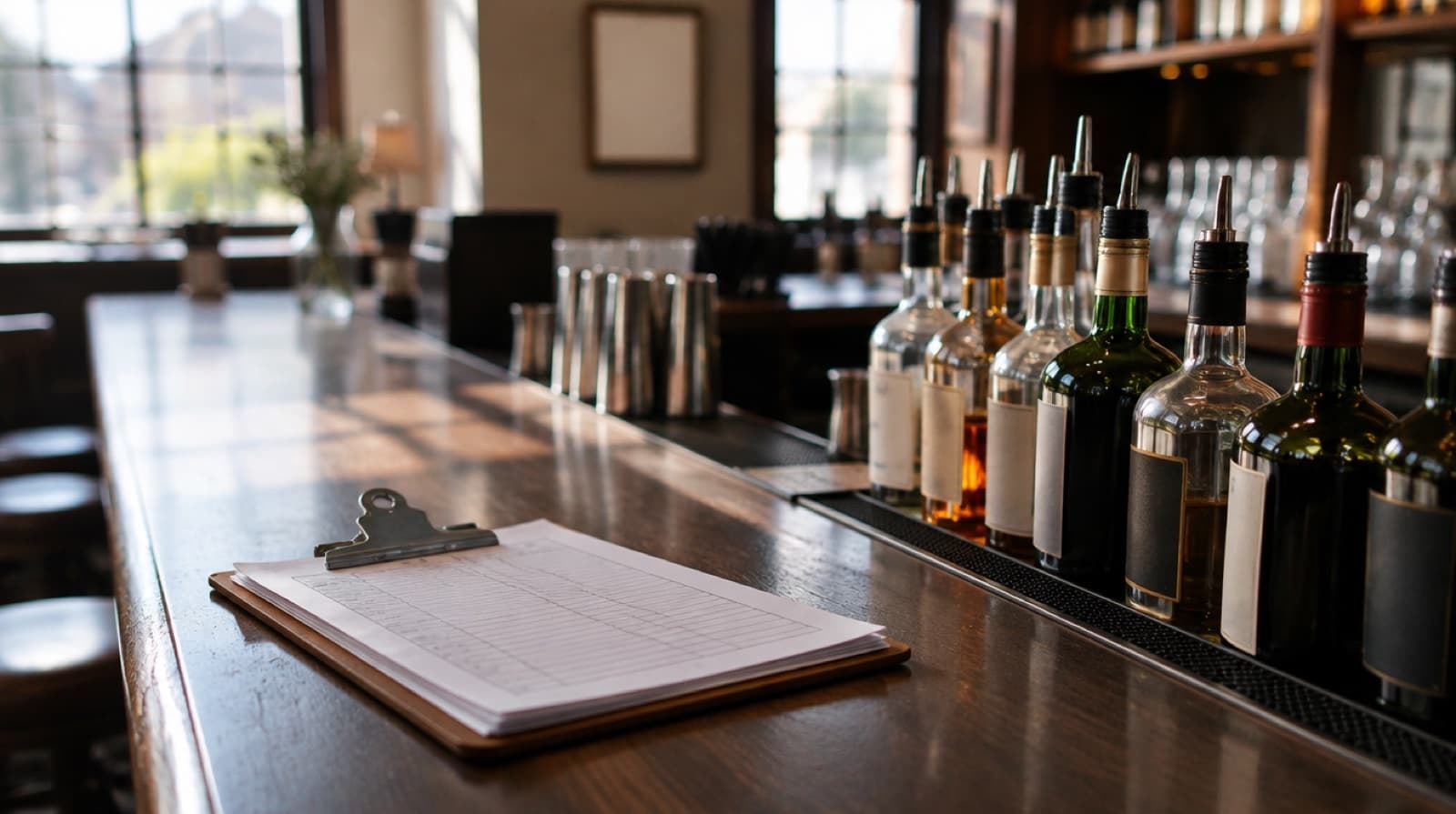
A bartender’s shift is judged by the queue. A bar manager’s week is judged by the stock count. Those two measures pull against each other more often than people outside the trade expect, and the bar manager is the person paid to hold both.
The job is running the bar as a business inside the business: what is bought, what it costs, what it sells for, who is on, and whether the whole thing stays within the conditions on the premises licence.
What fills the week
A bar manager still works shifts behind the bar, usually the busiest ones, because that is where problems show up first. The rest of the job happens before the doors open and after they close.
- Ordering. Spirits, wine, soft drinks, garnish, glassware, ice if it is bought in. Knowing the delivery days for each supplier and ordering so the back bar is never empty on a Saturday and never overstocked on a Monday.
- Stocktakes. Counting every bottle, weighing or estimating the open ones, and comparing what should have been sold against what the till says was sold. The gap is called variance, and explaining it is a large part of the job.
- Pricing and margin. Costing each drink by the measure, setting a price that holds the gross profit the owner expects, and noticing when a supplier price rise has quietly eaten it.
- The drinks list. Deciding what goes on, what comes off, which house spirit to pour, and whether the cocktail list earns the time it takes to make.
- The rota and the team. Who works which nights, who is trained on what, who needs to be moved off the well because they are slowing everyone down.
- Licence conditions. Knowing what the premises licence actually says about hours, door staff, glass in outside areas and refusals, and making sure the team follows it.
The hours follow the bar. Late finishes are normal, and the stocktake is often done early the next morning, so a bar manager can close at one and be counting bottles a few hours later.
The point where a venue needs one
Plenty of restaurants run a small bar without a bar manager. A senior bartender does the ordering, the restaurant manager signs it off, and the drinks margin is watched in the same monthly report as everything else. That works while the bar is a supporting act.
It stops working when drinks become a meaningful share of the takings, or when the venue is a bar first. The signs tend to arrive together:
- The stocktake shows a loss nobody can explain, month after month, and nobody owns finding out why.
- The owner or general manager is placing drinks orders at the end of a double shift.
- The cocktail list has not changed in a year because nobody has the time or the authority to change it.
- Good bartenders keep leaving because nobody is training them or fighting for their rota.
- A licensing visit has turned up something that should have been caught in-house.
At that point a bar manager can earn their keep through the stock line alone. Before that point, a venue is often better served by a bar supervisor who runs shifts well, with the ordering kept by a manager who already exists.
Bar manager or head bartender
The two titles overlap and are often used for the same job. Where both exist, the head bartender tends to lead on the drinks themselves: the recipes, the prep, the training on technique. The bar manager leads on the numbers, the suppliers and the staff. In a cocktail bar the head bartender may be the more senior of the two in everything except the spreadsheet.
Who they answer to, and who answers to them
In a restaurant or hotel the bar manager answers to the GM or, in a hotel, the food and beverage manager. In a standalone bar they may report to the owner directly. Below them sit the bar supervisors, bartenders, mixologists and barbacks, and in a busy pub or venue with its own cellar, a cellar manager who looks after the beer side.
The handover that matters is to whoever closes. If the bar manager is not on, the supervisor or duty manager needs to know what is running low, what has been refused and why, and anything the licence requires to be written down.
Adequate and good
An adequate bar manager keeps the shelves full and the rota filled. A good one knows the margin on every line without looking, can tell which bartender’s shifts carry the variance, and changes the list because the numbers say so rather than because they are bored of it.
Venues also look for someone who can say no to a supplier, handle a refusal at the bar without it becoming a scene, and teach. A bar where only the manager can make the signature serve has a single point of failure.
Getting there, and what comes after
The usual route is bartender, then bar supervisor or head bartender, then bar manager. Stock control is what separates the last step from the others, and the fastest way to learn it is to ask to do the count alongside whoever does it now.
Bar managers are often asked to hold a personal licence, because it lets them act as the designated premises supervisor. From here people move into general management, operations roles across several bars, brand and trade roles with drinks companies, or into opening a bar of their own.
The licensing rules, including personal licences: alcohol licensing on GOV.UK
What the advert should say
State the salary, and whether a bonus is tied to margin or stock results and how it is measured. Say which nights are the late ones, whether the tronc includes managers, how many bartenders the role runs, and whether the venue expects a personal licence or will pay for the course.
Salaries bars are advertising now: bar pay
The role one step below: what a bar supervisor does
Bars hiring directly: bar jobs on Covers