Below the bar: what a cellar manager looks after
A cellar manager keeps the beer right before it reaches the tap: cask conditioning, line cleaning, gas, deliveries and wastage, and which venues need one.
Covers · · 5 min read
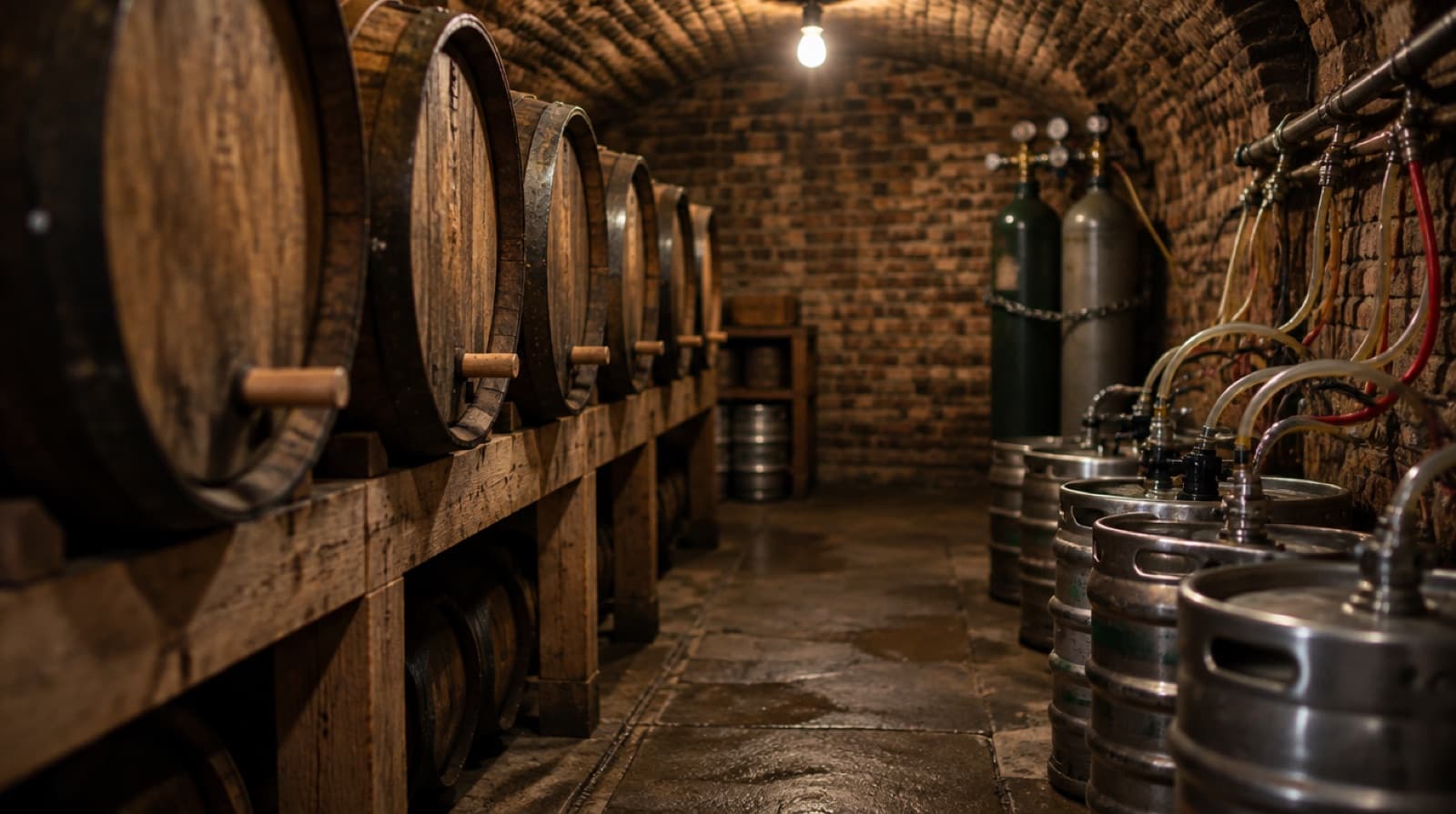
A pint that pours flat, cloudy or sour is almost never the bartender’s fault. The problem happened downstairs: a cask tapped before it had settled, a line left too long between cleans, a cellar that crept warm over a hot weekend. The cellar manager is the person whose job is to stop that happening.
It is one of the few bar roles that happens mostly out of sight of customers, and one of the few where the craft is about patience rather than speed.
The work itself
Cask ale
Real ale arrives unfinished. It is still conditioning in the cask, so it has to be stillaged, left to settle, vented with a soft spile to release excess condition, then a hard spile once it is ready, and tapped. Judging when a beer is ready to serve, by look, smell and a sample in the glass, is the skill that defines the job in a cask pub. Once on, a cask has a limited life, so the cellar manager plans which beers go on when so nothing sits open too long.
Keg, gas and lines
Keg beer and cider are less delicate but depend on the system around them: couplers, gas, pumps, coolers and the lines running up to the bar. The cellar manager changes kegs and cylinders, sets and checks gas pressures, and cleans the lines on a fixed cycle with line cleaner, flushing through until the water runs clear. Dirty lines are a common cause of bad beer and of customers quietly switching to bottles.
Deliveries and the stock
The dray arrives early and does not wait. Checking the delivery against the order, rotating stock so the oldest goes on first, returning empties and ullage (beer that could not be sold) for credit, and keeping the records that make the stocktake line up with the tills: this is the paperwork half of the job.
The hours start before opening and are often split, with a morning in the cellar, a gap, and a return for the evening when kegs run out mid-service.
Why a venue hires a specialist
In a typical pub the cellar is part of the pub manager’s job, or the assistant manager’s, and that is usually the right arrangement. The cellar work fits around the rest of the day, the manager knows the beers, and a separate role would sit idle.
A dedicated cellar manager starts to make sense when:
- The range is large enough that rotating guest casks is a job in itself, as in ale houses and pubs known for their beer.
- Volume is high enough that kegs change during service and someone has to be downstairs while everyone else is serving, as in stadium bars, big city pubs and music venues.
- Wastage on draught is high and nobody can say whether it is the lines, the pouring, the temperature or the rotation.
- The pub is chasing or keeping a quality accreditation for its cask ale and needs someone who will keep the standard every day, not just before the inspection.
Where the need is real but not full-time, venues often combine the role with a bar supervisor’s or assistant manager’s job and write the cellar into the job title. That is a fair arrangement as long as the advert says so.
Its place in the team
The cellar manager reports to the pub manager, bar manager or general manager, depending on who holds the stock budget. They work closely with whoever closes, because the last shift needs to know which casks are near the end and which lines are due a clean, and with the supervisors who shout down when something runs dry. In a larger venue they may train a cellar assistant or teach bartenders to change a keg safely.
What marks a good one
- Tasting every beer before it goes on and being willing to hold one back.
- Keeping the cellar clean, cool and orderly, because a cluttered cellar is where accidents and forgotten casks happen.
- Knowing the gas and pressure side well enough to fix fobbing before calling an engineer.
- Records that let a manager see yield per cask and spot a problem before the monthly count does.
- Safe handling. Casks are heavy, cylinders are pressurised, and cleaning chemicals are hazardous; a good cellar manager treats those as the working risks they are.
An adequate cellar keeps the taps flowing. A good one is the reason regulars say the beer is better here than down the road.
How people get into it
Cellar work is learned by doing it next to someone who knows, and breweries and pub companies run cellar training courses that are worth asking for. Bartenders who volunteer to help with deliveries and line cleaning pick it up quickest. From the cellar, the natural moves are into pub management, brewery roles in quality or trade support, or into bar management where stock control is a bigger part of the job.
Advertising the role
Say the pay and the start time, because early starts are the norm. Say how many cask and keg lines the cellar runs, whether the role is purely cellar or shared with bar shifts, whether it shares in the tronc, and whether heavy lifting is part of every day.
Pay across bar and cellar roles: see bar pay
Who usually runs the cellar otherwise: what a pub manager does
Pubs and bars with vacancies: current bar jobs