Inside the barista’s job: grinder, milk, queue and clean-down
What a barista does from the morning dial-in to the evening clean, why a café or restaurant hires one rather than a machine, and what a head barista adds.
Covers · · 5 min read
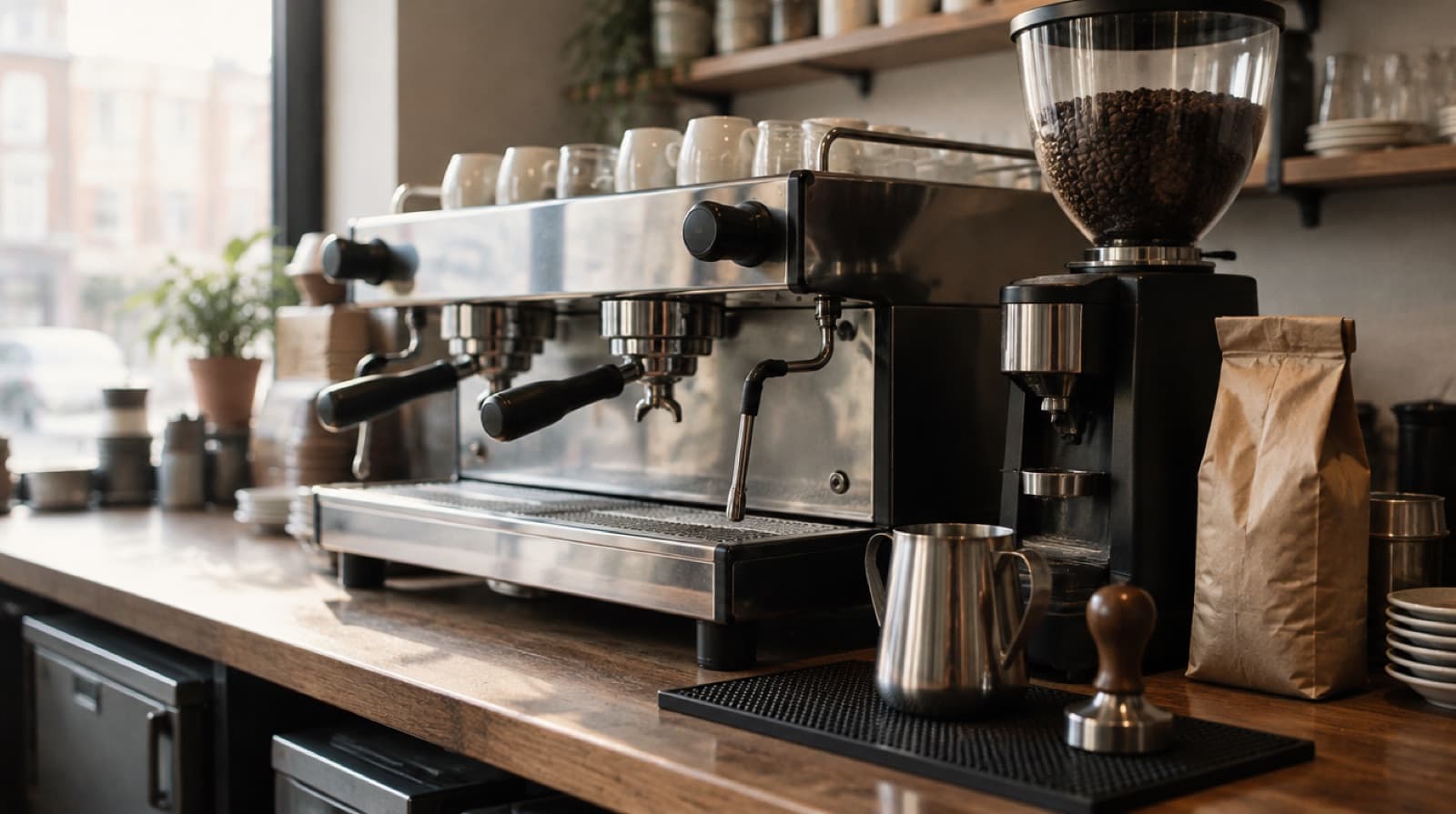
A barista makes coffee to order on an espresso machine. That sentence is accurate and leaves out almost everything that makes the job hard: coffee changes from day to day, milk behaves differently depending on what it is and how cold it is, and the morning queue does not care about either.
Before the first customer
The first job of the day is dialling in. Coffee beans age, the weather changes the humidity, and a grinder setting that was right yesterday may pull shots that run too fast or too slow today. The barista weighs the dose of ground coffee going into the basket, weighs the liquid coming out, times the shot, tastes it, and adjusts the grind until all three are where the recipe says. Then they do it again for the decaf.
Around that sit the ordinary opening tasks: milk fridges stocked, the alternatives lined up and labelled, cups warming on top of the machine, the pastry counter filled, the till counted in. Café shifts tend to start early and finish in the afternoon, and weekends are usually part of the deal.
During service
Service is a sequence repeated all morning: grind, dose, distribute, tamp, lock in, pull, steam, pour. The skill is doing that without the sequence getting slower when the queue gets longer, and without any single drink suffering for the speed. Milk has to be textured for the drink ordered, which is not the same for a flat white as for a cappuccino, and plant milks each need a slightly different touch.
Allergens are a real part of this job. Dairy is an allergen, several plant milks contain others, and some syrups do too. A barista needs to know what is in every drink they make and keep the steam wand and jugs separate or clean between milks when a guest asks. The duty to give accurate allergen information sits with the business, and the barista is the person it depends on at the counter.
What food businesses must do about allergens: allergen guidance from the Food Standards Agency
Cleaning runs through the whole day, not only the end of it. Steam wands are purged and wiped after every jug, group heads rinsed between shots, and the machine backflushed and the grinder brushed down at close. A machine that is not cleaned makes coffee that tastes of old coffee, whoever is using it.
Why hire a barista rather than buy a better machine
A venue can serve coffee without a barista. Bean to cup machines, batch brew and filter all work, and for a pub or a restaurant where coffee is an occasional afterthought they are often the sensible choice.
The case for a barista is strongest in two places. The first is anywhere the coffee is the reason people come in, which describes plenty of independent cafés: the morning trade is built on regulars who will go elsewhere the first week the flat white is inconsistent. The second is a restaurant whose espresso after dinner is the last thing a guest tastes, and where waiting staff currently make it between tables with varying results.
The signs are usually obvious. The queue at the counter is long enough in the morning that people walk away. Drinks come back. Coffee is made well on the days one particular person is working and badly on the others. The machine is being cleaned by whoever remembers.
Head barista, and the team around the machine
A barista usually reports to a café supervisor, café manager or, in a restaurant or hotel, the bar or front of house manager. Where there is a head barista, they set the recipes, own the dial-in, train new starters, order beans, and talk to the roaster about what is coming next. In a small café one person may be both, and may also run the till and the food counter.
What a good one looks like
- They taste the espresso, not just time it, and change the grind when it needs changing rather than when somebody complains.
- The tenth flat white in a queue looks and tastes like the first.
- They keep a clean, dry station through a rush, which is how the next person can start work without a clean-up first.
- They recognise regulars and start their drink before the order is finished, which is the whole appeal of a local café.
- They know the allergen answer to every drink on the board without looking it up.
An adequate barista can make every drink on the menu. A good one can tell you why today’s coffee tastes different from yesterday’s, and what they did about it.
Starting out and moving up
Plenty of cafés train baristas from scratch, and roasters and coffee companies run their own courses. Experience moves well between venues because the machine and the method are broadly the same everywhere. From barista, people move to head barista, then café supervisor or manager, or out of the café into roasting, green coffee buying, equipment servicing or training for a coffee supplier.
What to put in the advert
The pay, the start time, whether weekends are fixed or rotating, and how tips from the counter and the card machine are shared. Say what machine and grinder you use and whether the coffee is dialled in by each barista or set centrally. A barista reads that line to work out how much of the job is theirs.
The guide to coffee work, with listings: barista jobs
What venues advertise for bar and coffee roles: bar pay
If your hours change week to week: holiday pay for irregular hours