Development chefs: the cooks who write the dishes other kitchens cook
A development chef creates, tests, costs and specifies new dishes for groups and food brands, then trains kitchens to cook them. What the job involves.
Covers · · 5 min read
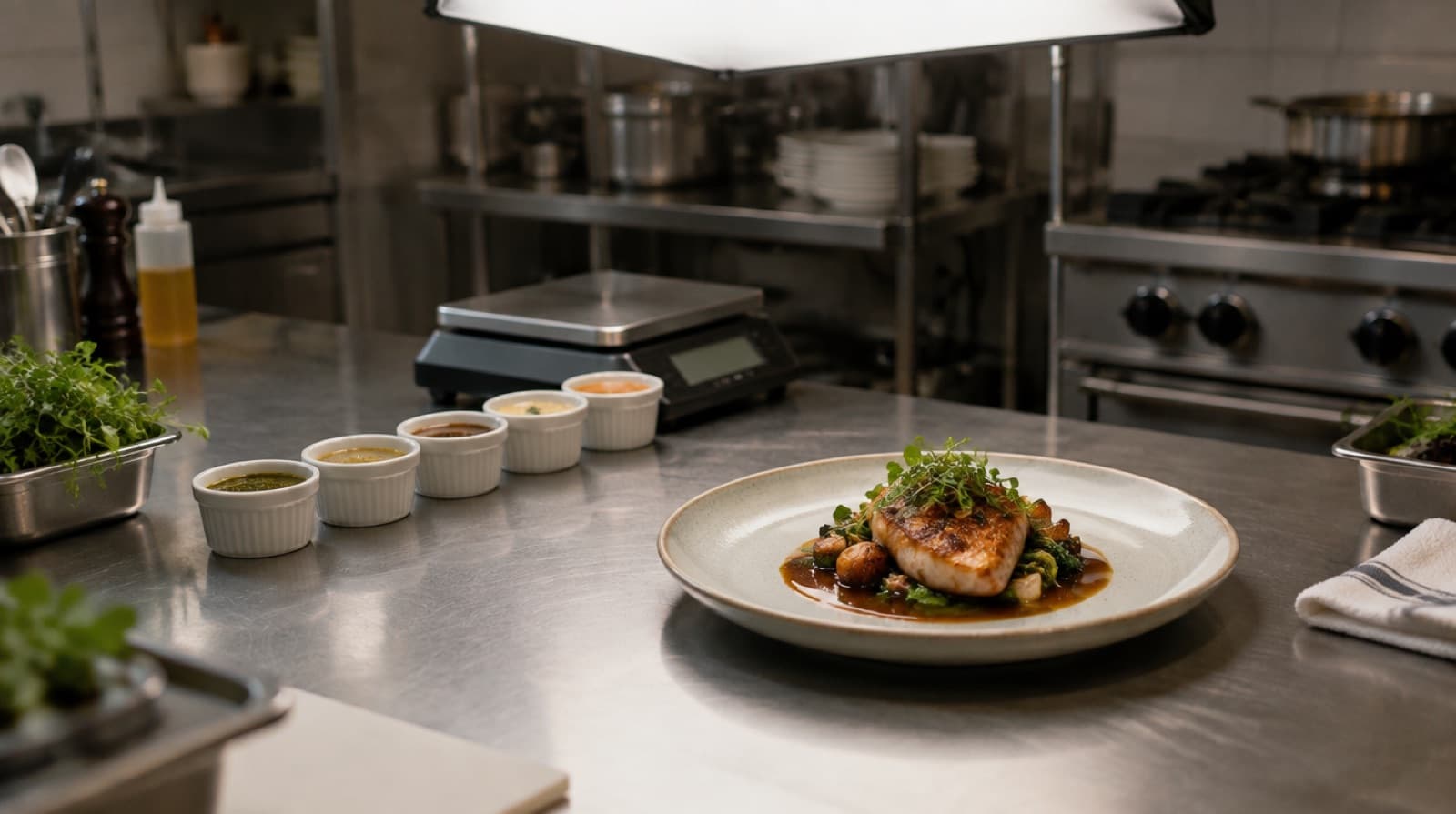
A development chef creates food that other people will cook. They work out a dish, test it until it works, cost it, write it down precisely enough that a stranger could reproduce it, and then teach it to the kitchens that will serve it. They are not normally in charge of a service or a brigade.
That separates them from the rest of the senior kitchen. A head chef creates dishes for the kitchen they run. An executive chef oversees several kitchens and is responsible for their standards. A development chef sits alongside both, and their output is recipes, specs and training, not plates on a pass.
Who employs them
- Restaurant, pub and hotel groups, who need new menus for many sites on a seasonal cycle.
- Food manufacturers and ready meal producers, where a dish has to survive scaling up, chilling, packaging and a shelf life.
- Supermarkets and food brands, where the chef works with technologists on products sold under the retailer’s name.
- Contract caterers, who run standardised menus across many client sites.
- Food service suppliers, who hire chefs to show kitchens how to use their products.
The job is quite different depending on which. In a restaurant group, the test is whether the dish works on a Saturday night at the smallest site. In manufacturing, it is whether it still tastes right after a production run and several days in a fridge.
What a menu cycle looks like
- 1The brief: a new season’s menu, a price point, a gap in the range, or a dish that is selling badly and needs replacing.
- 2Research and first versions: eating out, reading, talking to suppliers about what is in season and what can be supplied consistently at the volume needed.
- 3Testing: cooking each dish many times, adjusting, and cooking it again on the equipment the real kitchens actually have, not the best equipment in the test kitchen.
- 4Costing and specification: exact weights, yields, method, holding times, allergens, and a photograph of how the plate should look.
- 5Tasting and sign-off with operations, finance and senior chefs, which usually sends some dishes back to testing.
- 6Launch: training packs, visits to kitchens, cooking alongside the chefs, and fixing whatever breaks in the first week.
Hours are more regular than most kitchen jobs, often daytime during the week, but launches bring early starts, travel and long days on site. The pressure is a deadline rather than a ticket rail.
Why a business hires one
A single restaurant almost never needs a development chef. Its head chef develops the menu as part of running the kitchen. The role becomes useful once a group has enough sites that writing dishes is a job in itself, and the head chefs in each kitchen cannot also be responsible for recipes that everyone else must follow.
Signs that point to one: menu launches that take months and still arrive half finished, specs that differ between sites because each head chef wrote their own version, dishes that work in one kitchen and fail in others, or allergen information that nobody is sure is accurate across the estate. For a food manufacturer or retailer, the role is structural. Somebody has to turn an idea into a product that can be made reliably.
Some groups use a consultant chef for a menu launch instead, or ask their executive chef to develop dishes. That works when launches are infrequent. When the menu changes several times a year, a dedicated development chef is usually more consistent.
Their place in the structure
In a group, a development chef usually reports to the executive chef or a food director, and works closely with procurement, marketing and operations. They have influence over head chefs through the specs but rarely line-manage them. In manufacturing they often sit within a product development team alongside food technologists, and report to a development manager.
What separates a good development chef
Plenty of good cooks can invent a dish. The skill that matters here is making it reproducible. A good development chef writes a spec that leaves nothing to interpretation, knows what a line cook on their third week can and cannot do, and designs dishes around the equipment and the prep time the kitchens really have. They cost accurately, and they understand that a dish which hits its margin but slows the pass has failed.
They also communicate. Much of the job is presenting dishes to people who are not chefs and training people who did not ask for a new menu.
How chefs move into it
The usual route is through senior kitchen work: sous chef or head chef, often in a group where the chef was involved in menu changes. Some chefs move across from manufacturing or from supplier roles. A food science qualification helps for manufacturing and retail positions. From development chef the paths lead to head of development, food director, or consultancy.
Advertising for one
The salary, where the test kitchen is, how much travel to sites is involved, and how many menu launches a year. Say whether the role is restaurant, manufacturing or retail development, because a candidate from one may not suit another. Mention the reporting line, and whether launches bring weekend work.
What employers are offering in this category: head chef category pay
The role that usually signs off a development chef’s menus: what an executive chef does
Kitchen jobs with the pay on every one: chef jobs