The kitchen porter: the job that decides whether a kitchen can cook
A kitchen porter runs the pot wash and dish machine, keeps floors and bins safe and puts deliveries away. What a KP does on shift and why a kitchen hires one.
Covers · · 4 min read
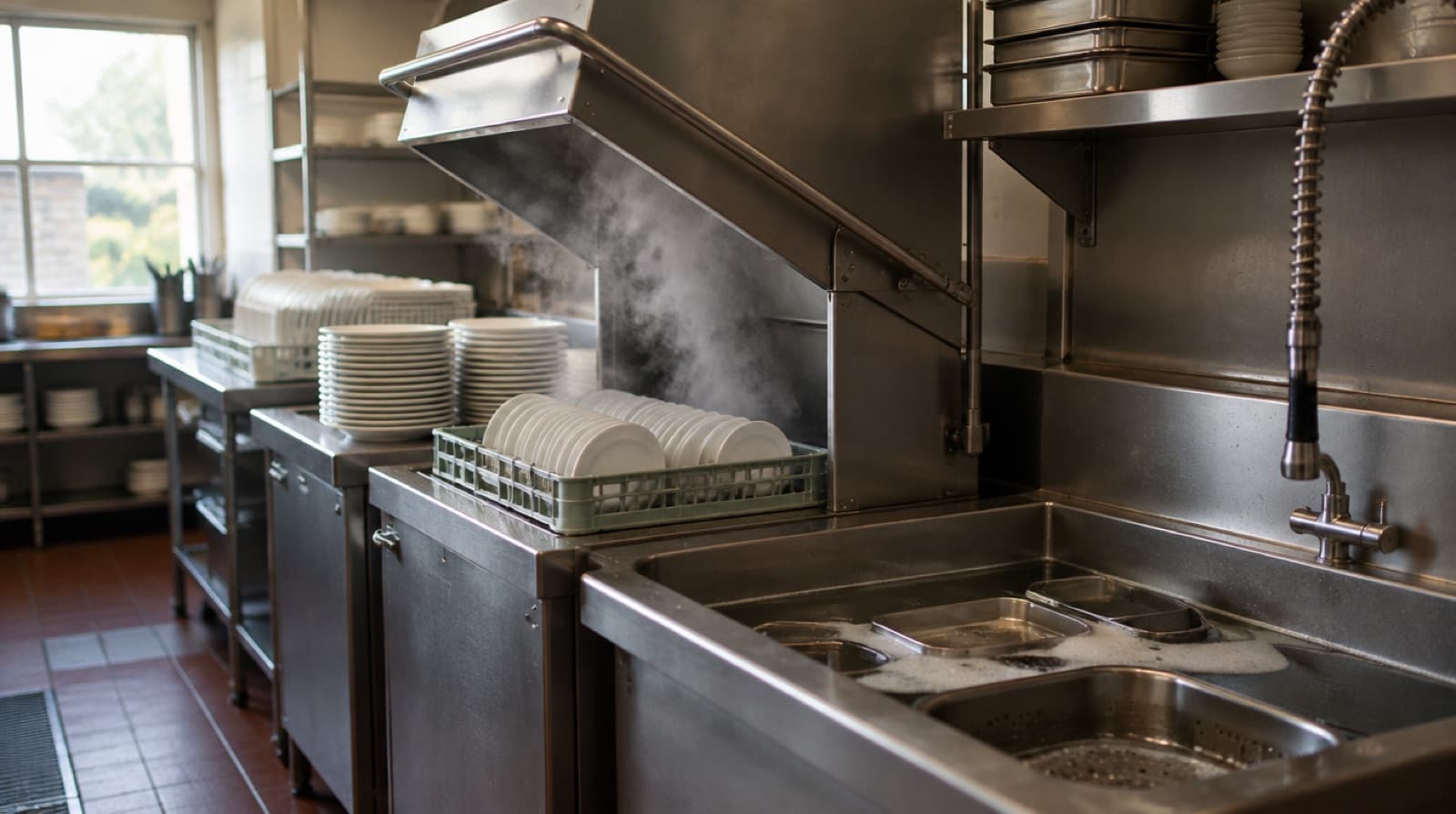
Every chef will tell you the same thing about the KP: when the kitchen porter is good, nobody notices, and when there is no kitchen porter, the kitchen stops. The job is to keep the equipment, the surfaces and the floor clean and moving so that the chefs never reach for a pan or a plate and find it missing.
Inside a shift at the pot wash
A kitchen porter’s station is the wash-up: a dishwasher, often a pass-through machine with a hood that lifts, a deep sink for pots, racks, scrapers and a spray arm. Through service, plates come back from the dining room, get scraped and racked and go through the machine, then back to the pass while they are still warm. Pans, trays and utensils come off the line constantly and need turning around before the chef needs them again.
- Opening: filling and heating the machine, checking chemical levels, setting up the sinks and taking in the early deliveries.
- Through the day: pots, trays, blenders and chopping boards from the prep team, plus floors swept and mopped as the kitchen works.
- Service: plates, glasses in some venues, and the steady flow of pans from the line.
- Bins emptied before they overflow, recycling sorted, cardboard broken down.
- Close: the deep clean. Machine drained and descaled on the schedule, filters cleaned, floors scrubbed, drains cleared, everything left dry for the morning.
Much of the job involves cleaning chemicals, and a kitchen porter should be shown how to use them safely, what protective equipment to wear, and what not to mix. That is a legal duty on the employer, not just a courtesy. Lifting stock, heavy pots and full bins is also part of the work, and it should be done with training rather than guesswork.
The rules on hazardous substances at work: HSE guidance on COSHH
Why kitchens hire a KP rather than sharing the washing up
A chef washing their own pans is a chef not cooking. In a kitchen with more than a couple of chefs, the cost of each of them stopping to wash up during service is plates going out late, and the washing up still does not get done properly. A kitchen porter frees the chefs to cook and means the kitchen is hygienic at the end of the night rather than just tidy.
The signs a kitchen needs one, or another one: service slowing because clean plates run out, chefs finishing late every night because the close-down cleaning falls to them, dirty equipment building up across the day, and a floor that nobody has mopped since lunch. A very small operation, say a café with one cook and a domestic-style dishwasher, may get by with the team sharing it. Anything busier needs a porter on every service.
Where the KP sits in the brigade
The KP answers to whichever senior chef is running the kitchen, and in a large kitchen to a head kitchen porter who runs the rota, orders chemicals, and trains new porters. They work with every section and hand over to the next shift’s porter, or leave the kitchen ready for the morning team. In hotels and big restaurants there may be several porters, split between the plate wash and the pot wash.
What makes a good one
Reliability first. A kitchen can cover a missing chef by moving people around; covering a missing porter means a chef leaving their section. After that, it is speed, a sense of order, and awareness: seeing that the grill is about to run out of trays before the grill chef shouts, and clearing a spill before somebody slips. A great KP learns the kitchen well enough to anticipate its rhythm and keeps the whole back of house calmer as a result.
A job with no experience needed, and a route out of it
Kitchen porter is a classic first job in hospitality and needs no experience at all. Plenty of chefs started there, picking up prep jobs when the wash was quiet and moving to commis when a head chef noticed. Others become head kitchen porters in large operations, running a team of their own, or move into kitchen assistant and catering roles.
The role alongside, with more food prep in it: what a kitchen assistant does
In the job advert
State the hourly rate, the shift times including how late the close usually runs, and whether shifts are split. Say whether the KP gets a share of the tronc, because back-of-house staff are sometimes left out and a candidate will want to know. Say whether meals on shift are included and whether there is transport help after a late finish.
What kitchens are paying porters and assistants: kitchen support pay
Porter roles open now: kitchen porter jobs