Kitchen assistant: a bit of everything, and the reason it exists
A kitchen assistant preps, serves, cleans and keeps a small or institutional kitchen running. What the job involves and how it differs from a kitchen porter.
Covers · · 5 min read
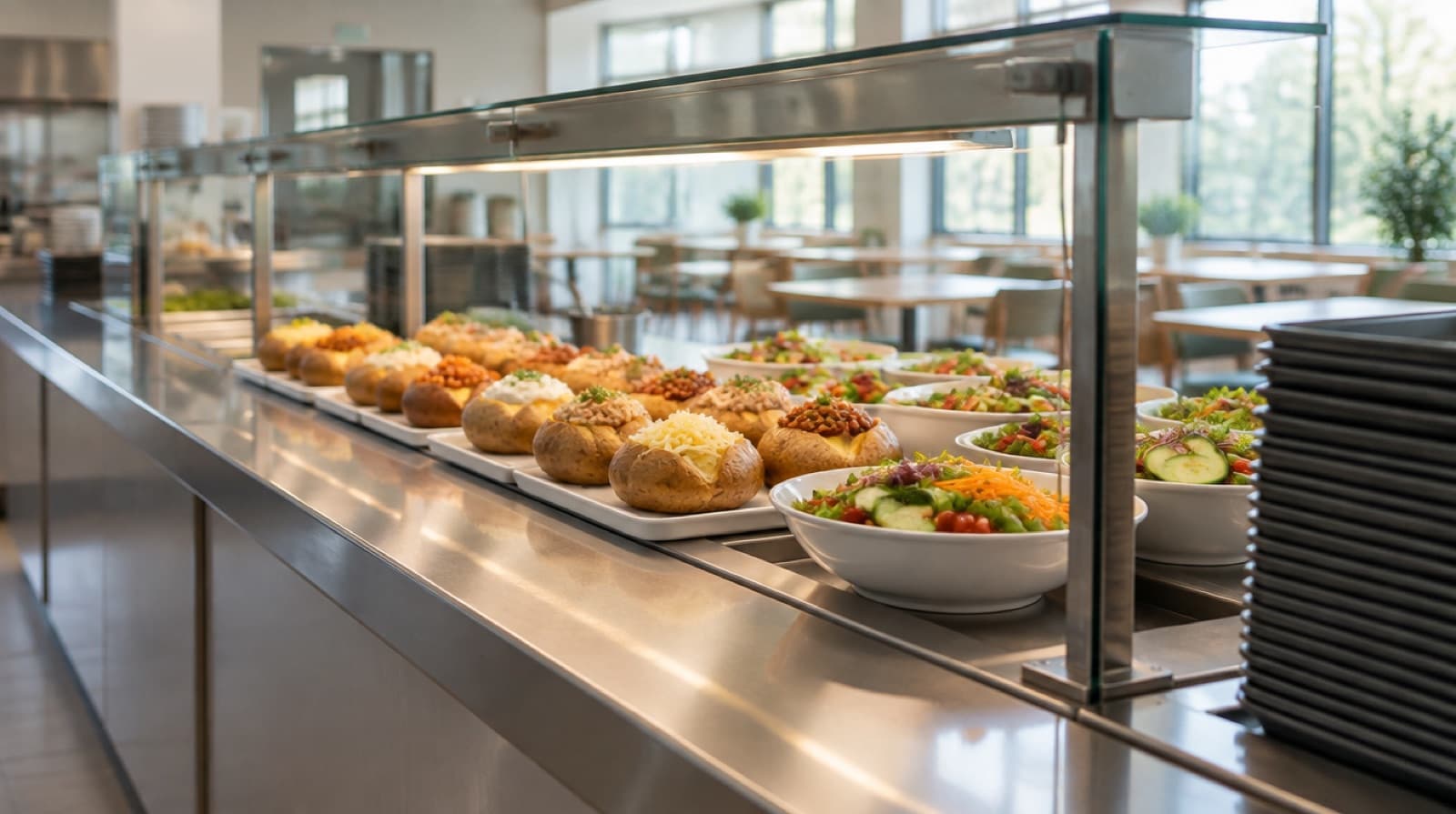
Kitchen assistant is the job title that covers the widest spread of work in a kitchen. In a restaurant it can mean a kitchen porter who also preps. In a school, a care home, a hospital or a staff canteen, it often means the person who prepares simple food, serves it across a counter, keeps the area clean and does the washing up, sometimes all within one shift.
What ties it together is that the kitchen assistant supports the cook or chef rather than running a section. They are the second pair of hands that makes a small team work.
The work, setting by setting
In a restaurant or pub
Vegetable prep, making up salads and garnishes, portioning desserts, basic cooking such as chips and toast, and a share of the washing up and cleaning. In a pub kitchen with one chef, the kitchen assistant may plate starters and desserts during service so the chef can focus on mains.
In a school, care home or workplace canteen
Here the kitchen assistant is often the catering assistant: helping the cook prepare meals to a fixed menu, setting up the servery, serving portions across the counter, managing the queue, clearing tables and cleaning down afterwards. Hours usually follow the institution, so a school kitchen works term-time daytimes and a care home kitchen runs seven days on early and late shifts.
Institutional settings carry heavier responsibility around special diets and allergens than people expect. A kitchen assistant serving in a care home may be handing out texture-modified meals for residents with swallowing difficulties, and in a school they are checking that a child with an allergy receives the right plate. Getting that right depends on knowing the system and following it every time.
What the law requires of food businesses on allergens: Food Standards Agency guidance
Kitchen assistant or kitchen porter
In practice the two blur, and some kitchens use the titles interchangeably. The distinction, where one is drawn, is that a kitchen porter’s centre of gravity is the wash-up and cleaning, while a kitchen assistant’s is food: preparing it, serving it and handling it safely. A restaurant hiring someone mainly to run the dish machine should call it a porter job. A canteen hiring someone to prep and serve should call it an assistant job. Getting that right in the advert saves both sides a wasted interview.
What a venue gains by hiring one
The kitchen assistant exists for kitchens that are too small for a brigade but too busy for one cook. The signs are a lone chef who cannot plate, prep and wash up all at once through a lunch service, a servery where the queue backs up because nobody is on the counter, or a care home cook spending half the day on cleaning instead of cooking.
A venue does not need a kitchen assistant if the cleaning is the real problem and the cooking is under control; that is a porter. Nor if the gap is skilled cooking during service; that needs a commis or a chef de partie. The kitchen assistant fills the middle: food-handling tasks that do not need a trained chef but do need care.
Who they answer to
In a restaurant, the head chef or sous chef. In contract catering, the cook or catering manager on site, who in turn answers to the contract company and the client. Kitchen assistants rarely manage anyone, though in a larger site a senior kitchen assistant may lead the counter team on a shift and train new starters.
The difference between fine and very good
- Following the menu spec and portion sizes exactly, especially where portions are costed or tied to a diet plan.
- Keeping food safety records accurately: fridge temperatures, hot-hold checks, cleaning schedules signed.
- Being pleasant across a counter, which in a school or care home matters as much as the food.
- Seeing what needs doing next without being asked, and doing the dull jobs properly.
Getting started, and what it leads to
It is an entry-level job. Some employers ask for or pay for a food hygiene certificate, and training on the job is normal. The daytime and term-time patterns suit parents and people fitting work around study. From kitchen assistant, people move into cook roles in contract catering, into commis roles in restaurants, or up to catering supervisor and site manager.
Putting it in an advert
Give the hourly rate, the hours and the pattern: term-time only, weekends, early or late. Say what the setting is and what the balance is between food prep, serving and cleaning. If it involves special diets or serving vulnerable people, say so and say whether a background check is required.
What venues are advertising for kitchen support roles: kitchen support pay
The role most often confused with this one: what a kitchen porter does
Kitchen assistant and porter jobs: see the listings