Head waiter: still carrying plates, now answerable for the whole floor
A head waiter runs the dining room on a shift: the floor plan, the briefing, the pace against the kitchen and the hard tables. What the job is and who needs one.
Covers · · 5 min read
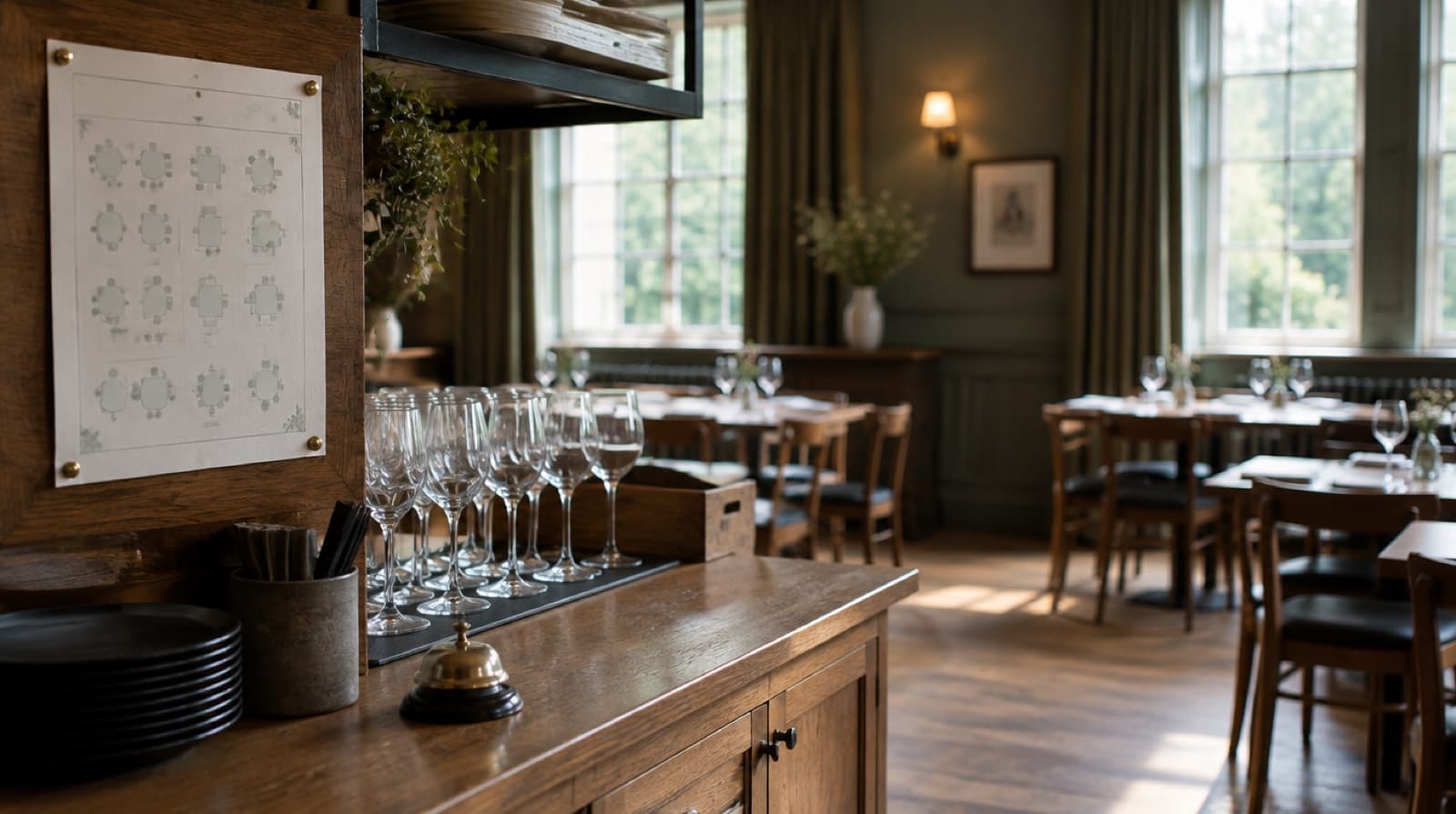
A head waiter is a senior member of the waiting team who takes charge of the dining room during service. The title is old-fashioned and still in use, particularly in hotels and traditional restaurants; in more casual places the same job might be called floor supervisor. What distinguishes it is that the head waiter usually still serves, often looking after the most important tables, while also directing everyone else on the floor.
The shift, from the head waiter’s side
Before service, the head waiter goes through the bookings and builds the floor plan: which tables go to which waiter, where the large party is seated so it does not swamp one section, where the regulars and the anniversary go, and who is on the bar and the door. They check the room is laid to standard, then run the briefing: numbers, specials, anything off the menu, allergies on the book, and who is doing which side job.
During service they watch the room as much as their own tables. The head waiter is the one who notices that section three is drowning while section one is quiet, and moves a runner across. They talk to the pass, telling the head chef that table twelve is lingering over starters so mains should wait, or that a big table is about to order all at once. When a guest complains, the head waiter is usually the first person senior enough to deal with it.
- Reallocating tables when walk-ins arrive or a waiter falls behind.
- Keeping the timing between the floor and the kitchen, so the pass is neither flooded nor idle.
- Handling complaints, comps and awkward requests before they need a manager.
- Carving, flambéing or finishing dishes at the table in restaurants that still do guéridon service.
- Checking the room at the end of the night, signing off side work, and passing notes to the manager.
What problem the role solves
Once a dining room is large enough that no single waiter can see all of it, somebody has to. Without that person, the manager ends up on the floor running tables and stops managing, or nobody coordinates and the room splits into separate sections with no sense of the whole. A head waiter provides a pair of experienced eyes on the room without the cost of another manager.
Signs a venue needs one: the restaurant manager spends every service carrying plates, new waiters get thrown in with nobody to train them, complaints get escalated because no one on the floor feels able to deal with them, or the kitchen complains that tables are called in bunches. A small restaurant with a hands-on owner at the door may not need a head waiter at all, because the owner does the job. A venue with a strong supervisor in place probably has the role already under a different name.
Between the waiters and the manager
The head waiter reports to the restaurant manager or, in a formal restaurant, the maître d’. They lead the waiters, runners and commis waiters on their shift, and often train new starters in the house standards. The handover works in both directions: the manager briefs them before service, and they report back afterwards on what went wrong, who was good, and what needs fixing before tomorrow.
The role above the head waiter in a formal dining room: what a maître d’ does
The difference between a good one and a senior waiter with a title
An adequate head waiter is a strong waiter who has been there longest. A good one has made the shift from doing to directing: they see problems early, spread the load fairly, keep their temper with the kitchen, and make the waiters around them better. They know the menu and the wine list better than anyone else on the floor and teach it. They are also fair about tronc, side work and section allocation, which decides whether a team trusts them.
Menu knowledge extends to allergens: the head waiter is often the person a waiter asks when they are unsure, so they need to know how the kitchen handles each allergen and never guess.
Getting there and moving on
Head waiters come up from waiting, usually after spending enough time in one place to know it inside out, or by moving to a new restaurant into the senior role. From head waiter the path runs to assistant restaurant manager or restaurant manager, or into a maître d’ role in a formal setting.
Advertising for one
Give the pay and say whether it is salaried or hourly, the hours, and how tips and service charge are shared, including whether the head waiter receives a larger share. Say how many covers the room does and how big the team is, because a head waiter running a handful of waiters is doing a very different job from one running a large team.
What venues are advertising for front of house: front of house pay
Waiting and floor roles: waiter jobs