Why some dining rooms still have a maître d’, and what the job is
The maître d’ runs the dining room from the door: the book, the seating, the pace of the kitchen and the regulars. What the role involves and who needs one.
Covers · · 5 min read
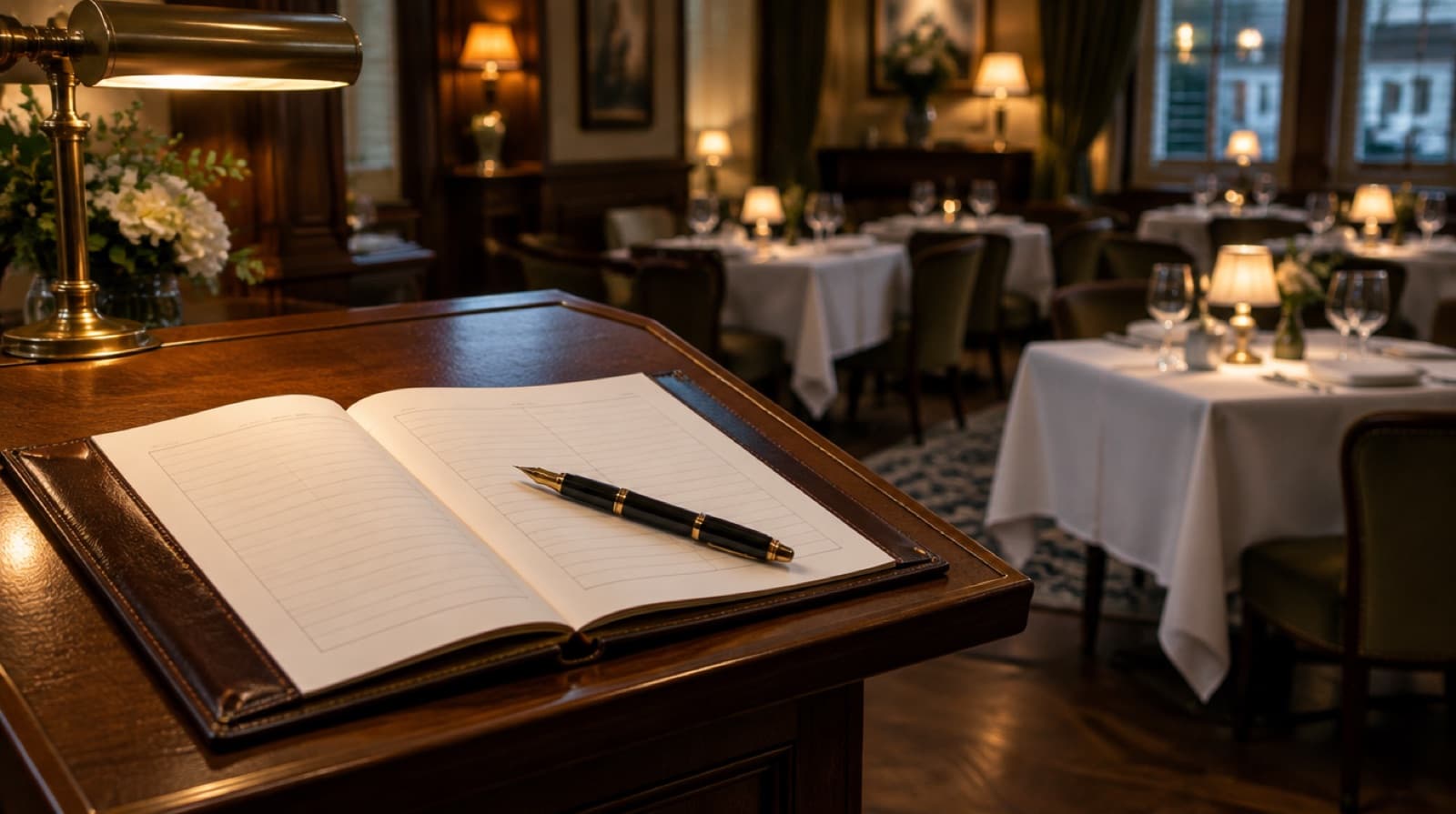
The title comes from maître d’hôtel, master of the house, and in a restaurant it means the person who owns the dining room during service. Where a host manages the door, the maître d’ manages the room: who sits where, when, and how the evening feels to every table in it.
It is a senior front of house role, found mostly in larger and more formal restaurants and in hotel dining rooms. Casual restaurants rarely use the title, even where somebody does part of the job.
The shape of a night
A maître d’s day often starts before the team arrives, with the reservations for the evening. They read every booking, recognise the names that matter, check the notes for allergies and occasions, and build the seating plan: which regular gets which table, where the large party goes so it does not swamp one section, which two tables should not be next to each other.
At the briefing they tell the floor who is coming, what to know about them, and what the kitchen is short of. Then they take the door, or stand just inside it, and run the evening from there.
Much of what they do in service is invisible. They pace the arrivals so the kitchen is never hit with a dozen orders at once. They hold a table back for a regular who always arrives late. They see a table waiting too long and send somebody over before the guest looks around. When a complaint needs a senior person, it is often theirs to take, and a good maître d’ resolves it before the guest has finished describing it.
What problem the role solves
In a certain kind of restaurant, the room is part of what the guest is paying for. They expect to be recognised, seated well, and looked after without having to ask. That experience depends on somebody who holds the whole room in their head, and it is hard to deliver if the restaurant manager is also doing the rota, the stock and the payroll.
A venue tends to need a maître d’ when:
- The regulars matter commercially and expect to be known by name, as do the people they bring.
- The dining room is large enough, or split across enough spaces, that seating decisions shape the kitchen’s whole night.
- Service is formal enough that a guest notices who greets them and how.
- The restaurant manager is spending service in the office, or at the door, rather than across the floor.
A neighbourhood bistro does not need one. A host and a strong supervisor cover the door and the floor between them, and the manager knows the regulars anyway. In some restaurants the restaurant manager is the maître d’ during service and does the office work in the afternoon, which is a perfectly workable arrangement at the right size.
Its place in the hierarchy
The maître d’ usually reports to the restaurant manager or general manager, and in some restaurants holds equal rank with the restaurant manager, dividing the floor from the office. They direct the hosts and reservations team, often the head waiters, and in practice everybody on the floor during service. Their counterpart in the kitchen is the head chef, and the relationship between those two sets the rhythm of the night: the maître d’ decides when tables sit, and the kitchen lives with the consequences.
What distinguishes a good one
Memory is the part everybody notices: names, faces, the preferred table, the wife’s birthday last year, the wine a regular ordered on their last visit. The part fewer people notice is sequencing. A good maître d’ can look at the book and see where the evening will go wrong at nine o’clock, and rearrange it at six so it does not.
Discretion matters too. Guests at this kind of restaurant include people who would rather not be talked about, and the maître d’ is the person who decides what the staff are told and what they are not. An adequate maître d’ seats people politely. A good one makes each table feel it got the best seat in the house, including the tables that did not.
The route in
There is no direct entry. People arrive from years on the floor, typically as head waiter or senior host, sometimes via reservations or a sommelier role, in a restaurant with the same kind of service. From maître d’, the natural next steps are restaurant manager, general manager, or a guest relations role across a group or a hotel.
How to advertise it
State the salary, the service pattern and how many covers a busy night does. Say who the role reports to and whether it includes the reservations team. Say how the maître d’ shares in the tronc. Senior floor people compare adverts on the detail, and a vague advert for this job reads as a venue that has not decided what it wants.
What venues advertise for front of house: front of house pay
The role that works the door with them: what a restaurant host does
Senior floor jobs and more: restaurant jobs