The restaurant host: the door, the book and the shape of the room
What a restaurant host or hostess does at the door, how seating decisions shape a service, when a venue needs one, and where the job can lead.
Covers · · 5 min read
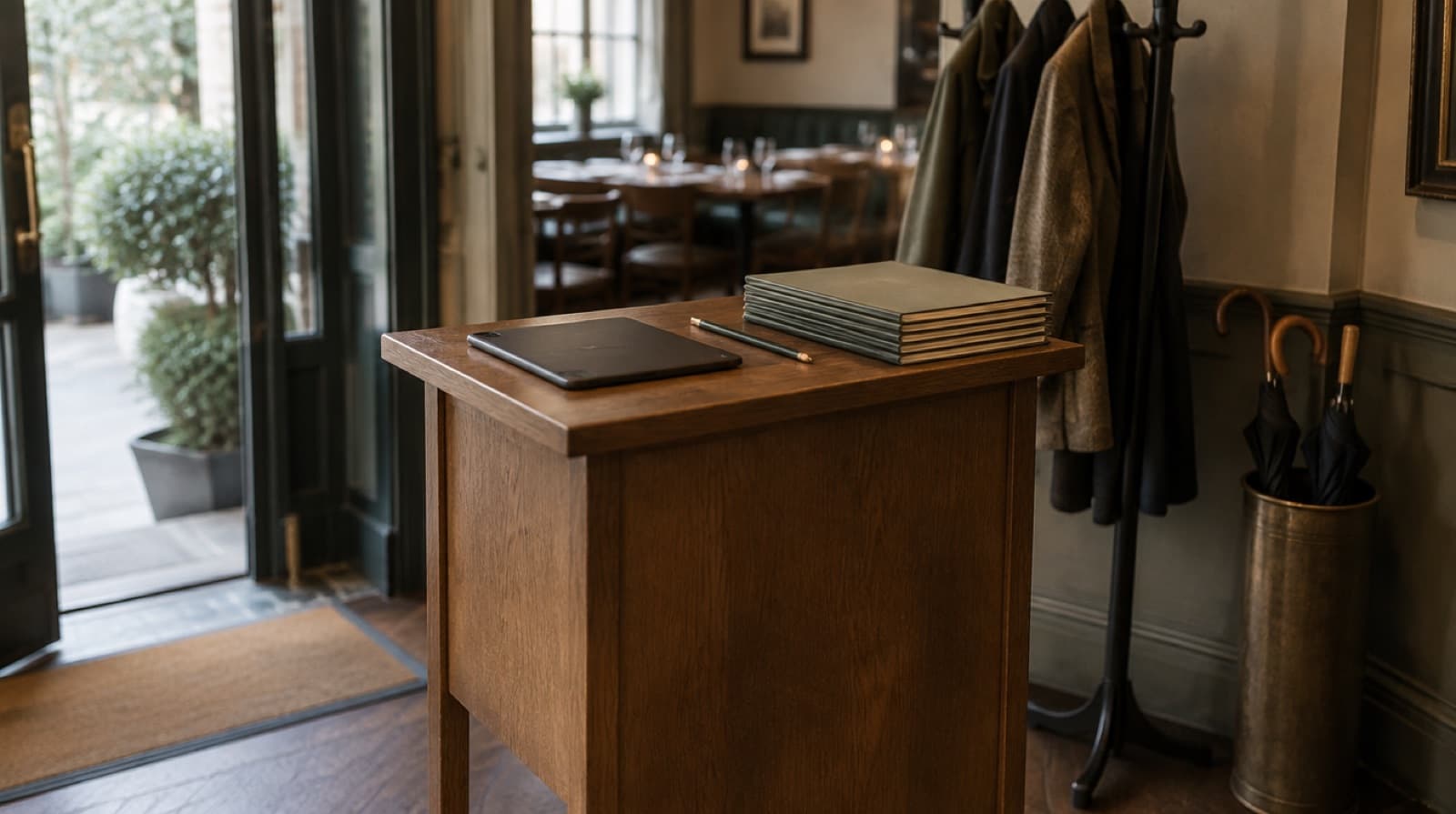
The host is the first person a guest meets and the one who decides where they sit. It looks like the lightest job on the floor. In practice every seating decision a host makes shapes the next two hours for a waiter, the kitchen and the guest, and a bad run of them can wreck a service that was otherwise going well.
At the stand
A host works from the stand by the door, usually with the booking system open on a tablet or screen and a floor plan showing every table. Through a shift they:
- Greet everybody who comes in, booked or not, and take coats and bags.
- Match bookings to tables, checking the notes for allergies, high chairs, birthdays or a request to sit away from the kitchen.
- Fit in walk-ins where there is space, and give an honest wait time where there is not.
- Keep a waiting list and call people back from the bar when their table is ready.
- Answer the phone and take bookings for later in the week.
- Mark tables as seated, on mains, paid and cleared, so the plan always shows the room as it actually is.
- Say goodbye, hand coats back, and notice who left unhappy.
Shifts follow service, so evenings and weekends, sometimes lunches. The busiest moments are the first hour of dinner, when bookings and walk-ins arrive at once, and the turn, when one sitting is leaving and the next is standing at the door.
Seating is a job, not a formality
The obvious way to seat a room is to fill the nearest empty table. It produces a bad night. Two large tables seated in one waiter’s section within minutes of each other means one waiter drowning while another stands idle. Six tables sat at once means six orders hitting the kitchen together and a long wait for everybody.
A host rotates through the sections so each waiter gets tables at a pace they can handle, and staggers arrivals so the kitchen gets orders in a steady stream. They also know which tables turn quickly and which do not, so a walk-in is not told twenty minutes when the table they need has only just ordered its mains.
When a venue needs a host
A small restaurant manages without one. A waiter near the door greets people, and the manager handles the book. That starts to fail when the door is left unattended at the busiest moment, because the waiter covering it is also running a section.
The signs are plain: guests standing inside the entrance with nobody acknowledging them, waiters leaving their tables to seat people, walk-ins turned away when there was in fact a table, the phone ringing out during service, and some sections consistently overloaded while others sit quiet. Venues that take a lot of walk-ins, have more than one room, or run a queue outside feel this soonest.
A venue that is booked out every night with no walk-ins may be better served by a reservations role during the day and a supervisor at the door in the evening. A counter-service place does not need a host at all.
Who the host works for
A host reports to the maître d’ where there is one, and otherwise to the restaurant manager or floor supervisor. They do not run a team, but they direct the flow of it, and a good one keeps the supervisor told about who is waiting and which section is stretched. At the table, the host hands the guest to the waiter for that section, ideally passing on anything from the booking notes that matters.
The senior role at the door: what a maître d’ does
What venues value
Warmth is taken for granted. What separates a good host from an adequate one is judgement. An adequate host seats people. A good one quotes wait times that turn out to be true, remembers the regular who likes the corner table, spots the booking for a birthday and tells the waiter, reads which tables are close to paying, and keeps a calm face while a queue builds and a guest with no booking insists they made one.
Honesty matters here more than people expect. A guest told the truth about a long wait will often stay at the bar. A guest told five minutes who waits much longer tends not to come back.
Starting points and next steps
Hosting is often a first job in hospitality, and it suits people who are organised and good with strangers. From there, hosts move into waiting, reservations, or towards maître d’ and supervisor roles. The knowledge a host builds of how a room fills and empties is exactly what a manager needs later.
What an advert should say
The hourly rate, the shifts, whether hosts share in the tronc and on what basis, and which booking system the venue uses. If the job includes daytime reservations work as well as the evening door, say so, because they are different days.
Pay across front of house roles: front of house pay
Restaurant jobs, with the pay stated: restaurant jobs
How tips must be shared: what the tipping law requires