Dough, fire and a wooden peel: the pizza chef explained
A pizza chef makes and ferments the dough, then stretches, tops and bakes to order in a wood-fired or deck oven. What the job involves and who needs a specialist.
Covers · · 5 min read
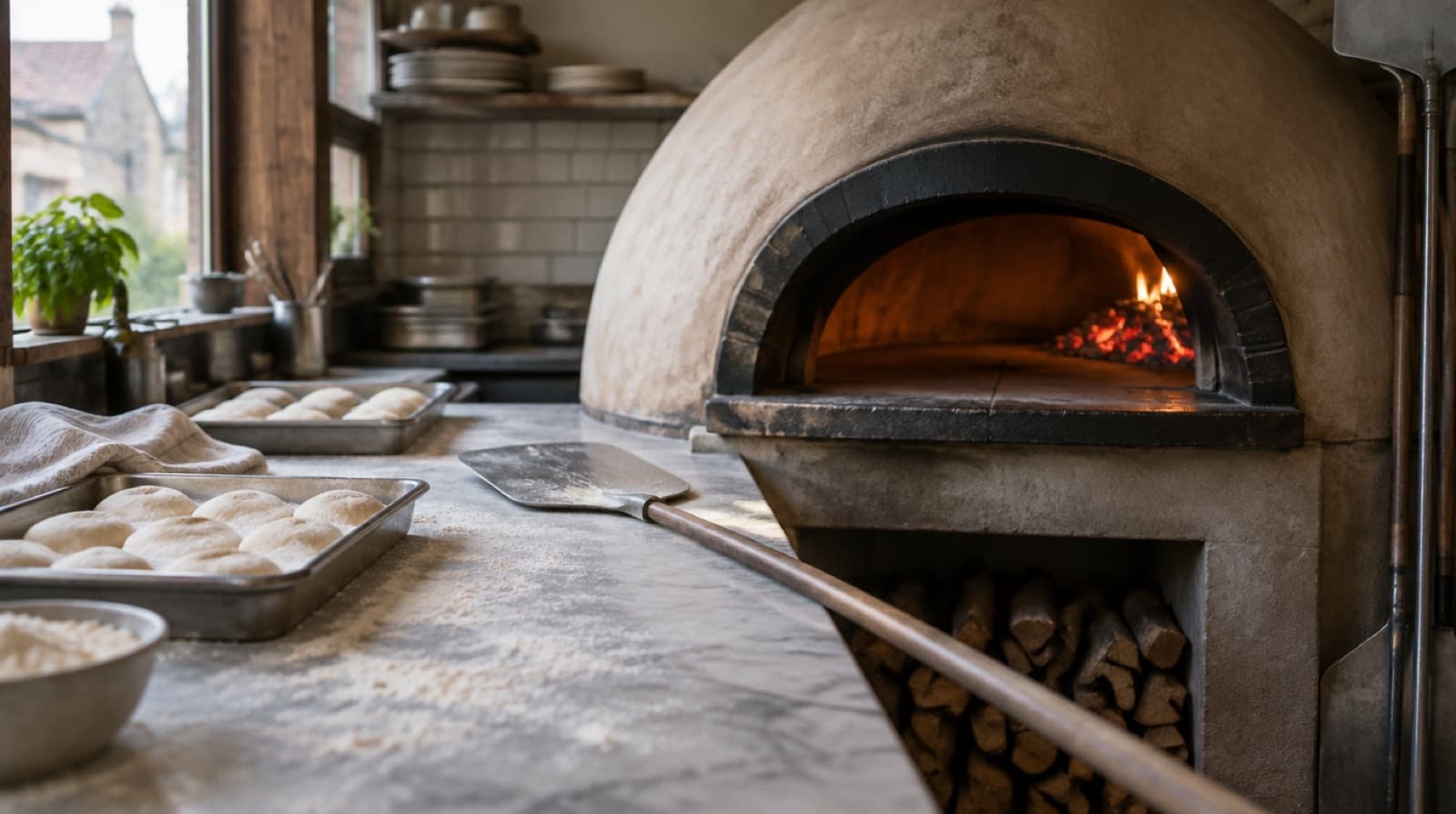
A pizza chef, or pizzaiolo, does two jobs that happen on different days. One is making dough, which is slow, quiet and planned well ahead. The other is baking it in front of customers, which is fast, hot and done one pizza at a time. A pizzeria is only as good as both.
The dough comes first
Dough is where the skill lives. The pizza chef mixes flour, water, salt and yeast or a starter, then controls how long and how cold it ferments before it is balled. A longer, cooler ferment gives flavour and a crust that blisters; too little and the base is dense, too much and the balls slump and tear. Flour strength, the temperature of the room and the water, and how the fridge is behaving all change the result, and the pizza chef adjusts for them.
So a pizza chef is always cooking for a service that has not happened yet. The dough for Saturday night is mixed and balled days before, which means reading the bookings and forecasting how many balls to make. Run out on a Friday and the menu is gone for the evening. Over-make and dough goes in the bin.
At the oven during service
- Stretching each ball by hand on a floured bench, pushing the air out towards the rim without knocking it flat.
- Topping quickly and lightly: tomato, cheese, the rest. Overloaded pizzas stick to the peel and bake unevenly.
- Launching onto the oven floor with a peel in one clean movement.
- Turning the pizza with a smaller turning peel as it bakes so the side facing the fire does not scorch.
- Judging when it is done by the colour of the rim and the spotting underneath, then out, sliced if the house slices, and onto the pass.
In a wood-fired oven the bake is very short, which leaves no margin for looking away. The fire has to be fed through service to hold the heat, and the floor cools where pizzas have sat, so the pizza chef moves each one to a fresh patch of stone. Deck ovens and gas-fired ovens are more forgiving and slower, and suit a longer menu; conveyor ovens need very little judgement at all, which is why chains use them.
Opening the oven means lighting it well before service so the dome and floor soak up heat. Closing it means letting it burn down, clearing ash safely and brushing the floor. Fire safety around a solid-fuel oven, and allergen control on a bench covered in flour, are both part of the job rather than an afterthought.
Allergen rules for food businesses: Food Standards Agency guidance
Why a place hires a specialist
A restaurant with pizza on the menu can have any chef bake frozen or bought-in bases. A restaurant that sells itself on its pizza cannot. Once dough is made in house and the oven is the centrepiece of the room, the business depends on one set of skills that general chefs do not usually have. Losing the one person who understands the dough is how a pizzeria’s quality drops overnight.
Signs a venue needs a dedicated pizza chef: inconsistent bases from one night to the next, dough running out or being thrown away, a wood oven that is either too cold or burning pizzas, and tickets for pizza backing up while the rest of the kitchen waits. A pub adding a pizza night once a week, or a café with a small electric pizza oven, can usually train an existing cook instead.
Who they work with
In a dedicated pizzeria the head pizzaiolo may effectively run the kitchen, with pizza chefs and a prep cook under them and a kitchen porter keeping trays and peels coming back clean. In a restaurant with a wider menu the pizza chef is one section among several and reports to the sous chef or head chef. Either way the dough schedule gets handed over carefully: whoever mixes the next batch needs to know what is proving, what is in the fridge and when it was made.
What a strong pizza chef brings
Any trained cook can learn to launch a pizza. What separates a good pizza chef is understanding fermentation well enough to fix a batch that is going wrong, and reading a live fire well enough to keep every pizza looking like the photograph on the menu across a long service. Speed matters, and so does working tidily in view of customers: open ovens put the pizza chef on show.
How people get into it
Many start stretching and topping at a pizzeria as a kitchen assistant or junior, and learn dough from the head pizzaiolo. Some come in from bakery, where the understanding of fermentation carries straight over. From there the path runs to head pizzaiolo, to opening new sites for a small group, or to developing the dough and menu across several ovens.
In the advert
Say the pay and hours, and describe the oven: wood-fired, gas, deck or electric. Say whether the dough is made in house and whether the role includes making it, because that is the difference between a pizza cook and a pizzaiolo. If there is a tronc, say how it is shared with the kitchen.
Pay advertised for section and specialist chefs: see the pay page
Open kitchen roles: browse jobs