What a room attendant does between check-out and the next guest
Departures, stayovers, the trolley and the room list: what a hotel room attendant does on shift, how the work is paid, and why hotels hire housekeeping staff.
Covers · · 5 min read
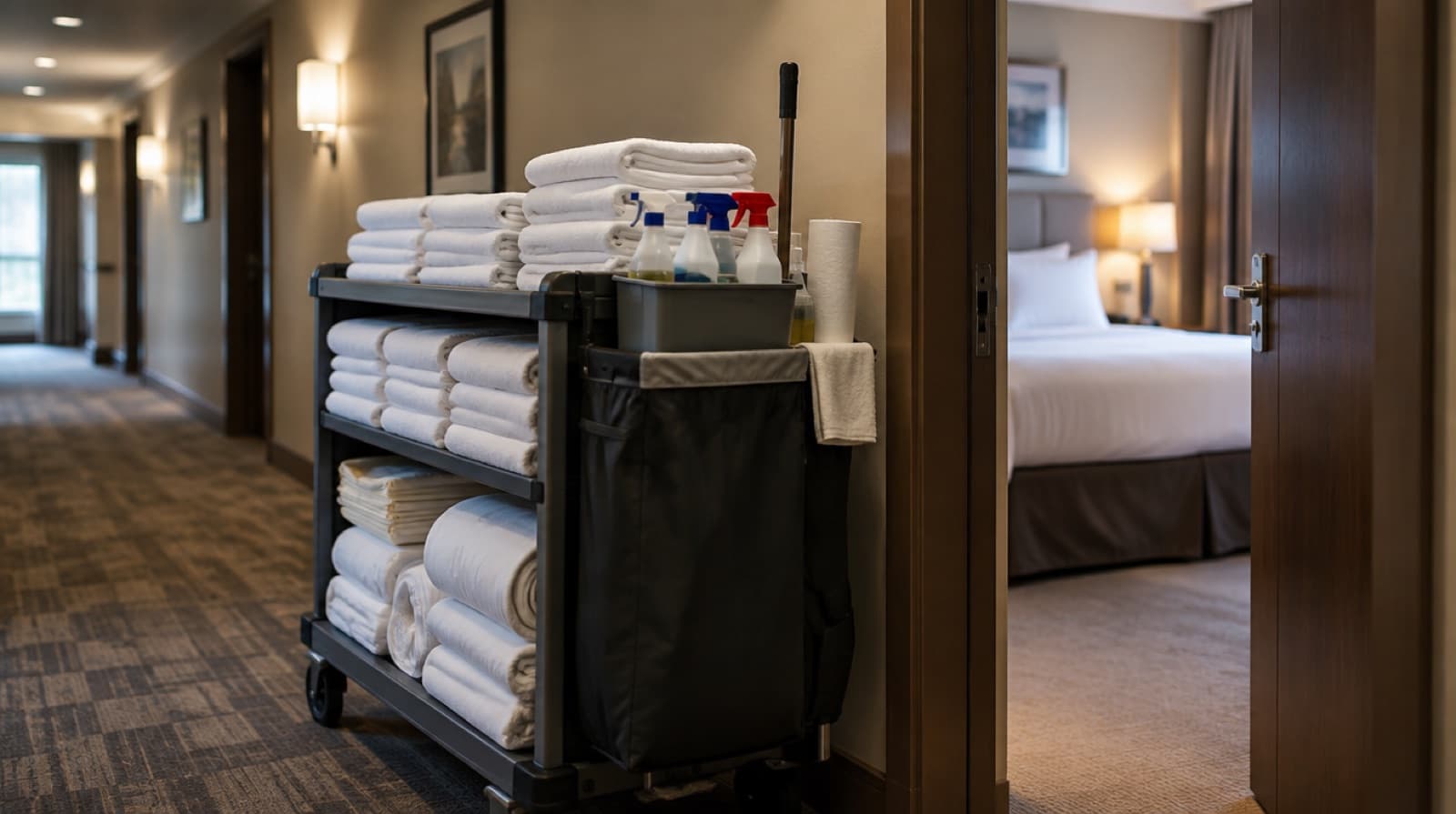
A hotel sells the same room again every day, and the room attendant is the reason it can. Between a guest leaving in the morning and the next one arriving in the afternoon, somebody has to take the room from used to perfect: bed stripped and remade, bathroom cleaned, supplies replaced, every surface checked. That somebody is the room attendant, also called a housekeeper, a room assistant or, in older job titles, a chambermaid.
A shift, from the room list onwards
The day starts in the housekeeping office with the room list: the rooms allocated to each attendant, marked as departures or stayovers. A departure is a full clean for a new guest. A stayover is a lighter service for a guest who is still there, with fresh towels, the bed made, the bins emptied and the bathroom wiped down, done around whatever they have left lying about.
Then the trolley. Linen, towels, toiletries, cleaning products, cloths colour-coded for bathroom and bedroom, a vacuum. The attendant works along a corridor, and a typical departure goes roughly like this:
- 1Knock, announce, and enter only when the room is confirmed empty. A room showing do not disturb is skipped and reported, not entered.
- 2Open the windows or curtains, strip the bed and remove used towels to the linen bag.
- 3Check for lost property, from chargers under the bed to jewellery in the safe, and log anything found.
- 4Clean the bathroom thoroughly: toilet, shower, bath, basin, mirrors, floor.
- 5Remake the bed to the hotel's standard, which is usually specific about how the corners and the pillows look.
- 6Dust, restock the tea tray and toiletries, check the minibar if there is one, vacuum, and look at the room from the door as the next guest will see it.
- 7Report anything broken, from a flickering bulb to a dripping tap, so maintenance can fix it before the room is sold again.
Finished rooms are marked on the system or reported to the supervisor, who inspects them and releases them to reception. The pressure point is the early afternoon, when guests are arriving and reception is asking which rooms are ready.
Pay by the hour or by the room
Some hotels pay room attendants by the hour and set a target of rooms per shift; others pay per room cleaned. Either way, the law says pay must reach at least the minimum wage for every hour actually worked, including time spent waiting for rooms to be vacated or fetching linen. Anyone offered pay per room should ask how the hotel checks that it meets the minimum, and an advert should make the arrangement plain.
Why hotels hire them, and the alternatives
The problem room attendants solve is simple and daily: a room that is not clean cannot be sold, and a guest who finds a hair in the shower will write about it. The number needed rises and falls with occupancy, which is why housekeeping teams often combine contracted staff with people on flexible hours.
A small guest house may not hire anyone: the owners clean the rooms themselves, or bring in a cleaner for a few hours on busy mornings. Some hotels outsource housekeeping to a contract cleaning company and pay per room, which moves the recruitment problem elsewhere but also loses control of the standard. A hotel usually starts hiring its own attendants when rooms are regularly not ready at check-in time, when cleanliness keeps coming up in reviews, or when the owners realise they spend every morning cleaning rather than running the business.
Who they answer to
Room attendants report to a floor supervisor or housekeeping supervisor, who inspects their rooms, and above them to the head housekeeper. They work alongside the linen porter or housekeeping porter who keeps the floors stocked, and the public area cleaners who look after corridors, lobbies and lifts. They hand finished rooms to reception through the supervisor, and hand anything broken to the maintenance team.
What a good room attendant does differently
An adequate attendant cleans the room. A good one sees it as the guest will: the smear on the mirror seen from the bed, the hair on the pillow, the missing coat hanger. They work in a consistent order so nothing is missed on the tenth room of the day, and they are honest about lost property and careful with guests' belongings. Hotels value reliability here as much as anywhere, because a housekeeping team that is one person short on a full Sunday leaves rooms unready at check-in.
The work is physical. Beds are heavy to lift and turn, a shift involves a lot of bending and carrying, and good hotels train their teams in safe lifting and in handling the cleaning chemicals correctly.
Getting started
No experience is required, and training is given on the hotel's standards. It suits people who want daytime hours and like working independently along a corridor. The route up is to floor supervisor, then assistant head housekeeper and head housekeeper, and some attendants move across to reception or other departments once they know the hotel.
What the advert needs
State whether pay is hourly or per room, and the rate. Give the start time and the usual finish, how many days a week, and whether weekends are rostered. Say whether room attendants share in the hotel's service charge through the tronc, and whether uniform and meals are provided.
The current minimum wage rates: National Minimum Wage on gov.uk
What hotels are advertising: hotel and rooms pay
The person who runs the team: what a head housekeeper does