The tandoor chef: one clay oven, a rack of skewers, and every naan in the house
A tandoor chef runs the clay oven: marinated meats on skewers, naan slapped onto the wall, and a fire kept steady all night. What the job is and who needs one.
Covers · · 5 min read
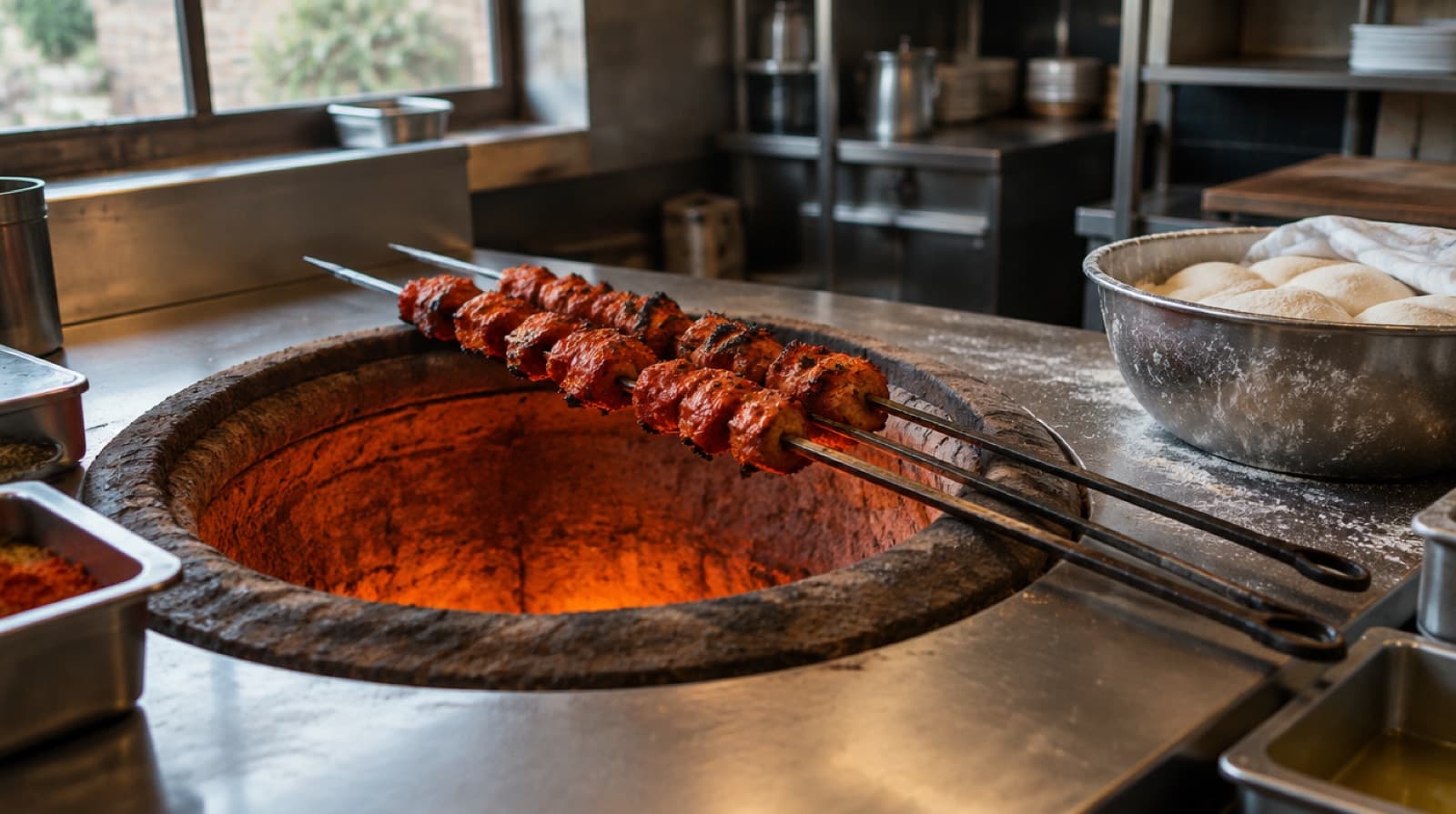
In an Indian or Pakistani restaurant the tandoor is its own station, and in many kitchens it is the busiest one. The tandoor chef runs it: a deep clay oven, fired with charcoal or gas, open at the top, into which meat, fish, paneer and vegetables go on long metal skewers and bread goes straight onto the hot inner wall. Almost every table orders something from it, and most tables order bread, so the tandoor is working from the first ticket to the last.
What the station involves
Before service the tandoor has to come up to heat, which takes time, and the clay needs to be hot all the way through, not just near the fire. A tandoor chef learns how their own oven behaves: where the wall runs hottest, how long it holds heat after the charcoal is fed, how it cools when the lid is off too long. On charcoal the fire is tended through the night; on gas it is steadier but still needs watching.
- Marinades made in advance, often in two stages: an acid and spice first, then a yoghurt-based coating with ginger, garlic and garam masala, left long enough to work.
- Chicken tikka, lamb chops, seekh kebabs pressed by hand onto the skewer from spiced mince, fish and prawns, paneer and vegetables.
- Naan dough mixed and rested, then portioned into balls through the day, plus roti, paratha and kulcha doughs where the menu has them.
- Butter, garlic and coriander, and cheese or keema fillings ready for stuffed breads.
- Tools to hand: skewers, a long hook for pulling breads off the wall, a padded cushion for slapping them on, and heavy gloves.
The rhythm of a busy night
Naan is shaped by hand, stretched over a cushion and pressed against the inside of the oven, where it sticks, puffs and chars in a very short time. The tandoor chef reaches in, hooks it off before it drops into the fire, butters it and sends it. Meanwhile skewers are in the oven, some needing to come out and rest, some needing a baste of butter and a second blast. Timing breads to land with the curries from the main line is the constant challenge, since cold naan is the complaint every Indian restaurant hears.
It is hot, fast and physical. The forearm goes into the mouth of the oven again and again, and a lapse of attention means a burn or a naan lost to the charcoal. A good tandoor chef works in a tight, repeated pattern that keeps them safe as much as quick.
Seekh and other mince on skewers need to be cooked through, and the kitchen’s food safety procedures should cover how that is checked, since a skewer can char outside long before the centre is done.
The written food safety system many small kitchens use: Safer Food, Better Business
Why a restaurant hires a dedicated tandoor chef
The oven is a single point of failure. When bread and grilled starters come from one clay pit, one person who cannot keep up holds the whole restaurant back, however good the curry chefs are. A dedicated tandoor chef lets the rest of the line cook sauces and biryani without stopping to slap naan.
The time to hire is when the chefs on the main line are also covering the tandoor and falling behind at peak, when breads are arriving late or pale, or when a takeaway trade on busy nights has pushed bread orders beyond what someone doing two jobs can manage. A small restaurant with a gas tandoor and a quiet midweek may manage with a cook who covers both stations and brings in a tandoor chef only for weekends. A place without a tandoor at all, using a grill and flat tawa for breads, does not need one.
Where the tandoor chef fits
They report to the head chef, and work next to the curry chefs on the main line, with whoever runs the pass calling tables. Larger restaurants may have a senior tandoor chef and an assistant who makes dough, skewers meat and learns the oven during quieter services. At the end of the night the oven is left to die down, ash is cleared once it is safe, and marinades are started for the next day.
What venues want
Anyone can learn to skewer chicken. What venues want is the fire sense: getting char without dryness, knowing by the colour of the wall when it is ready for bread, and pacing a full oven so nothing is forgotten on the skewer. The best tandoor chefs also make their own marinades and spice mixes and treat the station as their own, keeping it clean and prepped so the night never runs out of dough.
Starting out and moving up
Many tandoor chefs learn as an assistant beside an experienced one, starting with dough and skewering and taking over the oven gradually. Some train in hotel kitchens in South Asia before moving to the UK, and a venue recruiting from abroad has sponsorship and right to work checks of its own to deal with. From the tandoor, the path runs to senior tandoor chef, to a sous chef role across the whole Indian kitchen, and to head chef.
Describing the job in an advert
Say the pay and the hours, whether the oven is charcoal or gas, which breads are on the menu, and whether the role includes making the marinades and dough. If takeaway and delivery orders go through the same tandoor, say so; it changes how busy a Friday is. State how the kitchen shares in tips and service charge.
What venues are paying section chefs: chef de partie pay
What an employer has to check before a chef starts: right to work checks
Open jobs: browse jobs