Barbacks: the job that keeps bartenders at the counter
Ice, glass, kegs and restocking: what a barback does through a shift, why a busy bar hires one before it hires another bartender, and where it leads.
Covers · · 5 min read
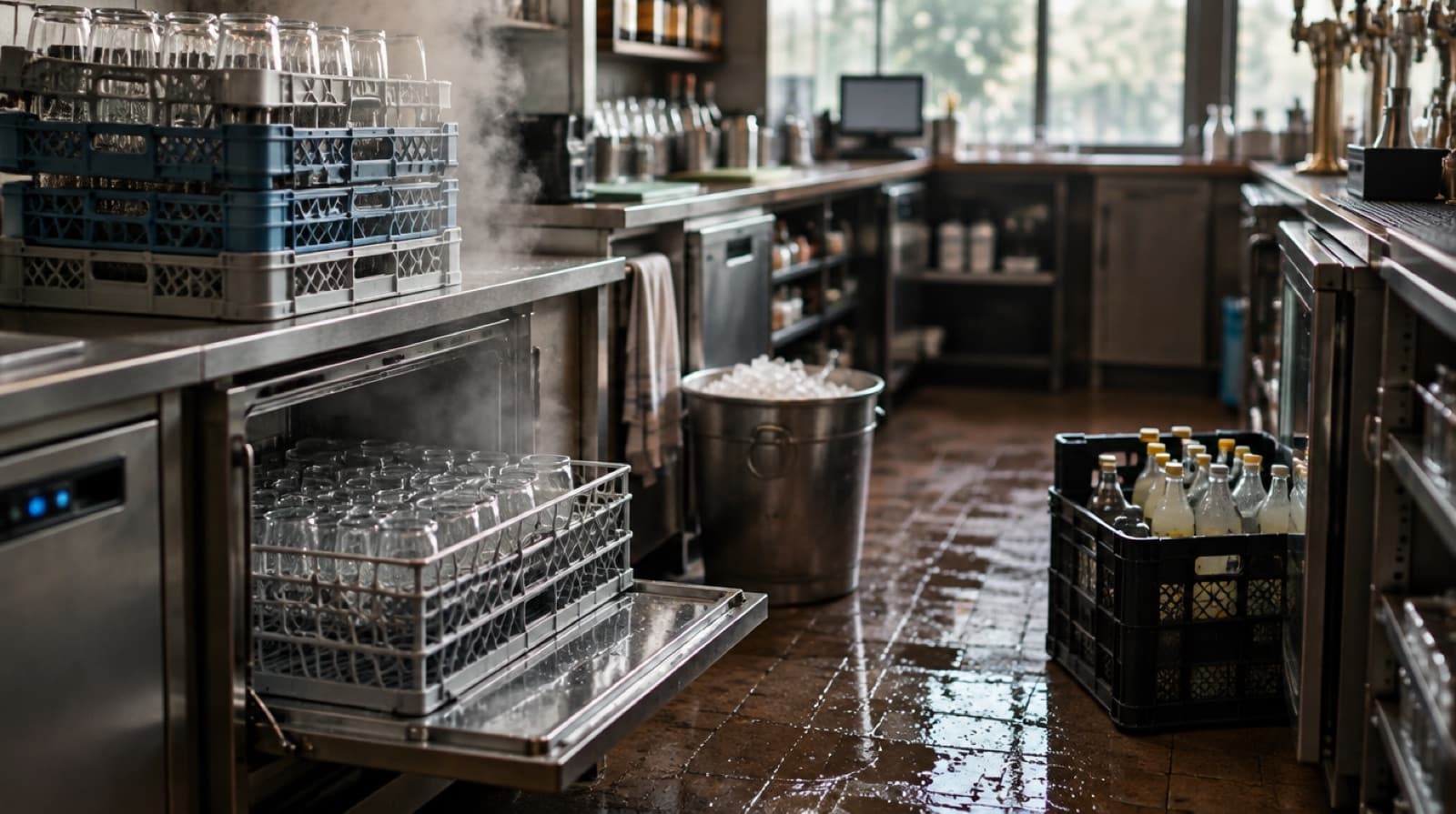
Every minute a bartender spends away from the counter is a minute nobody is taking an order. The barback exists to make those minutes unnecessary. They fetch, carry, restock, wash, change and clear, so that the people serving can keep serving.
It is often described as the entry level of bar work, and it is. It is also the job that decides whether a busy bar feels calm or chaotic, and bartenders who have worked with a good barback tend to remember it.
What fills the shift
A barback’s night is a loop of the same few jobs, reordered constantly by whatever is about to run out.
- Ice. Keeping the wells full from the machine, which on a busy night means carrying heavy tubs through a crowd, and never scooping with a glass.
- Glass. Emptying the glasswasher, racking the clean glasses back where the bartenders reach for them, and collecting the dirty ones from the counter and the tables.
- Stock. Refilling the fridges from the stockroom, bringing up spirits and mixers, and telling the bar supervisor when something is getting low before it is gone.
- The cellar. Changing kegs and gas cylinders when a line runs dry, where the bar allows it and the barback has been shown how.
- Empties. Bottles to the bottle bin, cardboard broken down, and the route between bar and back door kept clear.
- Garnish and prep, where there is time, and a wipe down of the back bar whenever the counter goes quiet.
Shifts follow the bar’s hours, which means evenings, weekends and late finishes. The heaviest part comes at the end: when service stops, the barback is usually the one draining ice wells, running the last glass loads, taking out the rubbish and restocking for the next day.
The problem a barback solves
Picture two bartenders on a Friday. One leaves to fetch ice. While they are gone the other is on their own, the queue grows, and the one who went for ice comes back to a counter they now have to clear before they can serve again. Before long the clean glasses run out and one of them goes to unload the washer. Every trip away breaks the rhythm of the whole bar.
A bar has reached the point of needing a barback when that pattern is regular. The signs are easy to see: bartenders leaving the counter several times an hour, guests waiting at a bar with nobody behind it, drinks served in the wrong glass because the right one has not come back from the washer, a keg running dry at the busiest point of the night.
The instinct is often to hire another bartender. A barback is frequently the better answer, because two bartenders who never have to leave the counter will usually out-serve three who keep leaving it.
A quieter bar does not need one. Where the counter is rarely more than a few people deep, bartenders can restock between customers and a glass collector on the busiest nights covers the rest. Some venues use a floating role across bar and floor for the same reason.
Who they work for
A barback takes direction from the bartenders on shift and reports to the bar supervisor or bar manager. They do not run anybody. In a pub they may also answer to whoever looks after the cellar, since that is where the kegs and gas live. At the end of the night they hand over by leaving the stockroom, the ice machine and the glass shelves in a state the opening shift can use.
What makes a good one
An adequate barback does what they are asked. A good one does it before they are asked. They look at the ice well and the glass shelf every time they pass and fill whichever will run out first. They know where everything lives, so a request for a particular gin does not become a hunt through the stockroom. They move through a crowd with a full ice tub without anybody getting hurt, and they never stand in the bartenders’ way behind a narrow counter.
Reliability matters more here than almost anywhere. A barback who is late on a Saturday leaves a hole the whole bar feels from the first hour.
No experience needed, and where it goes
Barbacks are one of the few bar roles hired without experience. What a bar is really doing is watching somebody learn the building: the drinks, the stock, how the bartenders work. The obvious next step is bartender, often at the same venue, and it tends to come to the barback who has been paying attention to the counter as well as the ice machine.
The advert
Say the hourly rate, the usual finishing time, whether the close is paid until the work is actually done, and whether barbacks share in the tronc on the same terms as bartenders. Say whether there is a route to the bar and roughly how people have taken it. A candidate for this job is often choosing between a barback role and something outside hospitality, and those details are what make the choice.
What bars are advertising: bar pay
The usual next step: what a bartender does
Live listings and the guide to bar work: bar jobs