The bartender’s job, from setting the well to cashing up
What a bartender does on a shift, the point at which a venue needs one behind the bar, what separates a good one, and where the job leads.
Covers · · 5 min read
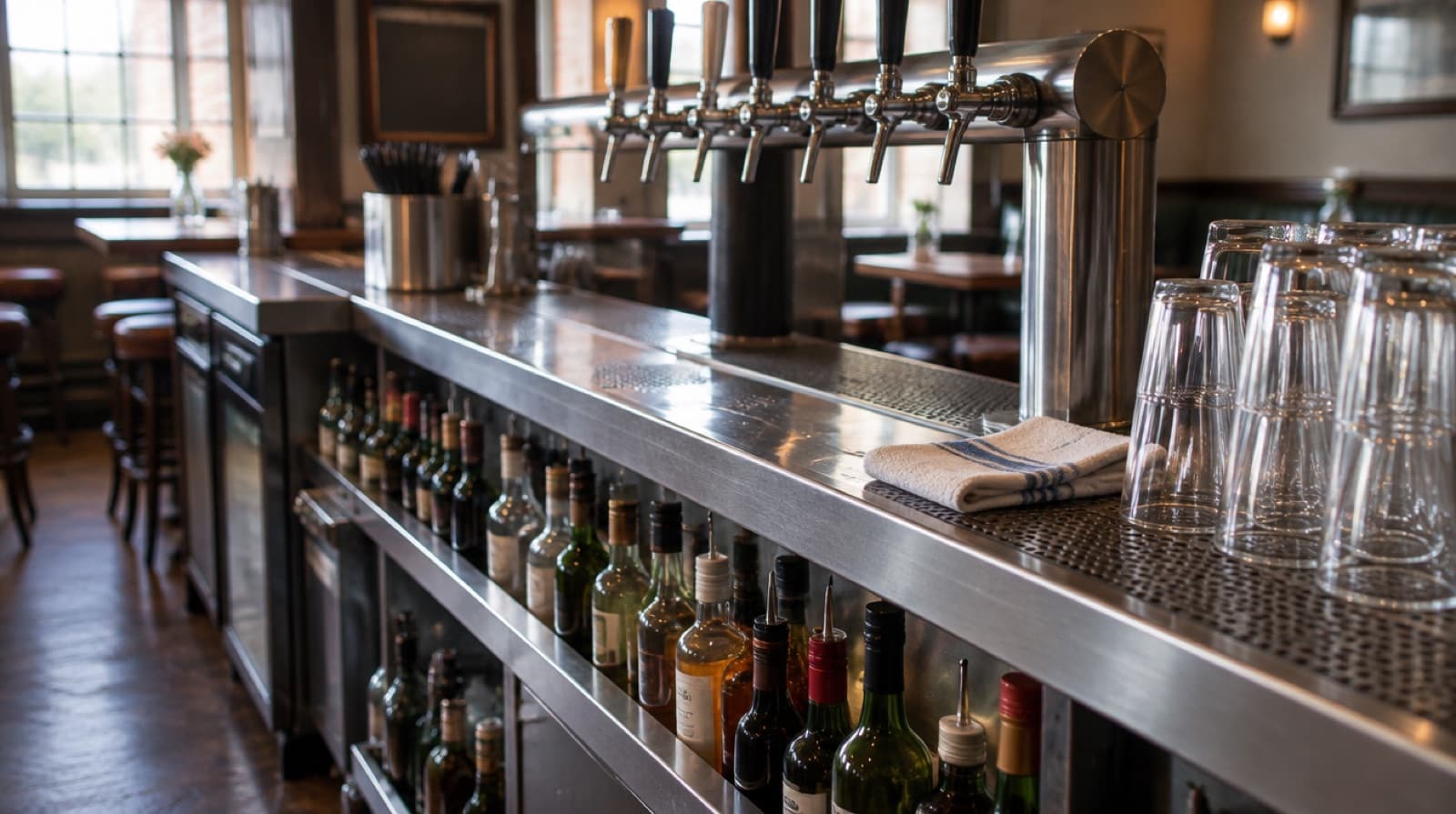
A bartender takes orders, makes drinks and takes payment, which is the part anybody standing at the counter can see. The part they cannot see is that a bar is a small workshop with a queue in front of it, and the bartender is the person who keeps that workshop stocked, clean and legal while serving at speed.
An ordinary shift
Bar shifts usually start in the afternoon or early evening and finish after close, with weekends as the core of the rota. The shape of a shift is roughly the same in a pub, a hotel bar or a restaurant’s dispense bar.
- 1Setup. Fill the ice well, cut the fruit, check the fridges against the par sheet, pull a test pour through each tap, and make sure the glasswasher is up to temperature.
- 2Service. Take orders, pour to the measure, run tabs, take card and cash, check ID when somebody looks under age, and keep a mental queue of who was next.
- 3The late part. Watch for people who have had enough, call last orders, and refuse service politely when it has to be refused.
- 4Close. Drain and clean the drip trays, restock fridges for the morning, wipe the optics and the back bar, run the glasswasher empty, and count the till.
The pressure points are predictable. A keg runs out in the middle of a rush and somebody has to go down to the cellar. A table of eight orders six different drinks. The card machine drops its connection. A drinks ticket from the restaurant arrives while the counter is three deep. A good bartender has an order of work for all of these rather than a reaction to each.
Why a venue puts somebody behind the bar
Plenty of places start without a dedicated bartender. The waiting staff pour their own wine and open their own bottles, and a manager covers the counter on quiet nights. That works until one of three things starts happening.
- Food waits at the pass because the waiter who should be running it is at the bar pouring a round.
- Drinks tickets from the floor back up, and tables finish their starters before their first drink arrives.
- People who came in only to drink stand at an unattended counter and leave, which is revenue walking out without anyone recording that it was ever there.
Any of those means the bar has become a station in its own right and needs somebody who belongs to it. The bartender solves a flow problem first and a sales problem second: once somebody is watching the counter, the second round gets offered at the right moment instead of not at all.
A venue does not need one yet if its drinks list is short, most of it is bottled, and the floor team can serve it without leaving their sections for long. Some places split the difference with a bartender on Thursday to Saturday nights and the floor covering the rest of the week, which is a reasonable halfway point if the advert says so honestly.
Who they answer to, and who they work with
A bartender usually reports to a bar supervisor, head bartender or bar manager, and in a smaller venue straight to the restaurant or pub manager. In a busy bar they work alongside a barback, who keeps the ice, glass and stock coming so the bartender does not have to leave the counter. At the end of the night they hand over to whoever closes, which means leaving the bar in a state where the opening shift can start serving without first cleaning up after somebody else.
The role that keeps a busy bar supplied: what a barback does
Good, and merely adequate
An adequate bartender makes the drinks correctly. A good one does that and also cleans as they go, so the bar at eleven looks like the bar at six. They know who arrived at the counter in which order without being told. They pour to the measure every time, because over-pouring is a margin problem and under-pouring is a legal one. They can describe the draught beers and the house wines in a sentence each, and they can suggest a second drink without it sounding like a script.
The quality that is hardest to train is calm refusal. Telling somebody they will not be served another drink, without an argument and without embarrassing them in front of their friends, is part of the job, and bars notice quickly who can do it.
Selling alcohol is licensed. Anyone serving needs to be authorised by a personal licence holder, and serving somebody who is drunk, or under age, is an offence for the person serving as well as for the venue. Scotland runs its own system with required staff training.
How alcohol licensing works: alcohol licensing on gov.uk
Getting in, and moving on
People come to it from glass collecting, barbacking or waiting tables, and some bars will train from nothing if the attitude is right. From bartender the usual route is bar supervisor, then head bartender or bar manager, where the job becomes ordering, stock counts, margins and the rota. Some go the other way and specialise in cocktails, and some move into the cellar side of a pub or into management across the whole venue.
What the advert should tell a bartender
The hourly rate, the usual finishing time, whether close-down is paid, how the tronc is shared and whether the bar team is in it, and what happens about getting home after the last train. A bartender comparing two adverts will choose the one that answers the finishing time question, because that is the one that decides whether the job is liveable.
What venues are advertising for bar work: bar pay
The guide to bar jobs, with live listings: bar jobs
How tips reach the bar team: tips, service charge and tronc