The breakfast chef: the first shift in the building, and why hotels hire for it
A breakfast chef runs the early service alone: eggs to order, the hot buffet, room service. What the job involves and when a venue needs a dedicated one.
Covers · · 6 min read
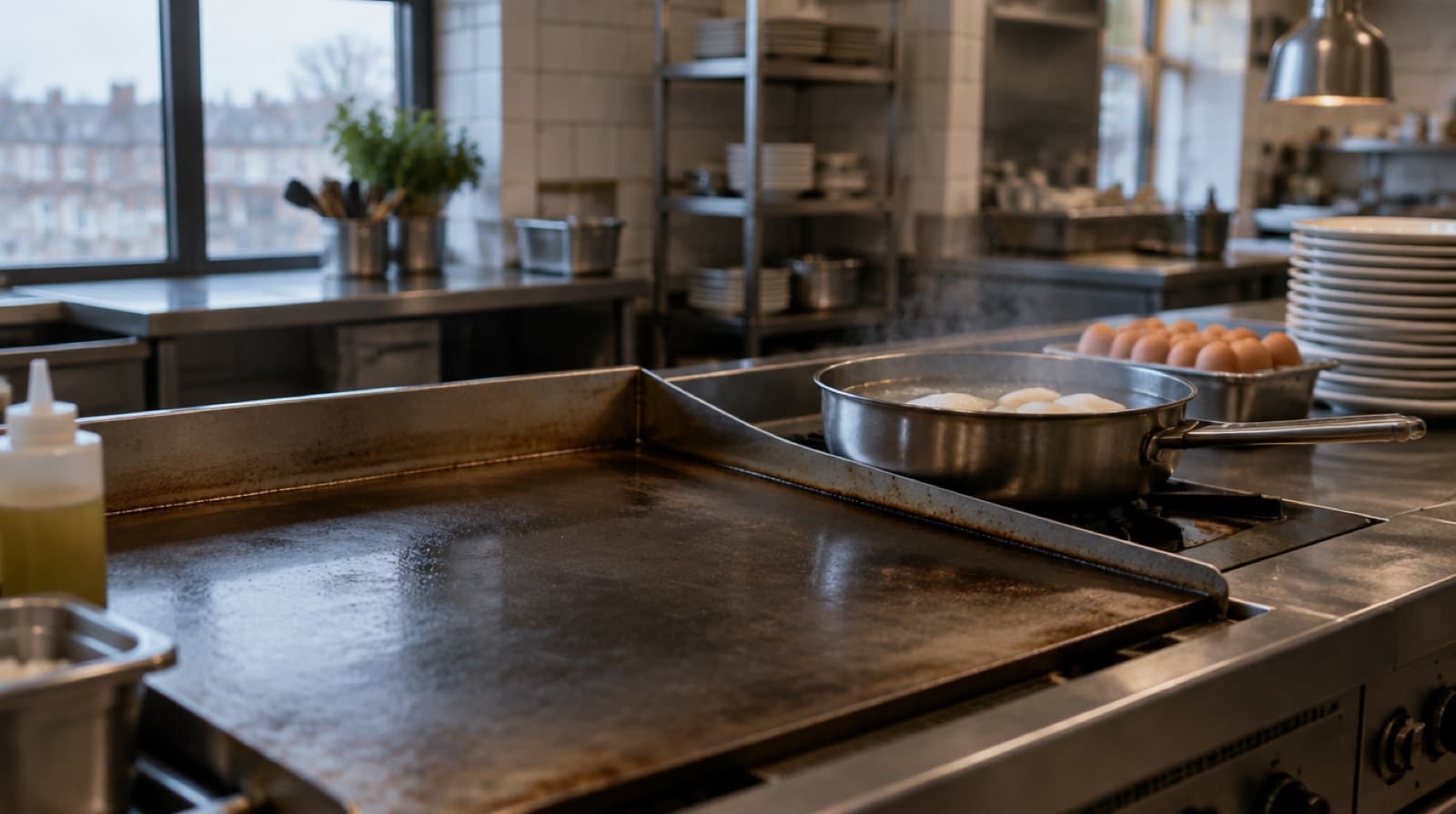
A breakfast chef cooks the first meal of the day, usually in a hotel, a busy café or a restaurant that opens for brunch. The job looks simple from the dining room. Eggs, bacon, toast. From behind the pass it is one of the few kitchen jobs where a single person is often responsible for an entire service, from switching the ovens on to handing the kitchen over to the lunch team.
An ordinary morning
The shift starts before the building is properly awake. The breakfast chef lets themselves in, turns on the griddle, the ovens and the hot cupboards, and checks what the night before left behind. In a hotel the first thing to read is the residents list: how many rooms are occupied tells you roughly how many people could come down, and any early departures or group bookings tell you when the rush will hit.
- 1Set up. Sausages and bacon into the oven in batches, tomatoes and mushrooms roasted, beans on, hash browns and black pudding ready to go.
- 2Build the buffet if there is one: hot counter topped up, cold section of fruit, yoghurt, pastries, cured meat and cheese laid out and labelled.
- 3Cook to order through service. Poached, fried and scrambled eggs, omelettes, pancakes, eggs Benedict, porridge, kippers or smoked haddock.
- 4Room service tickets as they come, plated and covered so they survive the lift.
- 5Break down, clean down, write the order for tomorrow and hand over to whoever cooks lunch.
The craft is in eggs. A breakfast chef who can hold a pan of barely simmering acidulated water and turn out soft poached eggs in quantity, keep a hollandaise stable on a warm corner for the whole of service, and fry an egg with a set white and a runny yolk every time, is worth a great deal more than one who can cook a steak. Hollandaise is also the item most likely to split at the worst moment, and knowing how to rescue it without starting again is part of the job.
The pressure point is the wave. Breakfast does not build gently the way dinner can. A coach party, a conference starting at nine or a wedding party checking out can bring most of a hotel into the dining room within the same half hour, all wanting something cooked to order, and the tickets pile up faster than a single griddle can clear them.
When a venue needs one, and when it does not
A dedicated breakfast chef solves a rota problem as much as a cooking one. The alternative is asking dinner chefs to come back in early the next day, which runs into the rest a person needs between shifts and wears a brigade out quickly. Once a venue serves breakfast every day of the week, and the evening team finishes late, splitting the morning off into its own job is usually the only arrangement that holds.
The signs that a venue has reached that point are easy to spot: a sous chef rostered on a late close followed by an early open, a commis left alone at breakfast without the experience to handle it, complaints about cold eggs or a buffet left empty, or room service slowed to a crawl because nobody is free to cook it.
A small guest house or a café doing a short brunch menu may not need one. A cook who does breakfast then moves onto lunch prep, or a continental buffet with a small cooked menu handled by front of house, can be enough. The question is whether the morning is a full shift of cooking or an hour of it.
Who they answer to
The breakfast chef reports to the head chef or sous chef, even though neither of them is usually in the building while breakfast is cooked. In a large hotel there may be a breakfast team with a lead, a commis and a kitchen porter; in a smaller one the breakfast chef works alongside a waiter or two on the floor and nobody else in the kitchen. The handover at the end of the morning, what was used, what ran short, what needs ordering, goes to the lunch chef or the sous chef.
What marks out a good one
- Reliability at an hour when other people are asleep. A breakfast chef who is late means guests with no breakfast, and there is rarely anyone else to cover.
- Batching judgement: cooking enough bacon and sausages to keep the counter full without leaving trays drying out under the lamps.
- Consistency. The same poached egg on the first plate and the last.
- Allergen discipline without a head chef watching: separate pans for gluten-free toast, knowing what goes into the sausages and the black pudding, and telling the floor staff accurately.
- Tidiness. A kitchen handed over clean, with the order written, makes the lunch team’s day.
The adequate version cooks the food. The good version runs the morning: reads the residents list, adjusts the batches, spots the conference in the diary and has extra eggs cracked before anyone asks.
Getting in, and what comes after
Many breakfast chefs come up from commis roles, or from café kitchens where the whole menu is brunch. It suits people who like early starts and afternoons free, including those with childcare or a second commitment in the day. Some stay for years because the pattern suits them. Others use it as a way into a hotel brigade and move across to a section on the main kitchen, or on to a junior sous role where running a service alone is exactly the experience that counts.
Advertising the job
Say the start time, because that is the first thing a candidate wants to know. Say the pay, whether it is hourly or salaried, how many mornings a week, and whether weekends are included. If the breakfast chef also preps for lunch, say so. State whether the role is part of the tronc; the breakfast team is easy to forget when the service charge is shared out in the evening.
What venues are paying section chefs, including breakfast: chef de partie pay
The section role a breakfast chef usually sits alongside: what a chef de partie does
Kitchens hiring now: browse jobs