Chef de partie: running a section, and why the brigade depends on it
A chef de partie runs one section of the kitchen, such as sauce, fish, grill or larder. What the job involves, how a demi differs, and where it leads.
Covers · · 5 min read
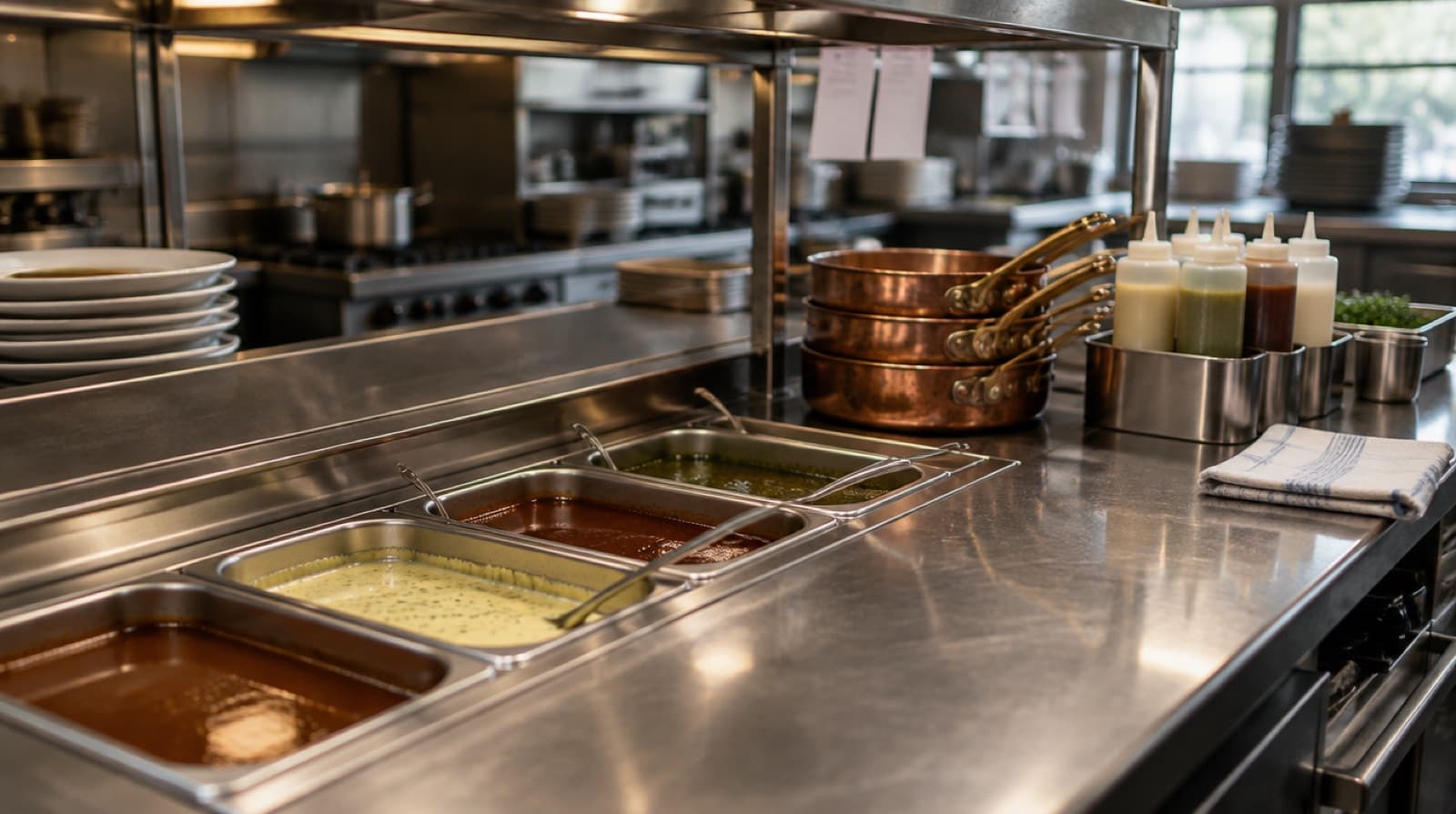
Partie is French for part. A chef de partie, usually shortened to CDP, is the chef in charge of one part of the kitchen: a section, with its own dishes, its own fridge, its own prep and its own share of every ticket. If the head chef owns the kitchen, the chef de partie owns a corner of it, and is expected to run that corner without being watched.
The sections
Which sections exist depends on the menu and the size of the kitchen. The classic brigade names them after what they cook:
- Sauce, or saucier: sauces, braises and often the meat, frequently the most senior section.
- Fish, or poissonnier: fish and shellfish, including butchering them.
- Grill, or rôtisseur: grilled and roasted meats and everything cooked over direct heat.
- Larder, or garde manger: cold starters, salads, dressings, terrines, and usually the butchery and portioning of raw produce.
- Veg and garnish, or entremetier: vegetables, starches, soups and eggs.
- Pastry: desserts, bread and petits fours, often with its own hierarchy.
Smaller kitchens merge them. A modern restaurant with five chefs may have a hot section, a cold section and pastry, and a CDP there covers more ground than the French names suggest.
A shift on section
The day starts with the section list. The chef de partie checks what is left from yesterday, what is needed for today’s covers, and what must be made from scratch. Then comes prep: stocks reduced, fish filleted and portioned, sauces made and seasoned, garnishes cut, everything labelled and in position so that during service nothing has to be looked for. Before service the CDP sets the section, known as mise en place, and the head chef or sous may taste through it.
In service the CDP listens to the pass, fires their part of each order at the right moment and sends it up at the same time as the rest of the table. A good section chef is thinking three tickets ahead. After service, the section is broken down, food is covered, labelled and dated, the station is cleaned, and the CDP writes what needs ordering or making for tomorrow.
The pressure point is the moment a section falls behind. When one section is in the weeds, every table waits for it. That is why a kitchen’s strength is measured by its chefs de partie more than by any single senior chef.
Chef de partie, demi and commis
These three are the working core of a brigade and the titles are often muddled in adverts.
- A commis chef works on a section under supervision, preparing and cooking what they are told to, and learning.
- A demi chef de partie is an assistant CDP: capable of running a smaller section, or a section on a quieter shift, and covering the CDP’s days off, but not yet trusted with the busiest station alone.
- A chef de partie runs the section completely, including its prep planning, stock and standards, and supervises any demi or commis working on it.
Above the CDP is the junior sous or sous chef. “Senior chef de partie” is sometimes used for the most experienced CDP in a kitchen, often on the hardest section, who may step in for a sous chef.
Why kitchens hire them
Chefs de partie are how a kitchen scales. One chef cooking everything can serve a small number of covers well. Beyond that, the menu has to be split, and each part needs someone who can run it reliably. A kitchen needs another CDP when a section is regularly the bottleneck in service, when the sous chef is spending shifts cooking a section instead of supervising, or when the menu grows and a station has more dishes than one cook can plate at speed.
Sometimes the answer is not another CDP. A section that is only busy two nights a week might be better covered by a demi chef de partie on quieter nights and a CDP moved across on busy ones. A kitchen short of prep, rather than of service capacity, may need a prep chef or a commis rather than another section chef.
What kitchens look for
Cooking skill is the baseline. Beyond it, a kitchen hiring a CDP wants someone who can organise a section, not just cook on one. Their prep is complete before service, their fridge is labelled and rotated, and their section is clean when they leave it. A good CDP can also teach a commis without slowing down, and can move to a different section when needed. An adequate one cooks well on their own station and struggles anywhere else.
Getting in and going further
Most chefs reach CDP by working as a commis and then as a demi, learning several sections along the way. Catering college and apprenticeships are common routes in; so is starting in the kitchen as a porter or assistant and being given a chance. From chef de partie, the next step is junior sous or sous chef. Some chefs specialise instead, staying on pastry or butchery or moving into a specialist kitchen such as sushi or a grill restaurant.
What a CDP advert should say
Which section. That one word changes who applies. Add the rate, the weekly hours, straight or split shifts, the number of covers, the size of the brigade and whether the kitchen is in the tronc. Say whether the trial shift is paid.
What kitchens are offering CDPs: chef de partie pay
The step below, and how it differs: what a demi chef de partie does
Trial shifts are common for section chefs. What should be paid: paying for trial shifts