Demi chef de partie: the half-step between commis and section chef
A demi chef de partie is second on a section and runs it on the CDP’s days off. How a demi differs from a commis and a full CDP, and why kitchens hire one.
Covers · · 5 min read
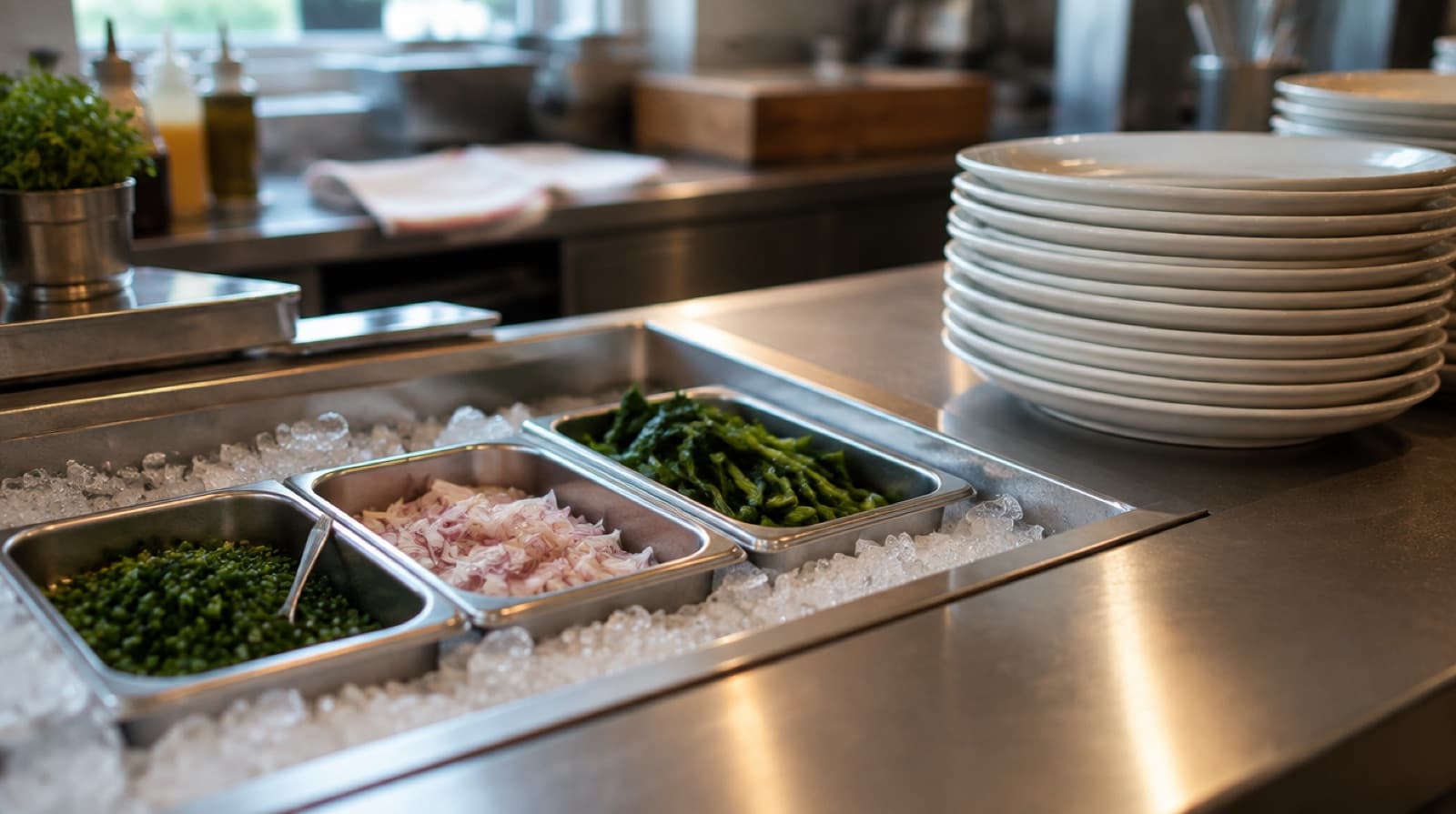
Demi means half. A demi chef de partie is half a section chef, in the sense that they can do most of what a chef de partie does but are not yet the person responsible for the section. They are usually the second chef on a station, working beside the CDP on busy services and running it themselves when the CDP is off or the night is quiet.
Not every kitchen uses the title. It is most common in hotels, larger restaurants and kitchens that keep to the classic brigade, where there are enough chefs on each section for a ladder within it. In a small kitchen the same person might simply be called a commis or a junior chef de partie.
What changes when a commis becomes a demi
The easiest way to understand the job is by what it adds. A commis is told what to prep and how, and in service does the tasks they are given. A demi is trusted with a list rather than instructions. They are expected to know the section’s dishes without looking at the spec, to prep them to standard without being checked at every step, and to cook them in service at speed.
What a demi does not yet own is the section’s organisation. The chef de partie decides the par levels, writes the order, sets the standard and answers to the sous chef for it. When the demi runs the section on the CDP’s day off, they run it to the CDP’s plan.
Demi CDP or full CDP
This is the question most people searching the title want answered, and it comes down to three things.
- 1Responsibility. The CDP is accountable for the section. The demi supports them and deputises.
- 2Range. A CDP can run their section on the busiest night of the week. A demi can usually run it on a quieter one, or run a smaller, simpler section alone.
- 3Supervision. A CDP directs the commis on their section. A demi may help a commis but is not usually in charge of them.
In practice the line moves. A demi on garnish in a large hotel may cook more covers in a night than a CDP in a small bistro. The title describes a position in that kitchen’s ladder, not a fixed level of skill.
A typical shift
A demi usually arrives with or shortly after the CDP and works through their share of the prep list: picking and chopping herbs, making dressings and purées, portioning proteins, blanching vegetables, reducing sauces to the CDP’s recipe. In service they may run one side of the station, such as garnish while the CDP cooks the proteins, or plate while the CDP fires. At the end of the night, the demi often does much of the breakdown and cleaning while the CDP writes the list for tomorrow.
Demis move between sections more than CDPs do. A kitchen uses them to fill gaps: larder on Monday, fish on Tuesday, pastry when the pastry chef is on holiday. That rotation is useful. It is how a demi learns enough of the kitchen to become a CDP who can cover anywhere.
Why a kitchen hires one
Kitchens hire demis for coverage and for succession. A section whose CDP works five days still needs cooking on the other services, and a demi who knows it is cheaper and more reliable than moving a chef from another section and leaving that one short. A kitchen that is regularly borrowing chefs between sections on the CDP’s days off has reached the point where a demi makes sense.
The role also holds on to good commis chefs. A commis who is ready for more and sees no step between them and a CDP job will go elsewhere to find one. The demi title, with the pay and trust that come with it, gives them a reason to stay.
A small kitchen where each chef already covers a whole side of the menu has little use for one. There, a strong commis and a CDP who can cover each other’s sections may be all the depth needed.
What makes a demi ready to step up
Kitchens hiring a demi look for someone who has worked at least one section properly as a commis and can prep without constant checking. The good ones are ready to become a CDP before anyone tells them. They start noticing the section’s stock levels, asking why a dish is made a certain way, and suggesting changes to the prep order. They keep their standard on a quiet Tuesday when nobody senior is watching. A merely adequate demi cooks well when the CDP is there and less well when they are not.
Route in and next step
Demis are almost always former commis chefs, promoted within a kitchen or hired from one. College leavers who have done a placement in a strong kitchen are sometimes hired straight in at demi. The next step is chef de partie, often on the section the demi has been second on.
Advertising the role
Name the section, or say that the role rotates. Give the pay, hours and shift pattern, and whether the demi runs the section alone on certain days. Say whether the kitchen shares tronc. A candidate deciding between a demi job and a commis job elsewhere needs to see what they will actually be trusted with.
Pay advertised for section chefs, including demis: chef de partie pay
The job a demi is working towards: what a chef de partie does
All current vacancies, each with its pay: browse jobs