What a food runner does between the pass and the table
A food runner carries plates from the pass to the right seat, hot and without asking. What the job involves, when a restaurant needs one, and where it leads.
Covers · · 5 min read
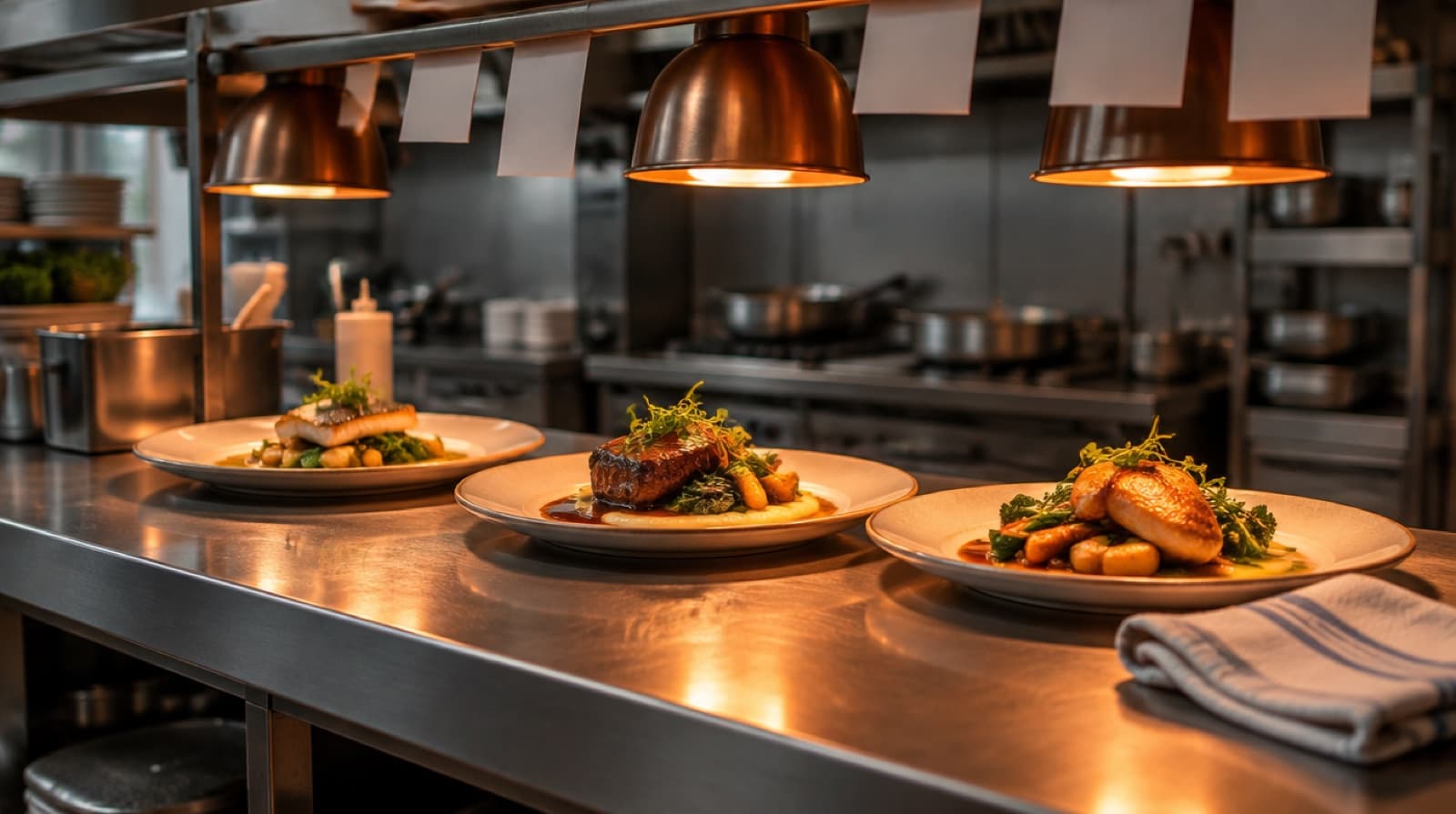
The runner’s job starts where the chef’s ends. When a plate is finished and put up on the pass, somebody has to get it to the guest while it is still at its best, to the right table and the right seat, and tell them what it is. That is the whole of the job, and it is less simple than it sounds.
The mechanics
Every table in the room has a number, and every seat at it has a position, counted from a fixed point such as the chair nearest the kitchen door. The waiter writes the position against each dish when they take the order. The runner reads the ticket at the pass, picks up the plates, and puts each one down in front of the person who ordered it without asking who had the fish.
Carrying is a physical skill. Runners learn to hold three plates at once, two in one hand and one in the other, so a four top can be served in one trip with a second runner. Hot plates are carried with a cloth. Sauces go on the table before the dish that needs them. On the way back the runner clears whatever is finished, so no trip into the kitchen is an empty one.
Between waves of food there is side work: polishing cutlery and glasses, folding napkins, refilling water, stocking the service station, and running drinks from the bar when the floor is short.
Where the pressure comes from
The chef calling service at the pass wants the plates gone now, because food under a heat lamp gets worse by the minute. The waiter on the floor may be mid-conversation at the table the food is going to. The runner sits in between and has to keep both sides moving.
Allergens make it serious. A dish made without an allergen for one guest looks identical to the version with it, and the runner is often the last person to handle it before it is eaten. Good kitchens mark those plates at the pass, and good runners check the mark every time.
Why a restaurant hires runners
A restaurant can run without them. Waiters take their own food out, and in a small room with a short walk from the kitchen that is the simplest arrangement. It stops working when the room gets bigger or busier.
The sign is food waiting at the pass. A head chef who keeps calling for service while plates sit is watching the quality of their cooking drop, and the cause is usually that the waiters are busy at their tables taking orders or pouring wine. Every time a waiter walks to the kitchen, their section goes unwatched. Adding a runner lets the waiters stay on the floor and the food leave the moment it is ready.
- Plates regularly sit on the pass longer than the kitchen wants.
- Waiters are rarely in their sections during the main course rush.
- Dishes arrive at the wrong seat, or a table is asked who ordered what.
- The kitchen is far from the room, on another floor, or at the end of a long corridor.
Where the room is small and the kitchen close, a restaurant may not need a dedicated runner. It can make one waiter the floater on busy nights, or have the chefs bring certain dishes out themselves, which some kitchens prefer anyway.
Between two teams
A runner reports to the head waiter or floor supervisor, but spends much of the shift taking instructions from the pass, usually from the head chef or sous chef calling it. They run nobody. The handover that matters is the one at each table: if a guest mentions a problem while the runner is putting plates down, it goes to the waiter for that section immediately, not at the end of the night.
A good runner, and an adequate one
An adequate runner delivers food to the correct table. A good one delivers it to the correct seat without asking, describes each dish in a few words that match the menu, notices that a table is missing cutlery before the plates land, and reads the pass well enough to know which order is coming next. They never auction the food, and they never leave the kitchen empty handed or come back to it that way.
Kitchens notice runners quickly. A runner the head chef trusts gets asked to take the complicated tables, and that is usually the first sign they are ready for more.
The usual first job
Running is one of the most common ways into restaurant work, and many venues hire for it without experience. It teaches the menu, the table plan and how the kitchen and floor talk to each other, which is most of what a new waiter has to learn. Runners who want to move up tend to become waiters within the same restaurant. Some go the other way, into the kitchen.
In the advert
The hourly rate, the shifts, whether they are split, and whether runners share in the tronc and on what basis. If there is a route from runner to waiter, say so. A candidate choosing a first restaurant job is choosing where they will learn, and that line tells them.
Advertised pay for floor roles: front of house pay
The usual next step: what a waiter does
Runner and waiting jobs posted by restaurants: browse jobs