The junior sous chef: first rung of kitchen management
A junior sous chef still runs a section but also opens, closes and covers the sous. How it differs from a sous chef and a CDP, and why kitchens create it.
Covers · · 5 min read
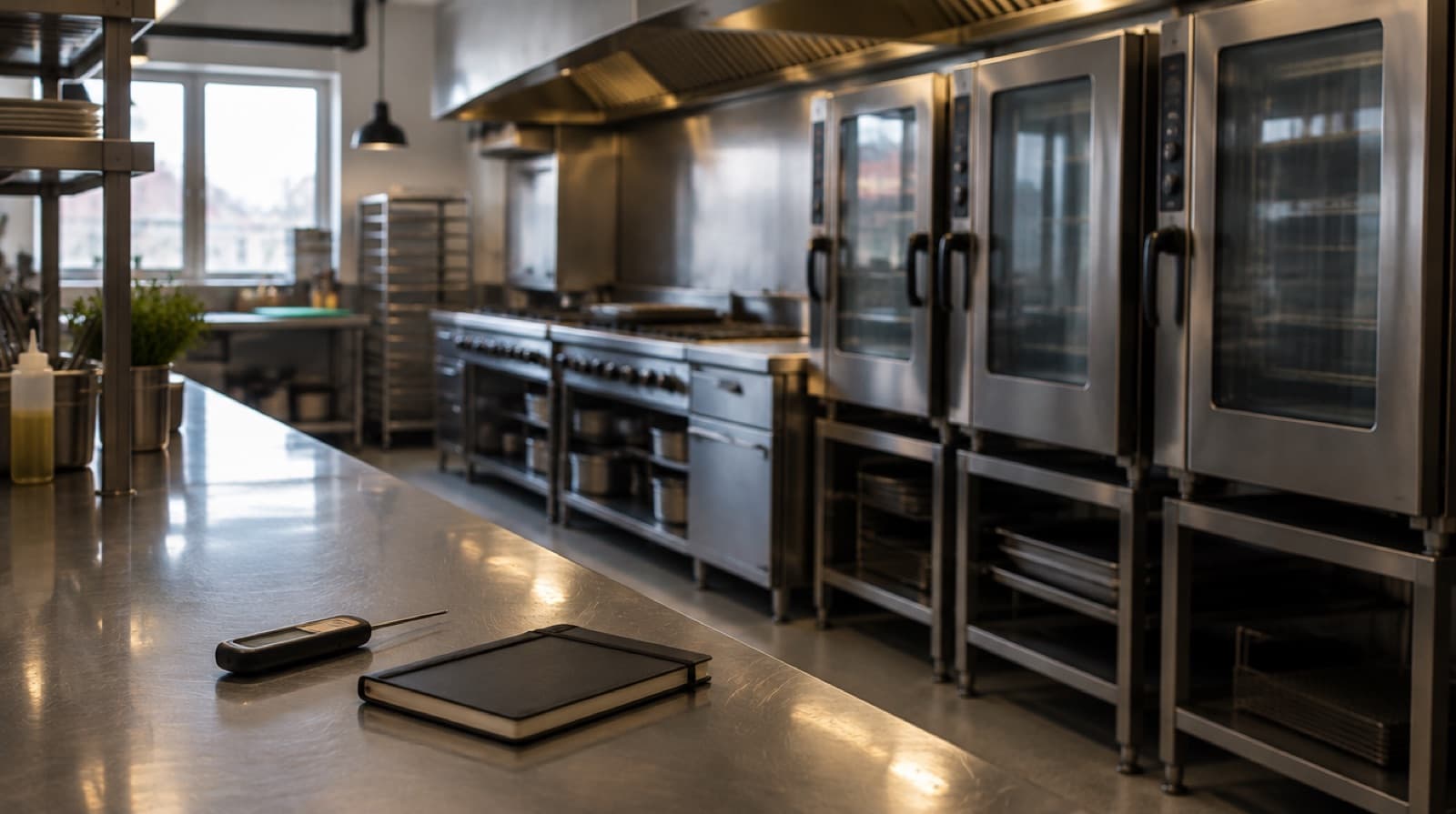
A junior sous chef is a chef de partie who has been handed some of the sous chef’s authority, and is being tested on whether they can carry it. The title only exists in kitchens large enough to have a management layer of more than two people. In those kitchens it is the third senior cook, below the sous chef and the head chef.
The job is best understood as a bridge. On one side is a section chef whose responsibility ends at the edge of their station. On the other is a sous chef who is responsible for the whole kitchen in the head chef’s absence. The junior sous spends most of their shifts on a section, and some of them in charge.
How the hours divide
On a typical rota, the junior sous works a section through service like any chef de partie, often a demanding one such as sauce or the main protein section. What changes is the time either side of service. They may be the one who unlocks the kitchen, switches on the equipment, takes the first delivery and checks it in. They may be the one who closes: walking the fridges, checking labels and dates, signing the closing checks, writing the handover note. In a hotel or a site that serves breakfast through to dinner, the junior sous may be the most senior chef on the early or late shift.
When the sous chef is off, the junior sous steps up. That may mean running the pass on a quieter night, or supervising the kitchen while the head chef runs the pass. It rarely means making decisions about the menu or the budget.
Junior sous, sous and chef de partie compared
- A chef de partie is responsible for one section: its prep, its service and its cleanliness.
- A junior sous chef is responsible for a section and for parts of the kitchen’s running, such as opening, closing, deliveries, records, or covering a shift in charge.
- A sous chef is responsible for the whole kitchen in the head chef’s absence, including the rota, ordering and the team.
The boundaries shift from kitchen to kitchen, which is why the advert matters. One kitchen’s junior sous orders all the dry goods and writes half the rota. Another’s is a senior chef de partie with a better title.
Why kitchens create the role
Kitchens rarely set out to hire a junior sous chef. The job tends to appear for one of three reasons.
- 1Coverage. The kitchen is open long enough that the head chef and the sous chef between them cannot put a senior person on every shift. A junior sous closes that gap without the cost of a second full sous.
- 2Retention. A strong chef de partie is ready for more and will leave to become a sous chef somewhere else. A junior sous role keeps them, and gives them a reason to stay for another year.
- 3Succession. The sous chef is likely to move up or move on. A junior sous who has been covering them is the obvious replacement, and a much safer one than an outside hire.
A kitchen with a head chef, a sous chef and three or four cooks does not normally need one. The role adds a layer, and in a small brigade a layer is one more person telling a chef de partie what to do. In that kitchen, extra responsibility for a good chef de partie is often better given as a senior CDP title and a pay rise than as a management title that does not carry any real authority.
What makes one worth promoting
Venues want a junior sous who is already a reliable chef de partie on any section, so that moving them around the kitchen causes no drop in the food. The part that separates a good one from an adequate one is the management half. An adequate junior sous completes whatever is on their list. A good one notices what nobody asked them to: the walk-in that is running warmer than yesterday, the commis who is struggling on garnish, the supplier whose delivery has been short twice. They tell the sous chef before it becomes a problem.
They also learn to correct other chefs without making enemies of them. That is the hardest part of the step, because the people they now supervise were their peers a month ago.
Getting in and moving up
The route is almost always from chef de partie, frequently inside the same kitchen. Candidates from outside are hired when a kitchen is expanding, or opening a new site and needs a management layer quickly. The next step is sous chef, and a junior sous with a record of covering the sous well is a strong candidate for that job anywhere.
What the advert should make clear
The pay, the hours and whether shifts are split. Which section the junior sous will run, and which management duties come with the job: opening, closing, ordering, rotas, or running the pass on certain days. Whether tronc reaches the kitchen. Without that detail a candidate cannot tell whether the title brings genuine authority or is a chef de partie job with a new name.
What venues are advertising for sous and junior sous roles: sous chef pay
The job a junior sous is covering, and working towards: what a sous chef does
Kitchen jobs at every level, pay stated: chef jobs