Inside the pastry section: what a pastry chef does all day
Pastry chefs make desserts, bread, doughs and petits fours to exact weights and temperatures. What the section involves, its ranks, and when a venue needs one.
Covers · · 5 min read
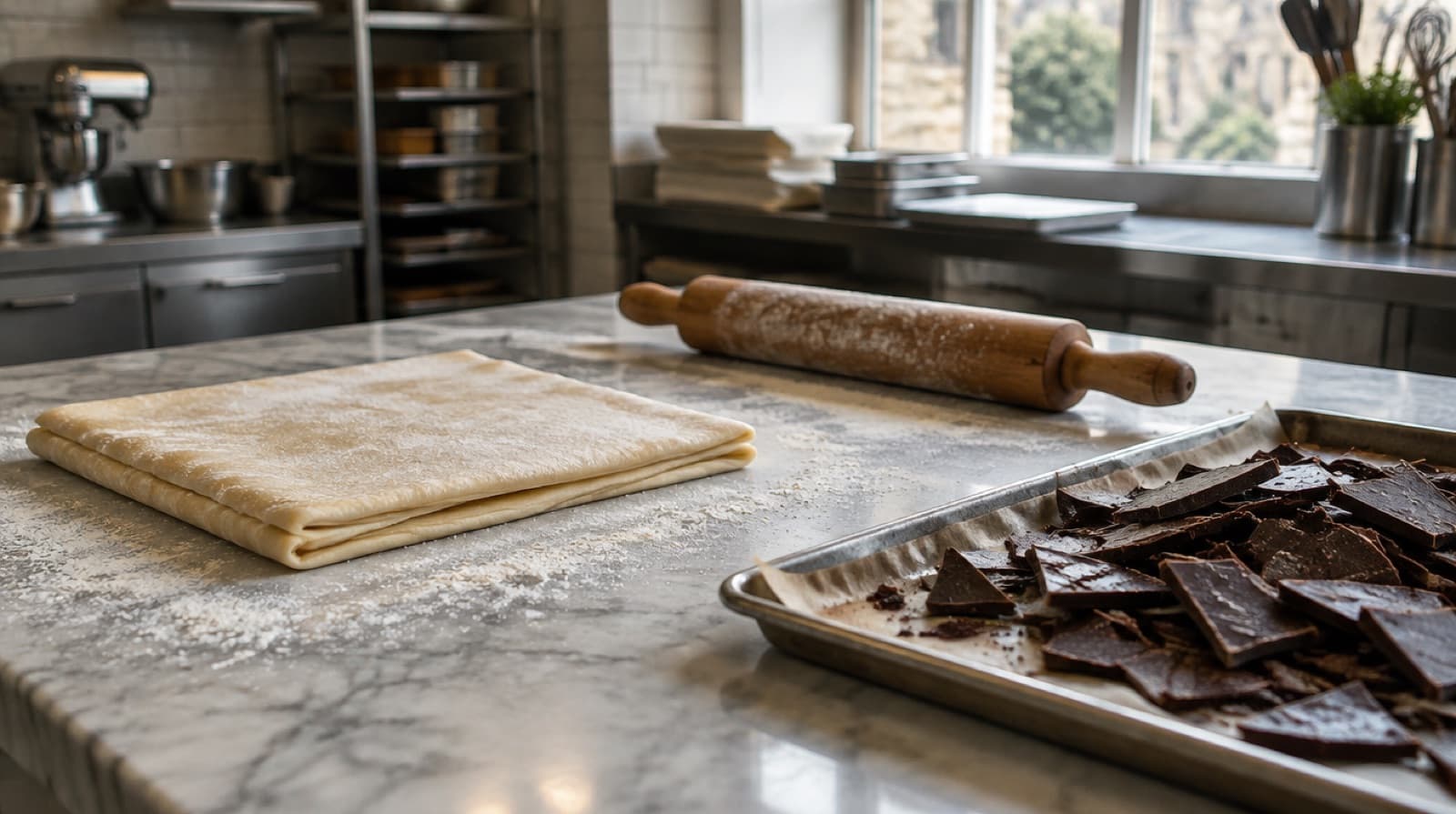
A pastry chef, or patissier, makes the sweet side of a menu and much of what is baked: desserts, ice creams and sorbets, tarts, doughs, breads, biscuits, petits fours, and in hotels the afternoon tea. In a restaurant brigade, pastry is a section like sauce or fish. In practice it runs almost as a separate kitchen, with its own rhythm, its own equipment and its own way of working.
Why pastry is different from the rest of the kitchen
Savoury cooking forgives a little. A sauce can be adjusted at the last minute; a braise can go a few minutes longer. Pastry mostly cannot. It is chemistry done by weight: flour, sugar, butter, eggs and raising agents measured to the gram, doughs rested for set times, custards cooked to a precise temperature, chocolate tempered so that it sets with a snap and a shine. A mistake made in the morning shows up in the evening, and there is rarely time to start again.
The tools reflect this. A digital scale is used constantly. So are probe thermometers, sugar thermometers, a stand mixer, a sheeter for laminating dough in larger kitchens, an ice cream machine, a blast chiller and often a separate oven set for baking rather than roasting. Pastry sections tend to be in the coolest corner of the kitchen, because warm butter is the enemy of laminated pastry.
The shape of the day
Pastry often starts earliest. Bread for lunch needs to be proved and baked before the first guests arrive; croissants for a hotel breakfast need to be in the oven before dawn. The morning is production: doughs, bases, creams, ice cream churned and frozen, garnishes made, everything that can be finished ahead of time finished. In service, the pastry chef assembles and plates desserts to order, often late in the evening when the savoury sections are cleaning down. That can make pastry hours long in both directions, and some kitchens split the section into an early production shift and a later service shift.
The ranks within pastry
- Head pastry chef: runs the whole pastry operation, writes the dessert and bakery offer, costs it, and manages a pastry team. Found in hotels, large restaurants and groups.
- Pastry sous chef: deputy to the head pastry chef in large pastry kitchens.
- Pastry chef de partie: runs the pastry section in a restaurant, usually reporting to the sous chef or head chef rather than a separate pastry head.
- Pastry demi and commis: learning the section under a pastry CDP or head.
In most independent restaurants, “pastry chef” means the pastry CDP. They may be the only person who does pastry, which gives them a lot of say over the dessert menu even without a senior title.
Worth hiring, or worth buying in
A venue hires a pastry chef when its desserts, bread or baking matter to the offer and a savoury chef cannot do them well alongside their own section. The signs: desserts that are bought in and taste like it, a dessert list left untouched since last winter for lack of anyone to rework it, bread that guests comment on for the wrong reasons, or an afternoon tea that the kitchen is struggling to produce consistently.
Many kitchens do not need a dedicated pastry chef. A short dessert menu can be covered by a CDP on the larder or cold section, especially if the desserts are designed around what that chef can prep ahead. Good bread can be bought from a local bakery. A pub serving a few classic puddings is usually better off with a well-written spec and a cook who follows it. A pastry chef becomes worth hiring when pastry is part of why people choose the venue, or when volume, such as breakfast pastries, banqueting or afternoon tea, makes it a full job.
What kitchens look for
Precision first. A pastry chef who does not weigh, does not record temperatures and cannot explain why a recipe works will produce inconsistent results. Beyond that: organisation, because a pastry section runs on long lead times and a forgotten dough cannot be rescued at six o’clock. Good pastry chefs also cost carefully, because butter, chocolate, nuts and vanilla are expensive, and a dessert that looks simple can have a poor margin.
What separates a good pastry chef from a merely competent one is judgement at the point where precision runs out. Flour behaves differently from one delivery to the next; a humid day changes meringue. The good ones notice and adjust. They also design desserts that can be plated quickly at the end of a long service, and they keep the allergen records for their section scrupulously, since pastry uses gluten, eggs, dairy and nuts more than any other section.
What the allergen rules ask of a kitchen: allergen guidance (food.gov.uk)
Getting into pastry
Some pastry chefs start in general kitchens and move across, usually after a spell on the pastry section as a commis. Others train in pastry or bakery from the start through college or an apprenticeship, or come from a bakery or patisserie shop. From pastry CDP the path leads to head pastry chef, often in a hotel or group, and from there to executive pastry roles, development work, or a bakery or patisserie business of their own.
What the advert should state
The pay, the hours, and crucially the start time, since pastry often begins earlier than the rest of the kitchen. Say what the section produces: plated desserts only, or bread, breakfast pastry and afternoon tea as well. Say whether the pastry chef writes the dessert menu, who they report to, and whether the pastry section gets a share of tronc.
Advertised pay for pastry and other section roles: chef de partie pay
Pastry and other kitchen jobs, with pay stated: chef jobs
How the other sections of a brigade are run: what a chef de partie does