Front of house supervisor: running the floor when the manager is not there
What a front of house supervisor does on a shift, why a restaurant creates the role, how it differs from a head waiter, and what the advert should say.
Covers · · 5 min read
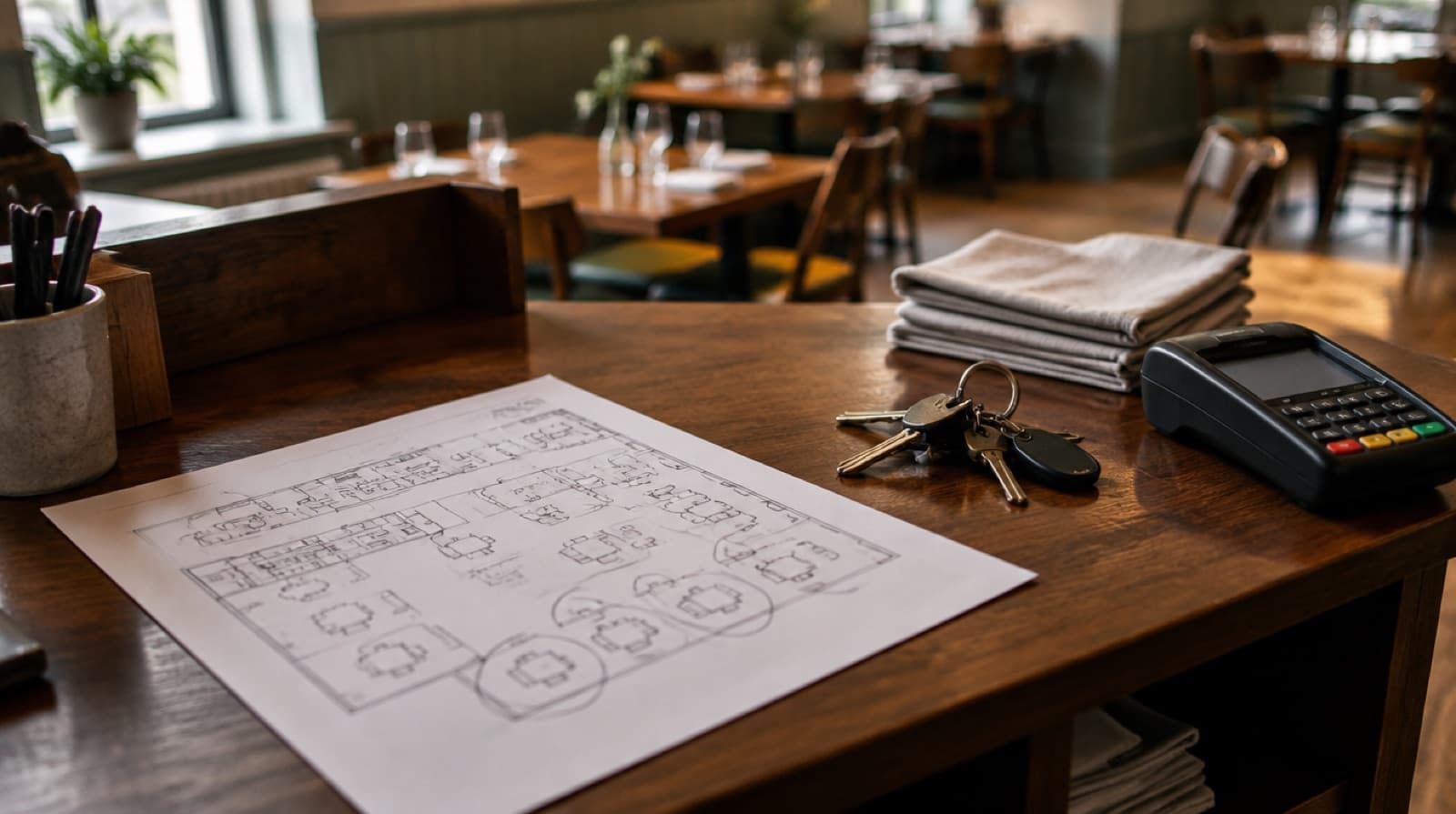
A restaurant open seven days, lunch and dinner, has more shifts than one manager can work. The front of house supervisor is how the venue covers the rest. On their shift they are the person in charge of the floor: the one the team turns to, the one a guest with a complaint gets, and the one who signs the till off at the end.
It is a working role. A supervisor still carries plates, takes orders and clears tables, and usually has a section of their own on a quiet night. The difference is that they are responsible for everybody else’s tables as well.
How a supervised shift runs
- 1Before service: read the bookings, note allergies, large tables and anybody the manager has flagged, and set the sections so the work is shared fairly.
- 2The briefing: specials, anything the kitchen has run out of, the wine to push, who is on breaks and when.
- 3During service: watch the room rather than one table, send help where a section is falling behind, deal with the complaint that needs somebody senior, and authorise the voids and discounts the till will not let a waiter do alone.
- 4Between services or at close: breaks taken, tables reset, side work checked, cash counted and the takings reconciled, and the building locked if they hold the keys.
- 5The handover: a note or a message to the manager covering what went wrong, what ran short and who was off sick.
The hardest moments tend to arrive together. The kitchen falls behind at the same time as a large table sits down early, a waiter calls in sick, and a guest wants to speak to the manager. The supervisor is the manager, for that shift, and has to decide which of those to deal with first.
Why a venue creates the role
The need usually shows up on the rota before it shows up anywhere else. A restaurant manager works five shifts, the venue opens for twelve, and the others run on whoever happens to be most experienced. That works until the most experienced person is off, and then a shift runs with nobody who can authorise a refund, handle a difficult guest or cash up with confidence.
Other signs: the manager is being phoned on their day off to sort out problems on the floor. Standards on a Tuesday are visibly different from standards on a Saturday. Complaints are resolved by whoever was nearest, which means inconsistently. Waiters are cashing up without anybody checking the figures.
Creating a supervisor fixes that by putting a named person in charge of every shift the manager is not on, with the authority that goes with it: keys, till permissions, the right to move people between sections, and a clear line to the manager when something is beyond them.
A venue probably does not need one if the owner or manager is genuinely on every service, or if the team is small enough that the head waiter already carries that authority. Some restaurants use an assistant manager instead, which is a salaried role with more administration attached; a supervisor is usually closer to the floor and paid by the hour.
Supervisor or head waiter
The two overlap and some venues use the titles interchangeably. Where they differ, the head waiter is the most senior person in the service itself, setting the standard at the table and training new waiters. The supervisor carries the operational side of the shift: the till, the keys, the staffing, the incidents. In a smaller restaurant one person does both, and the advert should say which it means.
The closely related role: what a head waiter does
Reporting lines
A supervisor reports to the restaurant manager or assistant manager. On shift they run the waiters, runners and hosts, and in some venues the bar team too. They work across the pass with the head chef or sous chef, who will expect one voice from the floor about which tables are ready for their mains and which have just sat down.
What marks out a good one
- They see the room. A good supervisor notices the table that has been waiting for a bill before the table does.
- They step in without taking over, clearing a plate for a waiter who is behind rather than moving them off their section.
- They give breaks properly, on time, and do not take their own at the expense of everybody else’s.
- They deal with a complaint once, at the table, and write it down for the manager.
- They count the till the same careful way on a night when everybody is tired.
An adequate supervisor is an experienced waiter with keys. A good one is the reason the team would rather work their shift than somebody else’s.
Getting there, and after
People are usually promoted into it from waiter or head waiter, and venues often prefer to promote from inside because the supervisor needs to know the building, the menu and the regulars already. It is the first step on the management ladder: assistant manager next, then restaurant manager.
The advert
State the rate or salary, the number of shifts and whether they include closing, whether the job carries keys and cashing up, and how the supervisor shares in the tronc. Say who they report to and how many people are on the floor on a busy night. That tells a candidate whether this is a real step up or a waiting job with extra responsibility and the same pay.
What restaurants advertise for floor roles: front of house pay
Restaurant jobs, and the guide to them: restaurant jobs
Where the role leads: what a restaurant manager does